





Today is Global Recycling Day, and is intended to remind us of all the materials that can be reused in everyday life, in part as a way to decrease our individual carbon footprint. However, it's valuable to know how much your business contributes in terms of its carbon footprint… and, once you know that figure, how you can reduce it.
Tech Minutes
There is a whole section of the workforce who forgoes the stability of a full-time job and contracts themselves out by the job. For many of these workers, the boom in application development has given them endless opportunities to make money. This all changed in March as government officials put forth stay-at-home orders, effectively putting millions of people out of work, and millions more displaced from their workplaces. This has had a dire effect on many of the gig workers that were making a living as more people are now trying to do whatever they can to make ends meet. Today, we thought we would look at the gig economy, how it functions, and how COVID-19 has exposed the gig economy.
In today’s highly competitive business environment, any advantage that you can claim will be useful to you. One big advantage you should seek to have is a trusted and reliable resource you can turn to so they can help you manage your IT solutions, consulting you on your business’ future in terms of its technology.
Between you and me, how is your business doing financially? If you answered with something along the lines of “not great,” you are certainly not alone. Cash flow is an issue for businesses all around the world, as a recent report from Intuit makes all too clear.
For any business to be successful, it needs access to the technology solutions that allow it to operate efficiently. Your IT team is responsible for ensuring that this access is not interrupted, which isn’t an insignificant responsibility. However, by clearly defining goals for your IT team to strive for, you provide a benefit to all members of your staff.
An IT project manager is an important part of any new technology initiative in your workplace. Therefore, you should be looking for specific requirements when finding a project manager for your latest project implementation. Here are some specific traits that your business should look for in an IT project manager.

There’s no denying that digital records have quite a few advantages over paper documentation. Benefits of ‘going paperless’ include simplified search capabilities, more efficient storage, heightened security and automated backup capabilities. There are plenty of sources around the Internet that discuss making the switch to paperless documentation, but to keep your business documents safe, it is better to know what you’re getting into.

Using pirated software or abusing your software licenses for your business is heavily frowned upon. However, many software companies, in an attempt to protect their products, have unleashed a practice that can actually reward those who let it happen in the first place.
One experience that almost everyone has been involved in is the clashing of personalities. This is only natural, as different people are born with different predispositions and are raised in differing environments. However, in the business world, one should do their best to keep personal differences from affecting the professional relationships they form.
Your business either has a sound plan to manage its IT maintenance, or it does not. There is no middle ground here. Either you have an internal team dedicated to maintaining your IT infrastructure, or it’s not being taken care of as well as it should be. Even if you do have an internal team, you might notice that they simply don’t have time on their hands to handle all of their responsibilities. We’re here to introduce you to one of the most notable ways of keeping your technology in proper working order: managed IT services.
Selecting a managed service provider should be like selecting any employee. You need to make sure that your expectations are going to be fulfilled, and that your selection will be there when you need them to be. However, the criteria you examine your potential IT service provider by should be a little different than how you evaluate your other prospective team members.
While many different people open businesses, the primary reason that they all do so is to make money. A positive cash flow is essential if the business is to generate funds that support a cause or provide a decent living. However, to collect this cash flow, a business must have their invoices returned. As it happens, this doesn’t often occur in a timely manner.
As a managed service provider, we’re naturally going to be a little biased when comparing the positives and negatives between an in-house IT team and an outsourced approach. However, each has its benefits in the right situations, and each can have its downsides. Today, we’ll discuss each to establish which is the better choice for your situation.
How does your organization manage its mission-critical technology solutions? We know that most small businesses have some sort of trouble with this topic, either due to budget constraints or a lack of personnel. Either way, we know that there is a better way to manage your business’ technology, and it’s all thanks to managed IT services.
In order for small businesses to remain competitive in this economy, there has to be the opportunity for them to participate as a viable competitor. This is the goal of a United States bill that has passed through the House of Representatives and is moving forward to be voted on by the Senate.
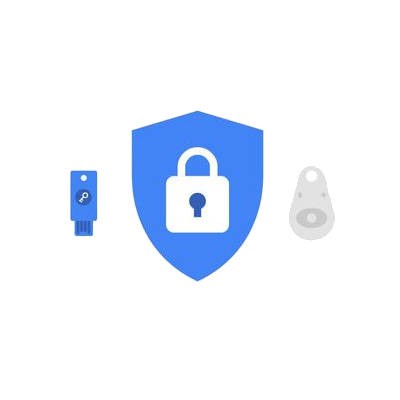
Google is taking steps to protect the data of a small group of its users who run the highest risk of experiencing a data breach or hack. This new service, the Advance Protection Program, shows promise in protecting the information that these select few can access.
It should come as no surprise that the practice of business continuity planning is one that every business needs to undergo. This planning serves as essentially your only insurance against some form of data disaster or another. Consider your own business for a moment--could it survive a fire, a critical failure in part of your infrastructure, or theft? With a business continuity plan, there’s a chance it just might.
By now, you’ve probably heard about the importance of business continuity and disaster recovery planning for small businesses. According to FEMA, more businesses have business continuity plans than ever before. With so many SMBs looking to secure their future, there are still a few aspects of business continuity planning that today’s business need to comprehend. After all, there is more to it than just data backup. Disaster recovery is something that needs to be planned, practiced and updated.
Let’s say that you have an employee who wants to do some good for your business and save your IT some cash on a piece of business software. They find a “free” version of it on the Internet, thinking they have found you a bargain deal. Little do you know that there is an agency out there that’s specifically looking for businesses like yours that don’t keep track of their software licensing, just to make a quick buck off of copyright infringement.
As a business owner, you expect to stay in control of what your business does. Unfortunately, there are certain variables in running a business that simply can’t be controlled, like the weather. Therefore, you need to take special care to ensure that these uncontrollable instances don’t become a threat to your business’ prolonged existence. To this end, we recommend a business continuity plan.
As one would expect, a business will run a lot more smoothly when its employees have the resources to work cohesively toward a common goal. This is why collaborative solutions are becoming a staple in many office environments. Today, we’ll examine how one of these solutions, Microsoft Office 365, can help a workforce to achieve its goals.
When your organization is implementing a new project, there are a lot of expectations and deadlines that are watched with a close eye. While it might be ideal to get the project finished as quickly as possible, doing so can put a lot of pressure and stress on it that can ultimately be its downfall. For example, if you don’t think out the planning phase carefully, the entire implementation process can suffer--particularly when working on new IT initiatives.
The concept of deferring to an expert is not new, especially in terms of running a business. If your business encounters a problem in its plumbing, you call in a plumber. When it comes to your business’ IT solutions, there are professionals who can help with issues there as well: IT consultants.
It’s time to face the fact that those times when your technology acts up, you don’t have the time to spare waiting around for the issue to just go away...you need to react. Many small businesses just don’t have the means to maintain an in-house IT resource to solve their problems. What if we can offer you a different solution.
In order to function properly, any business will need to procure certain pieces of equipment. Some of this equipment will be specialized to the business’ purpose, while some will be the sort that may be more commonly found in offices everywhere. This equipment must be procured from somewhere, and this is where vendors come in--but who in your organization is responsible for your vendor management?
When we talk about best practices, we are typically referring to the practices used by successful companies to garner the best results. A new study by Disaster Recovery has shown that, as backup and recovery solutions go, enterprises are providing some pretty disappointing results as many fail to continuously back up their data and it results in additional inherent risk.
Managing your businesses technology is important because your operations rely heavily on efficient access to information. One advantage that secure and reliable IT provides is the ability to remain competitive, as the slightest advantage could mean a world of difference in your given market. One new IT trend is the analysis of big data. If it is leveraged properly, you could help your business get the leg up on local competition.
As a modern business, your success depends on your technology functioning properly. As many businesses have discovered when their solutions did not function as intended, the effects can have considerable impact to their success rates. To help keep your business running, you need to be sure that your solutions are maintained.
Information technology is a necessity in today’s world. No matter the industry, IT solutions play a major part in daily operations, so businesses need their solutions to be in working order. In order to ensure that they are, many have turned to managed service providers.
How much time does your staff spend actually doing work compared to simply communicating about work? There’s a big difference, primarily in terms of making you money versus costing you money. Truth be told, employees spend nearly 80 percent of their time either in meetings, on the phone, or responding to emails. By finding ways for your team to communicate more efficiently, they will effectively spend less time yapping and more time making you money.
When you talk about your employees, you hopefully often refer to them as a department, or a “team.” These terms often come with predetermined assumptions, with one of them being that the employees work together to accomplish something specific. However, it’s often not so simple. If your employees aren’t working together as a team, how can you fix this dilemma?
When your business experiences an IT outage, what’s the first thing that comes to mind? A typical response (after expressing frustration) is, “How long until operations resume?” An answer to this question isn’t always obvious, which leads to another question, “Why did my system go down in the first place?” Being able to quickly and accurately ascertain what’s behind an IT outage is a responsibility that every business should have handled, yet implementing such a procedure is often overlooked until it’s too late.
No business owner wants to experience data loss in any way, shape or form, which is why it’s so crucial that preventive measures are taken. If you don’t have protections in place, you may find yourself out of business due to a data loss disaster. While that’s certainly the worst-case scenario, the other consequences of data loss are downright troublesome in their own right.
IBM is perhaps one of the best known technology companies out there, but do you know all of the details about Big Blue’s legacy? IBM has built itself a reputation for pursuing advances in innovation and revolutionizing the way that businesses utilize computing, all the way back to its inception 100 years ago.
How much time does your business waste on managing its own technology services? This includes maintaining your email solution, upgrading and managing your desktop infrastructure, and keeping your network secure from both internal and external threats. We would understand if you said that you don’t have time to both run your business and its technology, but we are of the firm belief that you shouldn’t have to choose one over the other.
As more and more businesses rely on technology solutions to accomplish their everyday tasks, there is a natural expectation for there to be a bit of a learning curve as these advanced solutions are prioritized and accounted for. However, a few industry research firms have compiled their expectations for how this learning curve tendency will influence the needs and challenges businesses will face during the rest of the year.
In the natural course of doing business, an owner/operator will have to face many difficult situations, but none of these situations are as difficult as asking them to determine whether or not to close the doors of the business for good. Many problems could cause a business to fail, but it has to hurt the failing owner a little more when the solution for the problem was not only within his/her reach, it was affordable.
Two major concerns of every business owner are the protection of their company and making sure their technology does what it’s supposed to do. It can be overwhelming to manage these two aspects on your own, which makes outsourcing the security and maintenance of your IT such an attractive option.
Entrepreneurs enjoy an almost mythical standing in the business world as visionary leaders risking everything on an idea that, if successful, pays off in a big way. Yet, few understand the role of the intrapreneur; those who have equally big ideas, but operate in the context of established companies. Your business likely has dynamic intrapreneurs in your midst, but how do you make sure their voices are heard?
No business owner likes to think about it, but every business needs to be prepared for the possibility of their data disappearing. Have you taken steps to ensure that, should some disaster strike, you will be prepared to dust yourself off and continue operations? Furthermore, are you sure that your preparations will be sufficient and your data will be preserved?
Having access to your company’s data is absolutely crucial to your success. After all, in today’s day and age, it is an extraordinarily important aspect of your business’ sustainability. Everything you do is influenced in some way by the data you have generated and/or collected--so what would you do if it was suddenly gone?
When you turn on your device’s Wi-Fi capabilities, do you ever take the time to look at some of the names of your neighbors’ connections? You’ll see some rather boring names as well; some might just use the name of their organization or the family’s name, or even just the default SSID used by the router. The fact of the matter is that a wireless network name that’s easy to gloss over is a best practice for network security.
Providing outstanding customer service is a requirement to be successful in today’s business environment. If you ignore this valuable tenant of business, then you’ve got a competitor who will gladly jump on the opportunity to steal away your customers and prospects by offering better service. What steps is your business taking to make sure that your customer service is second to none?
Today’s businesses are looking to expand their cashless payment options to include those made through mobile devices. Doing so, can provide your organization with a variety of benefits.
We have been very fortunate to assist many organizations, and this experience has given us a certain perspective of how many businesses approach their technology maintenance. We often work with new businesses to audit the performance of their IT. We’ve found that small businesses tend to have more issues and are susceptible to bigger vulnerabilities. These aren’t networks that go ignored either--many of them currently pay for an “expert” to support them.
Unless you’re at the helm of a Fortune 500 company, it’s likely that you’re always on the lookout for new ways to save money by tweaking your company’s operations. When you’re in money-saving mode, you understand that even a small change can rack up a lot in savings. To help you in your quest to save money, consider implementing these four practices.
When was the last time that your organization had an unexpected technology expense blast your IT budget out of the sky? Surprise issues that you don’t plan for could potentially derail your budget for months, or even years, depending on the severity of it. Having a clear idea of what your IT service plan covers is a great way to make sure that you don’t get hit by surprise billing.
What would you do if your business were suddenly struck by something which threatened its very existence? Do you have a plan to make sure that your business survives well past the expiration date assigned by natural disasters, hardware failure, user error, or hacking attacks? One of the most important parts of running a business is managing risk, and implementing a business continuity plan is a great way to focus on the preservation of your organization.
It turns out that the old adage “iron sharpens iron” is true and it applies to the modern workplace. This, according to a new study by Harvard Business Review, which found that the productivity of a worker can be enhanced by an average of ten percent simply by having them be in close proximity to someone who’s more productive than they are.
The purpose of an internal IT department is, in theory, twofold: first, they are supposed to strategize a future for the company’s information technology, with the secondary responsibility of troubleshooting and tending to the technological issues a business faces. However, the reality is that many IT departments find themselves with no time to innovate, as they are swamped under service requests for technical issues.

Not all companies are prepared to deal with the costs associated with downtime. Any situation in which your organization cannot access important information or can’t operate with efficiency is something which needs to be prepared for; otherwise, you risk more than you know. We want to help protect your business when it needs it most.
How often do you look at a workstation in your office and say, “Wow, I should replace that soon!” Old equipment is vulnerable to all sorts of performance issues, and if you wait too long to replace it, you might be dealing with troublesome downtime and wasted capital. Plus, older hardware is often harder and more expensive to replace. Thankfully, there’s a service that’s capable of changing the way that you procure new hardware, including workstations, server units, network components, and so much more.
No one said business was going to be easy. One of the most frustrating aspects can be employee complacency. In fact, with the advent of the Internet and with more jobs trending toward service, you are finding that people are constantly looking outside their current organization for professional development. With employee turnover costing businesses everywhere substantial capital, retaining your proficient employees must be a priority.
There’s an undeniable connection between success and emotional attachment. Marketers know this, which is why you see so many commercials meant to manipulate your heartstrings. The point of these stirring advertisements is to engage consumers on a deeper level, and thus, create brand loyalty. It stands to reason that the same strategy can be applied to retaining and engaging your employees.

Budgeting accurately for your long-term IT needs requires an intimate knowledge about technology and IT trends. Compared to other department budgets that are easy to compile by making a few simple adjustments to the previous year’s numbers, your IT budget must take into account the depreciation of your IT equipment for replacement purposes, as well as the cost of procuring the new, cutting-edge solutions that are shaping your industry. Do you have the technical knowledge to come up with an accurate IT budget? If you don’t, you’ll want to employ the services of an IT consultant.
As the business owner, are you the only person in your office who manages your company’s vendor relationships? Chances are that this is a huge responsibility, and one that consumes a significant portion of your time. While communicating with vendors is important for resolving issues or learning more about the service offered, it’s still a pain that you shouldn’t have to deal with.
Fact: Millennials are entering the workforce en masse. Therefore, employers and workers from earlier generations shouldn’t be so quick to write off the generation that now makes up the largest segment of the workforce. In order to properly leverage this differently-thinking group, managers need to understand a few things about how Gen Y thinks, behaves, and what they value.
Managed services have been around for ages. For example, wealthy individuals will often hire someone to take care of their extravagant home, like doing the housework or tending to the garden. Did you know that managed services can be acquired by the average business owner to further enhance their organization’s operations?
With so much focus on how new technology improves productivity, it can be easy to overlook the other ways of enhancing operations. Sometimes, improving productivity can be as simple as rethinking the layout of your office. Or, you may find that your company’s current technologies may be hindering productivity more than they’re helping. The following three suggestions should help make your office a more productive place.
Business is a fickle thing, as acquisitions can be the end of both major and minor vendors. This can also lead to the untimely demise of some of your partnerships with these companies. Take, for example, a recent acquisition by Fitbit, which acquired a former Kickstarter project Pebble, showing the world that these types of acquisitions can be major problems for consumers.
One of the most effective methods to boost employee productivity is to encourage your workforce to work together in order to achieve their goals. Workplace collaboration allows multiple employees to combine their efforts and energies into a common project, adding value to the final product and often completing it more quickly. The benefits don’t end there, either. Here are some of the other advantages gained by encouraging collaboration among your workforce.

The ultimate goal of any business is to increase the volume of services it provides its clients in order to reap larger profits, as is likely the goal of your business as well. Perhaps you have been successful in attracting new clients, but if you wish to continue to experience such growth, then you’ll need to also attract quality employees.
Technology has been ingrained into today’s society to the point where businesses can’t function without it. Your organization relies on servers, networks, and workstations to keep productive and access important information, but all of this technology saddles your business with the responsibility of maintaining the components, as well as budget challenges.
Whether you like it or not, millennials (those reaching young adulthood around the year 2000) make up a significant portion of the workforce. Appropriately leveraging their skills is going to become a big part of succeeding as a business, but millennials are known for their tendency to hop from job to job as opportunity calls. How can you keep your top millennial talent from jumping ship? You can start by offering the latest technologies.
So you’ve outgrown your office space and need to relocate. Congratulations on reaching this milestone with your business, but do you know what to look for in a new building? Finding the perfect setup can be daunting, especially if you don’t know what to look for. To help you out, here are four tips to make your transition easier.
Nowadays, with streaming services like Spotify, Google Play, and Pandora available on a plethora of mobile devices, music lovers have an easy time enjoying tunes everywhere they go, including at the office. While this is all well and good, have you ever stopped to wonder if music is helping your employees, or holding them back?
There’s no denying that flexibility is important. While technology makes it easier than ever before to communicate and work anytime, anywhere, employees should be encouraged to use this flexibility to their advantage. Yet, it’s often quite easy to fall victim to the many pitfalls of flexibility, which is why it’s so important to invest in solutions designed to maximize productivity.
How many hours a day do you work? Chances are that, as a business owner, you put in more than the average worker. Your team might put in the requisite eight hours, but you might find yourself putting in more. After all, working more hours means more productivity, right? Well… wrong. A recent study shows that eight hours of work, while revolutionary 200 years ago, is still too long to expect good work from your employees.
Bring Your Own Device, or BYOD, has become an accepted practice in the workplace, but only when it’s implemented properly. The fact remains that allowing workers to use their personal devices for work purposes has its benefits and disadvantages, and that you should only allow them to do so after they adhere to your company’s BYOD policy. Of course, this assumes that you actually have a policy, so let’s talk about how to set up a quality BYOD policy.
A business requires talent to be an effective asset to a community, but finding top talent can be difficult and frustrating. It often requires a business to look beyond their local market for talent and it also considers non-traditional avenues of talent such as outsourcing. The one solution to your organization’s talent deficit is often ignored: Internships.
For many workers, driving to and from the office is a way of life. In view of this, many have commuted for so long that they can’t imagine life without this daily drive. Despite commuting being the norm, employers and employees alike will gain substantial benefits by ditching the practice altogether. Today’s technology puts this goal within reach.
Stress is one of those things that you can’t escape, no matter how hard you try, and it can takes a toll on your workday. Despite this, there are (surprisingly) some redeeming factors to stress to be considered.
Modern office technology is breaking down office barriers left and right. With the proper tools, workers can perform their daily duties anytime, anywhere. This trend is prompting businesses to hire remote workers in order to find the talent they need without being limited by geographical location. Unfortunately, finding a good candidate for a remote worker is easier said than done.
We think that it’s safe to say that nobody enjoys their inbox receiving incredulous amounts of emails on a regular basis. Yet, the business owner must maintain their inbox every day, and if a message doesn’t strike them as important, they’ll probably either ignore it or delete it completely. Here’s how you can prevent this from happening.
Businesses used to paying up front for Windows may be surprised to learn that the newest offering by Microsoft, Windows 10 Enterprise edition, will have a monthly charge. For some organizations, this move may be enough for them to rethink how they buy and manage their software.
With today’s great technology solutions, working remotely is no longer just a dream. Many businesses have either a partial or a complete remote staff, and it’s all held together by modern technology solutions. However, even with the latest tech, the remote worker still has to invest in their own success.
Let’s be honest; when was the last time you seriously went out of your way to take a day off from work? The corporate business environment often leads both business owners and normal office workers to overindulge themselves in their work. Plus, the mobile-first business model isn’t making it any easier to take time off, as you’re connected to the office no matter what. However, science is proving that it’s not just beneficial, but practically necessary, to take time off on occasion.
How often does your technology experience trouble? If your business is constantly dealing with technical hiccups, your assets that are meant to be a boon to your organization, can quickly become a nuisance that holds you back. How can you take better care of your technology, and use it to usher in a new era of productivity?
How did your last major IT initiative turn out? Were you able to get what you wanted implemented in an orderly fashion, or did it fail to provide a return on investment? You might be surprised to hear that half of the IT projects implemented by businesses ultimately wind up as a failure, and these numbers have been increasing over the past several years.
One of Microsoft’s latest moves to appeal to business owners has been to establish a Technology as a Service program, allowing small businesses to purchase Surface products, accessories, and support by subscribing to a monthly payment plan. What’s more, when time comes to upgrade, customers can do so, although some fees may apply as dictated by the lease.
Business owners need to understand that employee engagement is just as important a part of running an organization, as keeping operations running at optimal efficiency. After all, your employees are the ones responsible for keeping everything moving forward, and if they’re not happy and fulfilled, it can affect the quality of your end product or service. A new study finds that even businesses that have good intentions about employee engagement have trouble guaranteeing that their efforts are effective.
Vacations are an important part of maintaining one’s sanity, especially if you’re a business owner. However, unless you have a reliable staff that can handle the management of your business, chances are that you might feel like you can’t get away from the office long enough to relax. While it might seem tempting to disconnect yourself from the office entirely while on vacation, it’s actually better for your business if you don’t.
It’s nice to do something and feel good that you’re the one doing the work. This DIY approach provides you the satisfaction that you’re doing the job yourself, and that you’re doing it right. If you’re the kind of person who gets nervous about others handling tasks, you fully understand how stressful it can be to have someone you don’t know or trust working on important initiatives; particularly working with your company’s technology.
Every business owner understands that having a good reputation is paramount toward their success. Yet, some business owners may not fully grasp just how much the Internet influences their company’s reputation in today’s business environment. In order to find out what the people of the Internet are saying about your business, you have to manage your company’s online reputation.
It’s time to be realistic and admit that the office can be an extraordinarily distracting place. Constant meetings and discussions, phones ringing, and emails hitting the inbox can all seem overwhelming. With so much going on, how can you get the most work done while still remaining in contact with your co-workers?
Most modern businesses need access to crucial parts of their infrastructure in order to keep operations moving forward. For example, your building’s electricity is necessary to power your technology, and without an Internet connection, you could be losing out on hours of potential productivity. What can you do to minimize downtime and make the best out of a bad situation?
Companies are always looking to improve their operations by eliminating unnecessary costs. It’s a part of business, no matter how you look at it. However, as automation technologies grow more advanced, some of the more mundane (and even some professional) positions are at risk of getting replaced by cheaper, more efficient robotic systems.
Many businesses see the value in allowing their team to work remotely, which sounds great on paper. Workers don’t have to be at the office to get work done, so long as they have an Internet connection. Most important of all, though, is how much money a business can save by allowing its workers to work remotely. Thus, the primary objective should be to make it as easy as possible for remote workers to perform their jobs.
When it comes to technology, upgrading is part of the package. Despite this being a well-established fact, some business owners will delay upgrading for as long as possible, while others will upgrade as soon as the latest product is released. What’s behind a company’s motivation to upgrade or not? We can better understand this by looking at a study on why businesses upgrade their operating systems.
Technology is a wondrous thing, allowing your business to achieve greatness and change the way you approach business. However, it has also brought about an extremely wasteful society that tosses old technology aside in favor of the latest and greatest devices. This is a habit that society has yet to break, but it’s not too late to do the right thing and commit your business to environmentally-friendly practices.
The most recent edition to the Windows family of operating systems, Windows 10, offers several new features that appeal to business owners. Yet, many businesses are still skeptical about adopting it for their entire infrastructure. Still, there’s good news abound for Microsoft’s OS, as compared to the unpopular Windows 8, Windows 10 is being tested on twice as many computers following its release date.
Wouldn’t it be nice if you could provide your staff an over-the-top benefits package similar to what Google offers their employees (aka, “Googlers”)? For most SMBs, making Glassdoor’s annual list of “50 Best Places to Work” (a list routinely dominated by Google) is a fantasy; primarily due to the fact that the average enterprise operates within the confines of a strict budget. As the owner of an SMB, this reality often means making tough decisions and budget cuts.
Businesses always try to eliminate unnecessary costs, but printing isn’t necessarily everyone’s first idea of an unnecessary cost. With so much revenue being invested in paper, ink, and toner every year, just think of how many resources this can free up for your business if you could find a way to eliminate them from your budget. With the right technology solutions, you can easily cut costs on printing.
2015 was a brutal year for major corporations, as one by one they fell victim to hacking attacks. Major organizations like Blue Cross Blue Shield, Anthem, and even the United States Office of Personnel became victims of major hacking campaigns. A fact that’s often lost amongst these details is that not all hackers use their skill for evil actions, even if they are still illegal.
The continuity of your business should be a major priority, especially considering how the livelihood of yourself and your employees is on the line. Believe it or not, there are some organizations out there that don’t give a second thought to the preservation of their data and critical assets. Therefore, it’s clear that you need to pay proper attention to how your organization handles problems like natural disasters, data loss, hacking attacks, and other hazardous incidents.
The technological landscape of the office environment has evolved significantly over the past few years, especially in terms of technology that fosters inter-office collaboration. What could only be accomplished by sitting down together in the same room, can now be done remotely through the use of video conferencing and VoIP technologies. It’s a true golden age of business technology achievement, and if your business isn’t fully leveraging your communications technology, you’ll quickly fall behind.
You’re a small business, and as such, you need technology in order to keep your operations moving forward. Many organizations will refer to their services and products as “enterprise-level,” as if there’s a certain draw to them that wouldn’t ordinarily be there. Here’s what this term means, not just for larger businesses, but for your SMB.
What’s your reaction to your mobile device beeping at you? If you’re the kind of person that drops everything to see what it says, then you’re probably way more distracted at work than you should be. It’s a bad habit to look at your phone every minute or two, but with hard work, habits can be broken. Here are three actions you can take to minimize workplace distractions so you can be more productive.