For a lot of businesses, employee mobile phone usage was once a big problem for them. There have been some businesses that actually hired someone to walk around their office telling people to get off their phones. Some businesses outlawed employee devices altogether. There probably are some businesses out there that still limit the use of these devices in their office, but for most businesses, their employees’ smartphones are now completely part of their productivity strategy. Let’s take a quick look at the shift from banned to benefit in this month’s newsletter.
Tech Minutes
If you’ve ever managed a major IT project, you’re probably well acquainted with Murphy’s Law: “Anything that can go wrong, will go wrong.” Every project is going to have some rough patches. The key to overcoming these challenges lays not with the execution of the plan, but with the preparation. Here are four things to consider when you’re planning your next long-term IT project.
Have you ever tried to manage a major IT project yourself? If you have, you know that it’s a huge time sink and that there’s a lot involved with the process. We’ll discuss four of the best ways that you can save time and resources while managing your latest technology implementation project.
So, you’ve just finished up a huge, potentially career-altering project. Your finger is poised over the mouse, ready to click ‘save,’ when suddenly your entire project disappears. Turns out, a critical issue just killed your network, your progress, and your mood. Wouldn’t it be nice if there was a way to keep this from happening?
The scenario we just described was a classic example of the traditional IT approach in action--a problem occurs, causing progress, profits, and productivity to be lost.
The main problem with this strategy is that it’s reactionary, and gives circumstances control over your business. Besides the day-to-day hassles and shortcomings that this approach brings, there are potential dangers that threaten your entire establishment. What if a disaster struck and destroyed your entire infrastructure, or you were suddenly struck by a crippling malware attack that infected your critical data?
Without preventative, proactive action, there wouldn’t be much you could do to bounce back; and, based on what has happened to other businesses after such events, it isn’t very likely that your business would last.
However, it is very possible to reduce the risk of such events with some planning, forethought, and preparedness. When a system is built, it’s built to behave a certain way. When it behaves differently, that’s a red flag.
Social media is a phenomenon that has invaded the business world in more ways than one. While it might be a great way to endorse your brand and communicate with your local prospects, it can be a huge distraction for your in-house workers. A new study by communications agency, We Are Flint, claims that 84 percent of adults in the UK use social media, and two-thirds of them use it every day--be it at the office or at home.
Stress is one of those things that you can’t escape, no matter how hard you try, and it can takes a toll on your workday. Despite this, there are (surprisingly) some redeeming factors to stress to be considered.
Instant messaging is commonplace in today’s society. It used to be primarily for social interaction, but its success was so overwhelming that business professionals have implemented it into their daily communications. Although, despite the advantages that instant messaging can provide, you still have to jump through some hoops in order to bypass what it’s become; an immense annoyance.
Today’s fast-paced work environment demands multitasking and juggling various projects at once. Thankfully, there’s a lot of great technologies designed to make workloads more manageable. If you’ve not yet looked into utilizing automation apps for your business, you may be surprised to learn how they can improve efficiency.
To summarize, automation apps are used to automatically carry out an action that’s triggered when a user completes another action. Automation apps actually vary by different strengths, based on the other applications that currently function with the automator. By using apps to automate several of the mundane tasks throughout the workday, you can end up saving your company time and money by providing users with more control over their work routine.
Here are three automation apps of different strengths that are worth looking into for any company valuing productivity and efficiency.
If This Then That (IFTTT)This is a simple automation app that’s fairly easy to set up and compatible with 320 web services. IFTTT uses a “recipe” that the user enters to select a trigger action along with the responsive action (if [trigger] happens, then [response] happens).
IFTTT can be downloaded directly from its website, and it includes mobile versions for Android and iOS. One advantage of IFTTT is its large user community that shares recipes with other users. You may be able to find something useful just by scanning the available recipes like, receiving a notification when a new subscriber is added to an email list, or incorporating receipts and orders into a single spreadsheet.
It’s time to be realistic and admit that the office can be an extraordinarily distracting place. Constant meetings and discussions, phones ringing, and emails hitting the inbox can all seem overwhelming. With so much going on, how can you get the most work done while still remaining in contact with your co-workers?
Downtime is a critical problem with many businesses that have limited IT budgets. Organizations need to ensure that their bottom line is as high as possible, but if you’re constantly plagued by persistent downtime, your business is losing money when it doesn’t need to. We’re here to inform you about downtime, and what it can cost your business if it’s not addressed promptly.
Most modern businesses need access to crucial parts of their infrastructure in order to keep operations moving forward. For example, your building’s electricity is necessary to power your technology, and without an Internet connection, you could be losing out on hours of potential productivity. What can you do to minimize downtime and make the best out of a bad situation?
There are some workdays where distractions are abound and you can’t even remember what you’re supposed to be doing. In trying times like these, you need all the help you can get, just to stay focused and on task. Here are four simple adjustments to your work routine that have been proven to do wonders to increase productivity.
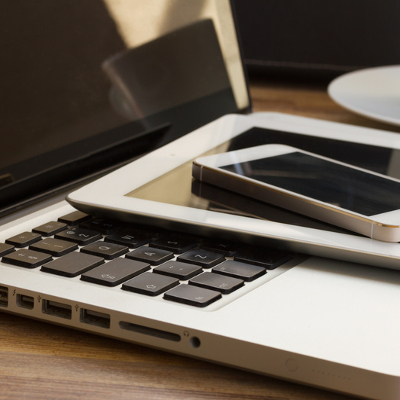
How many of your employees have a smartphone? The answer is probably most (if not all) of them. In the United States alone, nearly two-thirds of adults own a smartphone, and many of them depend on the device to do much of their personal computing. As a result, many workers, even if they are instructed not to, will use their devices while at your office. This is why many companies have put in place a comprehensive Bring Your Own Device (BYOD) strategy.

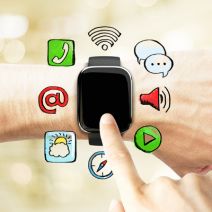
Wearable technology isn’t a new concept, but lately it’s been exploding in popularity. People love the fact that they can use their watch to perform various features that a smartphone can accomplish, and they enjoy how their workouts can be monitored by various health sensory-type devices. However, is this obsession with wearable technology going to amount to anything, or will it be a notorious flop?
What’s your reaction to your mobile device beeping at you? If you’re the kind of person that drops everything to see what it says, then you’re probably way more distracted at work than you should be. It’s a bad habit to look at your phone every minute or two, but with hard work, habits can be broken. Here are three actions you can take to minimize workplace distractions so you can be more productive.
Today’s workplace productivity has reached a peak, but thanks to this enhanced amount of work, the office environment can often feel hectic and stressful. This usually leads to workers skipping breaks just so that they don’t fall behind. While this maintains the semblance of productivity, it can often lead to a significant decrease in creativity and physical health.
You and your staff require certain software applications to get work done, whether it be your line of business app, your accounting software, or even Microsoft Office. This brings up a crucial question: do you know where all pieces of software you require came from, and are your licenses valid and up to date?
Can you imagine how much easier it would be to manage your IT problems if you had a dedicated support team who you could always count on to receive calls and answer any questions your team has? This would technically qualify as an internal help desk, and they could potentially save you a ton of money and time in the long run. Why? Because your team wouldn’t have to waste time digging through complicated systems to find answers to their dilemmas.
“Do you think this is a game?” In the past, a boss may have used this line to criticize an employee for not taking their job seriously. However, in today’s more creative work environments, many companies are using game mechanics to achieve their goals. This business strategy is called gamification, and it’s the most fun way to get work done.
There are a lot of ways to boost your productivity in the workplace, but sometimes it can be as simple as not working. According to a study by Julia Gifford of Draugiem Group, it’s not about what workers do to get ahead of the curve, but what they don’t do that sets them apart from others around them.
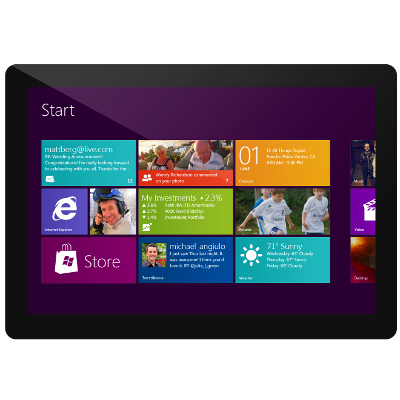
Smartphones and tablets are the new norm. Most professionals have begun to utilize mobile devices to accomplish tasks when they are away from their work PC. Not to say that these devices offer all that much in the way of productivity. Sure, there are plenty of software titles either ported over from the PC or developed directly for the mobile environment, but sometimes these titles don’t offer the functionality, or they take up too many of the device’s resources to be of much use. With these variables to consider, manufacturers are searching for the best way to deliver devices with enhanced productivity capabilities, right out of the box. One of these manufacturers is Microsoft.
The key to a productive workday may be the tomato. Not in the sense that eating more tomatoes will make you smarter; instead, we’re talking about the classic tomato-shaped cooking timer that counts down from 25 minutes. It turns out that 25-minute-tomato increments could be the most effective way to accomplish your work.
When it comes to service jobs, there are two kinds: Those where the work is highly visible, and those where work gets accomplished behind the scenes. Each service is valued and needed, yet, one may receive more attention and recognition than the other. Managed IT service falls under the latter category, and we’re totally okay with that.
The open office is convenient for a number of reasons. It is far more space-efficient, and it makes collaboration easier among coworkers. However, did you know that the open office can make people worse at their jobs? In 2002, a study in the journal Environment and Behavior tracked employees as they were moved from a private office to the open office, and the results were less than desirable.
Every business owner knows what’s expected of them when it comes time to onboard a new hire. When the training videos are all watched and the new employee is lined up to kick butt and take names, is that when your job as overseer ends, or is there more that you can do to get more productivity out of your staff?
When it comes down to it, your employees are being paid for their time spent at work. Business operates on the principle of “time is money,” which means that every minute wasted cuts into your bottom line. If you’re looking to squeeze the most productivity out of your employees, then there are technologies available that can take back those precious minutes.
Mobile is all the rage nowadays. Industry giants such as Microsoft and Apple claim to have mobile devices that make the PC obsolete. It makes for great marketing, but do mobile devices have what it takes to keep employees productive inside and outside of the workplace? The statistics say no, but the gap is closing. Here are three mobile myths all CIOs should consider.
We’re all aware of how the proliferation of mobile devices is changing the workplace, but let’s take an objective look at this trend. Are mobile devices changing the workplace for the better? Are employees actually using their personal devices to get more work done? Or, is the BYOD trend a bunch of hype and nothing’s really changed? Let’s find out.
A business owner knows better than anyone how difficult it can be to manage their time and get the most out of their workday. However, you can use your morning and afternoon commutes to eliminate certain mundane tasks from your day-to-day schedule. By using this time to your advantage, you can reduce the stress you’re put under on a daily basis and free your schedule for more important tasks.
How are you coming on those New Year’s resolutions? If you’re already putting off doing them due to a case of getting bit by the procrastination bug, then you might be feeling down on yourself and thinking about giving up. But, did you know that doing something a little later might actually be a better way to get something done?
When it comes to the workplace, people want more than they used to. It used to be all about the salary and decent working conditions, but that has significantly changed in the past decade. In order to attract the best talent and stay ahead of the competition, you want to provide optimal working conditions when possible. Thankfully, by providing your team with a few accommodations, it doesn’t have to be difficult for everyone to enjoy their workday.
Since the dawn of the Internet, email has been that thing you love to hate. Email was meant to be a dynamic tool capable of replacing the odd fax machine and postal mail. Today, some workers dread even opening their inbox due to how much time they have to invest in it. Some might even wonder if there’s a better way to go about their work day.
Have you ever found yourself neck deep in a major business project and nothing seemed to be working? In times like these you may have thrown up your hands and said, “There must be a better way to do this!” Often times there is, and it’s in the form of new technology. Is your current IT provider familiar with the latest technologies that can make operations easier for your business?
Black Friday is widely regarded as the most competitive day for American retailers, and for consumers standing in line to take advantage of rock-bottom prices, the general consensus is that all of this competition is great for their wallets. In the same way, your business can benefit from a healthy dose of friendly competition.
Every office worker knows that downtime experienced from a technology issue can totally derail the day’s productivity. However, one thing that office managers might not be aware of is how, in a downtime event, it’s possible to divert a worker’s energy so that productivity still happens on some level, which helps take the sting out of downtime.
It’s important to keep your communications plans organized, but it’s especially important for your IT department to keep in touch with other parts of your business. If a fatal problem shows its face, you want to make sure that they are there to fix it. In order to prevent these situations, plan out your IT communications strategy in detail, and stick to it.
It doesn’t matter how extraordinary your business skills are; eventually, your body begins to catch up with you and you’re hit with a storm of illness that no painkillers or medication can quell. In this case, it’s often better to quarantine yourself to your home and take it easy for the day. But, that doesn’t mean that you can’t be productive at the same time.
One would assume that being an officer in the military would require the ferociousness of a warrior and the mental fortitude to make split-second life-saving decisions on the battlefield. Surprisingly, in today’s modern military, there’s one skill that’s valued above the ability to fight: Microsoft PowerPoint proficiency.
There is consistent conversation about the security of your data and the best ways to minimize the risk of losing it. At some point in this conversation the topic of mobile devices comes up. The general consensus is that the more places your staff can access their work, the more they can get done, and how could it not? With smartphones becoming as predominant as coffee mugs, and the nature of mobile devices that have the capability of hopping from one network to the next, how can you ignore that the devices themselves are a data-loss risk?
Everyone is well aware of how mobile technology is changing everything. Therefore, it's a matter of time before we see new tech drastically change the office layout. This is what's happening in forward-thinking offices with a trend called "hoteling." If your business enjoys mobile technology and you want to get the most collaboration out of your staff, then hoteling is right for you.
Automation is an increasingly sought-after convenience in the workplace, especially when it comes to repetitive tasks. Some professionals foresee a world which has fully automated assembly lines, but most are only concerned about what this can do for their assets. Instead of freeing up menial positions for others to take on more meaningful existences, could automation destroy these jobs completely?
When life throws you for a loop and you are contracted with much more work than you are used to, perhaps it is time to upgrade your workstation. One of the simplest ways you can do this is by hooking up multiple monitors. With too many windows open, your desktop becomes cluttered and your workflow impeded. Stop getting lost in your work and hook up an extra screen today!
You may think that you're awesome at multitasking, but according to cognitive psychologist Art Markman, "You are your own worst judge of how good a multitasker you are." This is because the same areas of your brain that monitor performance are the same areas activated by multitasking, which means that it's difficult to accurately evaluate your own performance.
We've all wasted time surfing the Internet, but as we know, there are unfortunately extremes to every action. Wasting time by mindlessly browsing Internet pages can certainly become a problem when it claims huge portions of your time at work, killing your productivity. Can you not seem to get away from surfing the Internet?
Have you been frustrated with your employees lately? Maybe they aren't getting projects done on time, or aren't producing at a very high quality. Have you ever considered that you have substantial control over their job performance? People only work if they are motivated to do so. Here are six ways to motivate your employees.
First introduced by Xerox back in the 1964, the fax machine, or Long Distance Xerography as it was called then, was the hottest office productivity tool of its day. This new technology saved workers from having to send documents via mail, which dramatically improved office communications. Nearly fifty years later, and the fax machine has become a hindrance to office productivity.
Wouldn't you like to be more productive at work? For most of us, increased productivity means making more money, spending more time on what matters most (family, friends, etc.), and simply just feeling better. Many of us seek to increase productivity with elaborate and complicated methods. Here are five ways to increase your productivity, starting today.
There are currently over 900,000 mobile apps available for download. There are apps available for virtually any everyday function; entertainment, education, news, weather, health, and the list goes on. Your mobile device, armed with the right apps, can be your greatest productivity tools. Here are three essential mobile apps that can enhance your business productivity.