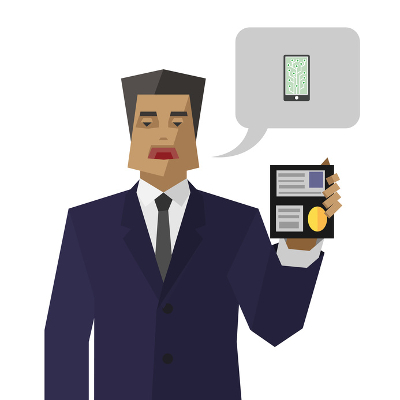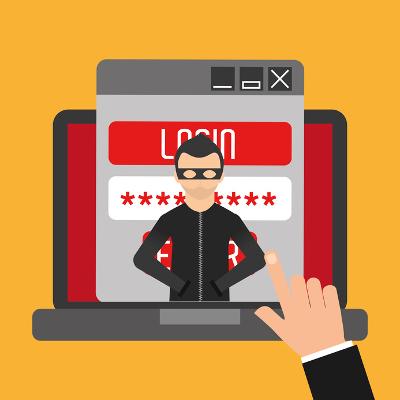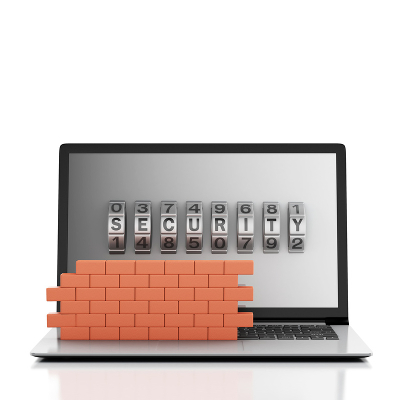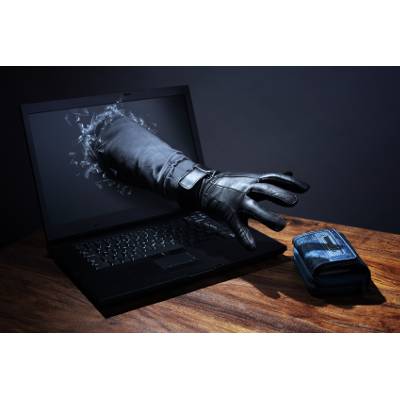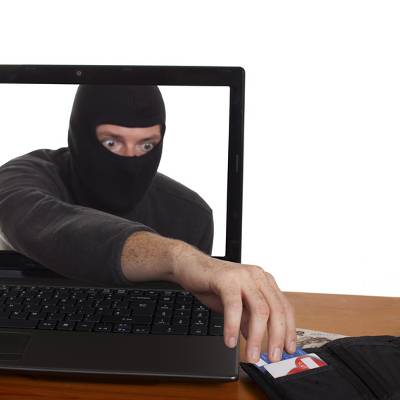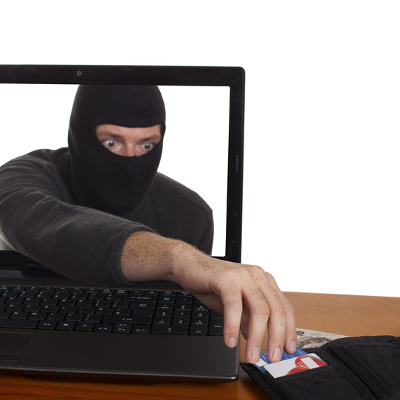





When over 16 million people are scammed out of over $16 billion, there’s likely some type of problem that needs to be addressed. Famous con artist, Frank Abagnale, the man immortalized in Steven Spielberg’s Catch Me If You Can, a movie that was based off his own memoir, has been working as a security consultant with the Federal Bureau of Investigation for over 45 years. In that time, he has become an expert in cybersecurity and fraud prevention.
Tech Minutes
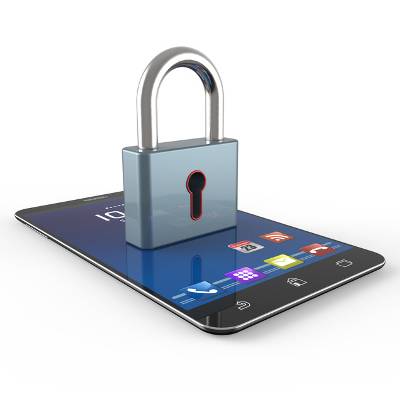
Smartphones are the predominant mode of communication, as well as now being the devices most used to access the Internet. With so much depending on the modern smartphone, it has become one of the largest, and most competitive, markets of any consumer item. As a result, manufacturers are building devices with software that is able to encrypt the phone against unauthorized access.
Someday, you’re going to encounter a situation where you absolutely need Wi-Fi and the only option will be a public connection. This becomes rather problematic, as a public Wi-Fi connection is far from secure for business purposes. A method to maximize productivity without compromising security is needed for every business that has employees working out of the office, but what’s the best way to do it?
January 28th marks Data Privacy Day, a day intended to raise awareness of the importance of data privacy and educate users and business owners of its benefits. Spearheaded by the National Cyber Security Alliance, there are plenty of lessons the NCSA has to share with businesses as this day puts their, and their clients’, privacy in the spotlight.
Spyware, like other malware, is a problem for any organization. Since your business generates, collects, and uses considerable amounts of data, there are plenty of organizations that want to get their hands on it. You spend so much time and money protecting your data against threats on the Internet, but what if the spyware were to just come standard on the computer you just bought?
2FA, or two-factor authentication, is a simple and effective means of boosting your cybersecurity. Despite this, a study performed by Duo Labs suggests that 2FA has not been adopted as much as one might expect, or as much as it should be.
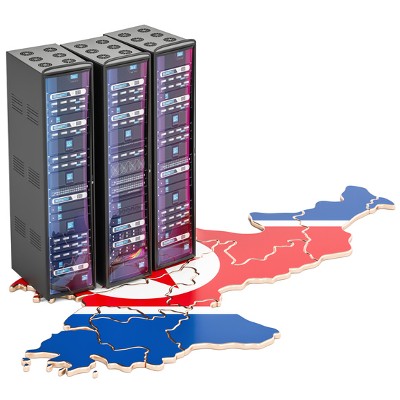
In a statement given by Tom Bossert, the homeland security adviser to the White House, blame for the WannaCry attacks leveraged from May 12th to the 15th in 2017 was attributed to the Democratic People’s Republic of Korea. This assertion is in line with the conclusions that New Zealand, Australia, Canada, and Japan have come to, according to Bossert.
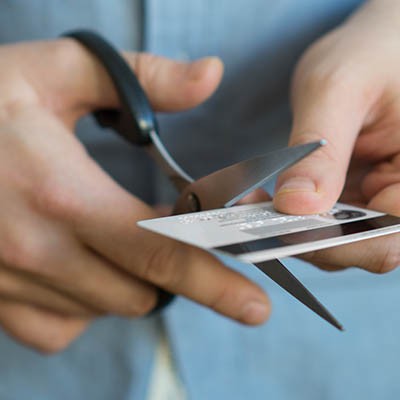
While many might see having a credit card stolen as identity theft, this is an oversimplification that can prove dangerous. While credit card theft can be an element of identity theft, equating the two means that other forms of identity theft are overlooked. In today’s blog, we’ll go over why identity theft and credit card theft aren’t exactly the same thing, and what you can do to help keep your business safe from damage.
Google is taking steps to protect the data of a small group of its users who run the highest risk of experiencing a data breach or hack. This new service, the Advance Protection Program, shows promise in protecting the information that these select few can access.
There are many organizations in the world that simply can’t have cybercriminals and hackers interfering with their data. One of these organizations, CERN (whose acronym translates to the European Laboratory for Particle Physics) has far too powerful of a computer grid to allow hackers to access it. To keep it safe, CERN has deployed what may be the future of cybersecurity: artificial intelligence.
Considering that since January 1st of this year, there has been upwards of 10 million personal information records lost or stolen each day, odds are that you, or someone you know, has had their records compromised by a data breach. With such a high incident rate, individuals and businesses that have never received any kind of notification that their records were included in a breach, generally consider themselves lucky and assume that they are not at risk of identity theft or unauthorized account usage. Unfortunately for them, that is not always the case.
Cybercrime is the fastest growing criminal activity in the world. From the largest enterprise to the individual, it can affect anyone, anywhere. To help ensure the cybersecurity of American citizens and their businesses, the Department of Homeland Security (DHS), United States Computer Emergency Readiness Team (CERT), and the Federal Bureau of Investigation (FBI) and other agencies work together every October to raise awareness about the threats people face online through a series of educational events and activities.
In the last few months, there have been several high-profile data security breaches that resulted in the theft of millions upon millions of non-public information records. Though much of the focus in the aftermath of the breaches was on personal identity theft and prevention, it’s important to keep in mind that not all the stolen data records target individuals. Business entities are also at risk. Vendors and partners that you do business with regularly will probably have record of your company’s non-public information, payment information, or tax ID number.
When a hacker tries to infiltrate your network, they are doing so with a purpose in mind. Usually they are looking for specific information, like account credentials, personal information, or files that can be used to blackmail victims. Regardless, we’ll go over what a hacker can do with the information that they collect from you, and how you can best protect it from them.
Everyone has a right to privacy. However, with the popularity of social networks, the Internet is a very hard place to remain a private individual. Digital communication is everywhere. Cybercrime has become a fairly regular event. This week’s tip of the week takes a glance at three websites that you can use to help enforce your right to privacy.
Ransomware is a tricky piece of malware that locks down the precious files located on a victim’s computer, then (in theory) will return access to them when a ransom has been paid. Depending on the files stored on a victim’s computer, they might simply blow it off and not worry too much about losing access to a couple of pictures or videos--but what if this ransomware threatened to expose your web browsing history?
It doesn’t matter if you’re a small business, a large enterprise, or if you're in a rural town, or a larger city. You still have to worry about the security of your data and the integrity of your infrastructure. Thankfully, there are services out there that allow even small businesses to leverage powerful, enterprise-level tools for maximum network security. The most valuable of all is perhaps the Unified Threat Management (UTM) tool.
The term ‘spyware’ has some clearly negative connotations to it, and rightly so. This variety of malicious software can cause no small amount of trouble if left unchecked. What follows is a brief overview of spyware, and what measures you can take to protect yourself and your business from it.
In October of 2016, the Federal Communications Commission designed a set of rules known as the Broadband Consumer Privacy Proposal. These rules had intended to flip the status quo and require Internet service providers (ISPs) to gain their customers’ permission before they harvested their browsing histories to sell to advertisers. This proposal is now moot with the establishment of a new law that passed through Congress and was signed by President Trump in April 2017.
ATMs are, surprisingly enough, not the most secure pieces of technology out there, though there are efforts to improve security by taking advantage of mobile devices. Granted, this won’t be enough to protect against the considerable vulnerabilities in ATMs. In order to maximize security and minimize the amount of damage done by vulnerabilities, the user needs to understand how to protect themselves while using ATMs.
One of the major password managers out there, LastPass, has become the victim of a major vulnerability. Google researchers from the Zero Day Project discovered this, along with other flaws within LastPass.
Most of your business’ technology is a direct result of your need to quickly and securely disseminate information. While there are solutions meant to improve efficiency peppered in there, the vast majority of IT solutions are designed to create, share, or protect information. On today’s Internet there are many threats looking to corrupt or intercept that information. One way your organization can share information more securely is through the use of a Virtual Private Network (VPN).
Hackers have always gone after industries that are profitable, or hold sensitive information that can be lucrative when sold under the table. As such, retailers that accumulate financial credentials are often hit by hacks. The entertainment industry is no different, and hackers continue to grow craftier in their pursuit of wealth and power. Not even Steam, the PC gamer’s most valuable software solution, is safe from the dangers of hacking attacks.
There’s a reason why IT professionals think that the Internet of things is a major security discrepancy. Around 5.5 million new devices are being connected to the Internet every day, and are giving security experts a run for their money. The Internet of Things and its devices could potentially become a security hazard for businesses that aren’t prepared to protect their assets from hacks.
Apple has been a major contributor to advancements in computing over the past few decades. Their iPhone was the first commercially available smartphone, and they continue to innovate with new and exciting consumer technology. However, one of Apple’s most recent decisions might be one of the most important for today’s cyber security world.
While they might seem like glorified toys for adults, drones are fantastic tools that can help people take some breathtaking photos and videos of their local scenery. Unfortunately, as is the case with most good technology, there are people out there who want to use them for nefarious purposes. This leads authorities to a tough question: how do you knock an illegal or dangerous drone out of the sky without harming those down below? The answer is simple: eagles.
Businesses all over the world are taking advantage of two-factor authentication, causing the password’s value to depreciate over time. Passwords aren’t powerful enough to keep users safe from advanced threats. Hackers are finding ways to punch holes in even the most comprehensive security solution, forcing users to focus on improving security through other means.
Firewalls are one of the most common IT security measures on the market today, and for good reason. They act as the first line of defense against any incoming threats, and without them, your organization would have to deal with one data breach after another. Of course, that’s only if you’re taking advantage of a proper firewall; if not, you should seriously consider doing so as soon as possible.
Whenever hackers show themselves, they always spell trouble. Whether it’s stealing credentials or completely taking over someone’s computer, a hacker has a plethora of targets and methods that can be irritating for the average PC user, or business executive. In fact, hackers are so crafty that they can even hack into hospital equipment.
Password security is a common problem that businesses that take their cybersecurity seriously have to deal with on a regular basis. Passwords need to be complex and difficult to guess, but easy to remember at the same time. Unfortunately, these two goals don’t go hand-in-hand, and as such, users often have to sacrifice one for the other. The “passpoem” is a concept born to resolve this issue, though it takes a pretty roundabout path of doing so.
Since you run a business, you know that your business’s network requires a secure firewall in order to keep threats out. In fact, the firewall is the most basic of security protocol that you should be taking advantage of. Knowing what a firewall protects you from, and what it doesn’t protect you from, is an important first step toward improving your data infrastructure’s security, and in turn improving your business’s continuity.
Have you ever wondered what hackers do with all of the data they steal on a regular basis? Sure, they could go public with it like they did with the Ashley Madison and Sony hacks, or they could sell it and make some quick cash. Credentials like passwords, usernames, Social Security numbers, and more, can be sold for top dollar in illegal markets, but how much can your identity go for?
For all of you who have Windows 10, you probably have realized that it is, without a doubt, one of the most refined versions of the Windows operating system released by Microsoft in recent years. In a way, it takes the best aspects of Windows 7, combines them with the metro menu from Windows 8, and adds several great new features that improve the user experience. However, not all is well for Windows 10; many users are concerned with some of Windows 10’s questionable data collection policies.
With so much nasty content just begging to get viewed on the Internet, it’s understandable why a content filter needs to be integrated into your company’s web viewing protocol. Still, it should be understood that your content filter isn’t going to keep all questionable content away from prying eyes. Therefore, the only way you can really know with certainty that your Internet users aren’t doing anything sketchy is to actively monitor their activity, and check for any suspicious websites.
You know the saying “you can never be too careful”? It’s always said by the person who understands the value of proceeding with caution, and understands that all it takes is a moment to lose everything. In some cases, it could be your workplace dignity, but in others, you need to cover your tracks to prevent hackers and other miscreants from performing the unspeakable: messing with your computer while you’re away from it momentarily.
We all know that Windows 10 is the hot new operating system released by Microsoft this past July, with slick new features and (gasp!) the Start menu. We’ve been writing a lot of articles about how great and functional the new operating system is. Keep in mind that Windows 10 is a great operating system, but you should also take note of these four shortcomings when considering whether you should immediately upgrade or not.
Agent Chrome is a pretty well-known guy in Google City. In fact, you could say he was the top of his class at Browser University, and everybody who is anybody knows who he is. When on the job, Agent Chrome sometimes needs to lay low and avoid the prying eyes of the masses around him. And this particular operation, rightfully dubbed “Incognito,” is one such occasion.
Since the dawn of the computing age, hackers have taken advantage of all sorts of tactics in order to crack systems and ruin lives. With the Internet of Things bringing connected devices from all over the place into the mix, there are more opportunities than ever to take advantage of unsuspecting users. In fact, even car computers are capable of being hacked.
In this day and age, a password isn’t enough to keep your accounts secure from attempted hacks. Passwords can be cracked as easily as anything. A lot of businesses have moved to two-factor authentication in order to preserve their data. There are several ways of using this for your business, but a new startup called BioCatch is developing an authentication procedure which looks at your mouse activity.
Normally in cybersecurity, we hear about hacking attacks and immediately sympathize with the victim. It’s usually an individual or a business that suffers the most; yet, a recent trend is showing that hackers are lashing out at one another in response to certain threats. In response to a hack from the cyberespionage group Naikon, another group, Hellsing, retaliated with their own attack.
It seems like we can’t go on the Internet without reading about some sort of data breach. Sometimes they’re caused by poor security measures, like lack of data encryption or two-factor authentication; other times, it’s because of lackluster password security. Despite the antiquity of the username and password, they’re staples in the modern office. Thus, it’s important that they’re as secure as possible at all times.
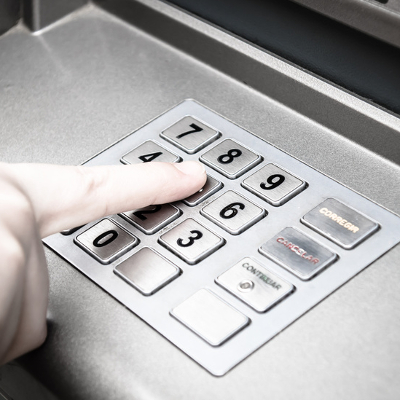
How much thought have you put into selecting your debit card PIN? If you’ve not put any thought into your PIN, then it’s likely the case that you’ve picked a number that’s easy to remember or even one that’s associated with something personal. Fact: Taking time to pick random and hard-to-remember numbers greatly improves PIN security.
Changing your password is a pain. After you’ve gone several months with the same one, it can be difficult to remember your new password. Despite this, it’s always recommended that you change your passwords often. Unfortunately, when you change all of your passwords often, it’s even easier to forget them. Instead of using a post-it note on your monitor, you should instead try using a password manager.
We always talk about protecting your computers and servers from outside threats, but what about protecting your smartphones? There isn’t much difference between a smartphone and a computer. They both function in very similar ways with access to a variety of apps, social media, and browsers. Your smartphone could hold much more valuable data than just contacts or text messages.
Today’s headlines are dominated by stories of major companies getting hacked, making the average computer user feel uneasy about their security. If you’re solely dependent on a measly password to protect you from hackers, then you’ve got good reason to worry. Adding a second layer of verification is an easy way to protect your information. Here’s how to set up 2-Step Verification for your Google account.
Humans are always trying to improve security protocols that can protect against increasingly advanced online threats. Unfortunately, the threats only grow stronger in response, and the war against malicious online activity rages on. Biometrics are security measures that are growing in popularity, but are expensive and difficult to integrate. Now, the US military is funding a campaign to make it more readily available to end users.
We see a lot of password-bashing these days, and some people have lost faith in them as a security measure. But, unfortunately, a lot of the blame for this lies in human memory. We just don’t pick passwords that are strong enough. In fact, a mind-numbing one in 20 people still use “password” to keep their information safe.
The busy business owner keeps sensitive work-related information stored on their mobile device. If he lost the device, it could have disastrous results, especially if the device were to fall into the hands of an experienced hacker or competitor. Just in case, it’s a best practice to always lock your mobile devices. How do you choose the Android lock feature which is right for your unique needs?
People dial 911 when they’re in some sort of trouble or in the event of an emergency. If not for the hotline, who knows how many lives could be lost daily. Sometimes, however, help doesn’t come, even when dispatchers have received the call and responded. This generally isn’t the fault of the dispatchers, but rather the criminals who have undermined the rescue efforts thanks to some unorthodox hacking.
When a virus infects your computer, you may not know about it until it’s too late. Like a biological virus, the damage it does to your system can be minimized if it’s caught early on. Stopping a computer virus early is possible if you know what symptoms to look for. Is your PC infected? Here are four signs you’ve been hacked.
In the past, we’ve been known to go into detail about threats, vulnerabilities, and how to protect your business while online. Distributed denial of service (DDoS) attacks aren’t new in the technology world, but notorious hacking group Lizard Squad has somehow managed to take out Internet service for much of Sweden with a faulty DDoS attack; an unprecedented feat, especially for a ragtag group of irate gamers.
The holiday shopping season is upon us and more people are choosing to shop from the comforts of their home PC or mobile device rather than fight the crowds. Shopping online is super convenient, but it’s not without the risk of identity theft. The best way to protect your digital shopping cart from hackers is to know how to safely shop online. We’ll show you how.
This subject isn’t very interesting outside of hospital administrators… or for hospital administrators, but there’s no denying that healthcare is one of the most important industries in our society today; and one that is having a technology overhaul at present. The influx of cheaper and more powerful technology is surely going to be a driving force for healthcare in the 21st century. Under the Health Information Technology for Economic and Clinical Health Act (HITECH), the United States government has followed the lead of other Western nations in forcing entities to upgrade their healthcare practice’s information technology for the betterment of patients, insurers, and health care providers.
With all the attention given today to scams over the Internet, it’s easy to neglect classic scams like con artists using the phone to exploit people. You may think that you’re safe because you have a smartphone with caller ID, but thanks to new spoofing tactics, reliable defenses like caller ID can no longer be depended upon to safeguard you from telemarketer scum.
The world of online currency is a strange, bizarre realm. While it’s designed for online transactions, it has gone from the somewhat useful (Bitcoin) to just plain silly (Dogecoin). However, there’s now an anonymous cryptocurrency available for use called Darkcoin, which attempts to make online transactions more difficult to trace.
In today's connected home, Internet security needs to extend beyond the PC. Any device that's connected to the Internet needs to be password protected, secured with a firewall, and utilize available security apps. These precautions should be taken even with seemingly harmless devices like baby monitors. A family from Ohio recently learned this lesson the hard way.
When you were a kid, did you ever ask your parents for a cool new toy only to have your request denied because you were in the habit of breaking everything? Your parents would point out your destructive habit and tell you, "This is why we can't have nice things." As an adult, the coolest toy is the Internet and hackers want to break it.

There's nothing quite like the feeling of getting scammed, and the scammers of today love using technology to rip you off and leave you with that sinking scammy feeling. The best way to avoid scams is to be proactive and know what to look for. New to your list of scams to be on the look out for are fake apps.
2014 has been a year of technological advancement, but with any kind of advances such as these, there will always be those who want to steal the work of others. According to the Identity Theft Resource Center and , as of March this year, there have been 204 instances of data breaches this year alone. These affected companies are perfect examples of why web protection is important. Directive can provide you with this protection and peace of mind. Here are a few of the more unbelievable breaches, most of which could have been easily avoided.
On April 7th, a new bug on the Internet was discovered that's putting millions of users' personal data at risk. Given the name "Heartbleed bug," it's capable of allowing infiltrators to collect information while you are securely browsing a SSL/TLS website. Since SSL/TLS is so widely used, it's very probably that your personal data is at risk.
You're likely familiar with the various ways that hackers can steal your identity, but you may not be familiar with how hackers anonymously buy and sell people's personal information to interested parties. This is done through online ID theft services and a December hearing before the U.S. Senate highlights how one service was selling personal records on more than 200 million Americans!
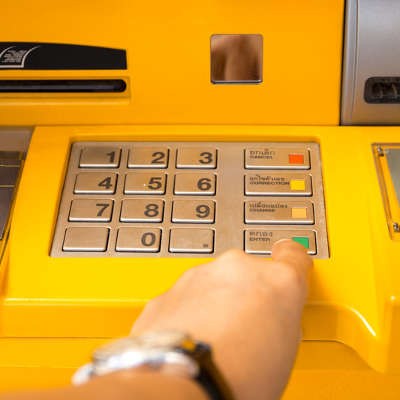
We live in a time where information technology has touched every facet of life. It would be a fair bet to assume that, at this point, it is more commonplace than a trend. We are inundated with Internet-connected computer systems in every aspect of life. We use automated tellers to do our banking, most major retailers have automated checkouts to supplement the work staff they have in place, and even your Grandma uses Gmail. With this technology saturated into the culture, there are many pragmatic uses that are just now being discovered and implemented. Nowhere is this more true than in the health care industry.
Tech savvy individuals and businesses alike have moved away from traditional Internet browsers such as Microsoft's Internet Explorer and Apple's Safari to Google's Chrome browser. After all, many people enjoy having a simplistic, yet powerful web browser that easily integrates it's Google Docs tools and Gmail email service. However, users may want to think twice about using the browser now that a new YouTube video has surfaced entitled "Chrome Bug Lets Sites Listen to Your Conversations." In the video, user Tal Ater walks through a very dangerous exploit that allows anyone to access your microphone through Google's voice recognition software embedded in Chrome.
You may think that the standard security policies that come with your email account can protect you from hackers. It's an easy mistake to make, but the truth of the matter is that, if a hacker really wants access to an account, then they will employ every tactic possible to get it, which can make standard password security measures woefully inadequate.
With the NSA and Edward Snowden making headlines around the world, it's enough to make any user of the Internet think twice about online security and wonder if they are being monitored or not. Google Search has been a popular hub for third party monitoring, which makes Internet users ask, "Is there a more secure search engine available?" There is with DuckDuckGo.
The value of your email account cannot be understated. You may think less of your email inbox because there are so many other ways to digitally communicate, but to a hacker, your email is a goldmine of valuable information. You may use your email less than ever before, but that doesn't mean you can neglect email security.
On December 3, 2013, security company Trustwave discovered over two million stolen user passwords for popular online services like Facebook, LinkedIn, Google, Twitter, Yahoo, and 93,000 other websites. There's a high probability that you use one of the services affected by the hack. Is your personal information compromised?
The world you do business in is a pretty dangerous and messed up place, and things always seem to be getting worse. Thankfully, security technology is improving, which helps offset the risks of living in a perilous world. You can take advantage of these security improvements by installing intelligent surveillance cameras for your business.
Recently, Adobe sent out e-mails and letters to users notifying everyone of a security breach. "The attackers may have obtained access to your Adobe ID and encrypted password." The obvious question here is, "How do I protect myself and my business from such attacks?" The unfortunate answer is you can't, but you can marginalize the impact by taking some common sense measures.
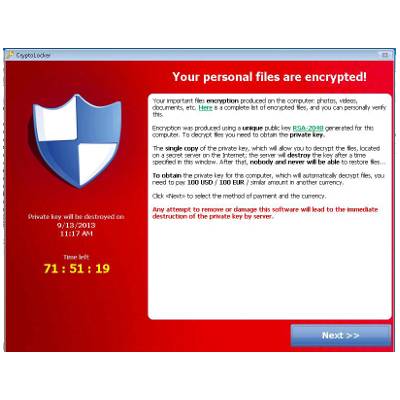
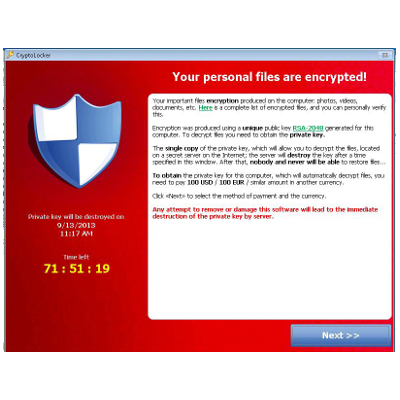
On September 10th, 2013, a new ransomware known as Trojan:Win32/Crilock.A began attacking computers all over the Internet, locking users out of their PCs and putting sensitive information at risk. If your computer gets it, then you're in for a world of hurt. Here are the details on what this virus does and what you can do to prevent it.
If you use a smartphone to take personal pictures and post them to the Internet, then you may unknowingly be posting more about yourself than you want to, like where and when the picture was taken. This information in the hands of the wrong person can lead to dangerous consequences, like theft of your property, your identity, or even kidnapping.
!--
How to Anonymously Browse the Internet
-->
With an increase in Distributed Denial of Service (DDOS) attacks and packet flooding volume, its evident that hackers are using compromised web servers for their malicious activities. By infecting servers, these dastardly infiltrators create a Zombie command-and-control center to direct their malicious activities from.
If you have been following international news headlines with stories like WikiLeaks spreading confidential documents, and recent revelations about a US surveillance scandal, it kind of feels like we are in the middle of Spy vs. Spy. As nations look for stronger security solutions to protect themselves, Russia is looking to older technology to keep their communications safe.
Many businesses are discovering how great it is for employees to use their personal devices to accomplish work. BYOD has been proven to improve productivity and worker satisfaction; but like so many great things, these BYOD benefits are in danger of being shut down as employers are becoming concerned about being sued. How can you still benefit from BYOD while being protected from lawsuits?
We often view hackers as creeps who are bent on spreading viruses to disrupt everyone's lives, perhaps for the sake of anarchy or some extreme ideology. But when it comes down to it, most hackers are in it for the money and are just trying to make a quick buck. In fact, hacking groups may even be more organized than your business!
With revelations coming to light on how governments are monitoring citizen's Internet usage, many people are concerned about their online privacy. Most of us are so dependent upon technology that it's almost impossible to totally disconnect off the grid, yet there are a few tricks you can use to browse the Web with anonymity.
Driving a powerful car can be an exhilarating experience, but if you have no idea what you're doing, it can be dangerous. This is why governments require drivers to pass a safety class before they can speed down the road encased in steel and glass. The Internet is also a powerful tool that can be exciting, beneficial, and dangerous.
You can't log onto your online account if you're dead, and unless you have your password clearly marked on a sticky note, then nobody else will be able to either. While the Internet is a great distraction to keep us from pondering our mortality, the issue of post-mortem social media forces us to face death by preparing a digital will.
As smartphone ownership continues to rise (175 million cellphones sold last year in the US), so too does smartphone theft. Take San Francisco, CA as an example, half of all robberies reported last year were phone-related. To help curb this trend, crime fighting agencies are seeking help from phone manufacturers in developing a smartphone kill switch.
You know that having a strong firewall is a key component to having strong network security, but do you how firewalls work? Firewalls take their name from the protective barriers that keep buildings and engines safe from fire. While it’s unlikely that your computer is in danger of incineration, a firewall does protect it from cyber-threats; here’s how!
With all the attention that hackers receive, you would think that they are solely responsible for every network security breach, but the truth of the matter is that most damages to company networks are due to negligence. Here are the four most common IT security oversights that can lead to major damages to your network.
Using strong passwords is a critical part of keeping your network protected. For years we have been preaching the need to use complex passwords, along with the need to use different passwords for different accounts. As the technology of crackers (not the salted kind) improves, the need to be diligent about password security intensifies.

Facebook makes it easy to connect with everyone; unfortunately, this includes people that you may not want to connect with. Whether it is the person you once had an awkward date with, or a hacker looking to hijack your profile, you can make sure that only the people who you want to see your post will be able to by adjusting your security settings.
Your company's information on your network is labeled as "sensitive" for a reason. The files on your servers contain the secrets to your success, along with financial records about you, your employees, and your customers. When trusting sensitive data to a third party, make sure that it is someone you trust.
Even if you are using the best antivirus software available, sensitive company data can still be compromised by users falling victim to phishing scams. Phishing is a tactic where scammers trick users into giving out their personal information, usually through deceptive spam e-mails. Looking to fry bigger fish, scammers are trying their luck at whaling.