Business security is a common issue for many small organizations with limited budgets, but it doesn’t have to be an issue. We’re here to help you master the seemingly endless threats and security problems that major vulnerabilities present to the small business environment, and it all starts out by understanding how even basic security solutions protect your organization.
Tech Minutes
How big a role does security play in your business’s network management? If it takes a secondary role more in favor of operations, you might want to reconsider why this is the case. After all, your organization’s critical assets--namely sensitive data like employee information, payment credentials, and usernames or passwords--all hold immense risk for exploitation from hackers. Therefore, even if you don’t fear a potential attack, you should at least consider it as a possibility.
Every time you pick up a personal computer from a vendor, chances are that it will have an extremely basic firewall pre-installed. These consumer-grade firewalls leave much to be desired, especially in the business environment. You’ll want to make sure that your organization is equipped with enterprise-level solutions designed to protect on both a fundamental level and an advanced level. To do this, you want to take advantage of a Unified Threat Management solution.
So you keep hearing about the need for a firewall, but maybe you’re not exactly sure what it is or even what it does. As a business owner, you don’t need to fully grasp the complexities of network security in order to effectively manage your company. Although, it is beneficial for every business owner to understand the basics of what a firewall is, along with a working knowledge of how it protects an organization’s IT infrastructure.
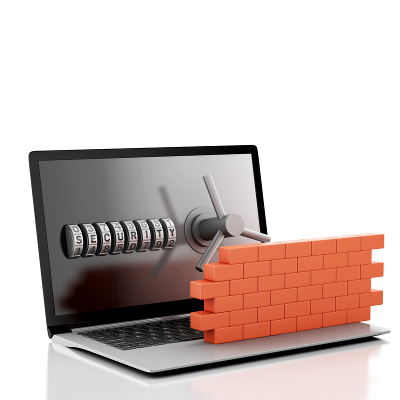
What a Firewall DoesIn its simplest terms, a firewall is software that analyzes data flowing in and out of your network. Before allowing the data through, the firewall makes sure that it doesn’t pose a threat to your system. If the data in question meets the criteria of a threat, it doesn’t get through--similar to how a roadway checkpoint works. Plus, in order to safeguard your system from the latest threats, firewall software routinely updates itself via the Internet with the latest threat definitions.
A firewall is most commonly used to analyze threats from Internet traffic, but it’s also useful for discovering threats from the traffic of your in-house network. They are also helpful for validating connection and data packets, checking for legitimate application data, and performing cavity searches on all messages going to and from your network.
You also need to know that firewalls come in varying strengths. For example, an operating system for a home PC comes pre-installed with a firewall. However, a consumer-grade firewall is woefully inadequate to handle the traffic of a company network. Therefore, businesses need an enterprise-level firewall solution that can adequately safeguard all of its servers and workstations, like what you’ll find with a Unified Threat Management solution. Another advantage of a UTM is that the included firewall is just one of its security tools; spam blocking and content filtering are additional UTM tools that are included in order to provide your business with a comprehensive approach to network security.
What a Firewall Doesn’t Do While it’s crucial for every business to have a firewall, it’s equally important for business owners to have additional security measures in place so they’re not solely reliant on their firewall solution. This means taking additional preventive security measures like backing up data, actively monitoring the system for threats, and applying security patches and updates. For your convenience, these tasks and all of your security needs can be outsourced to Directive.

Firewalls are one of the most common IT security measures on the market today, and for good reason. They act as the first line of defense against any incoming threats, and without them, your organization would have to deal with one data breach after another. Of course, that’s only if you’re taking advantage of a proper firewall; if not, you should seriously consider doing so as soon as possible.
Since you run a business, you know that your business’s network requires a secure firewall in order to keep threats out. In fact, the firewall is the most basic of security protocol that you should be taking advantage of. Knowing what a firewall protects you from, and what it doesn’t protect you from, is an important first step toward improving your data infrastructure’s security, and in turn improving your business’s continuity.
While it might be nice to imagine making $500 a day by working from home, this is the type of thing only really seen in a website’s spam comments. If these annoyances are common, know that you’re not alone. Even the most innocent sites can be stricken with this issue. So, how can you minimize spam comments?
One of the most vital parts of your network security is a firewall. This is generally your first line of defense against the myriad of threats that can be found while online, and are instrumental to comprehensive network security. Despite this common knowledge, some folks might not understand specifically what a firewall does to keep your systems safe.
The topic of online pornography can be rather uncomfortable to discuss, but it’s an issue that business owners need to be aware of; especially considering that 70 percent of all online porn access happens during business hours! Whoa. This statistic has some naughty implications for what your employees may be doing on company time.
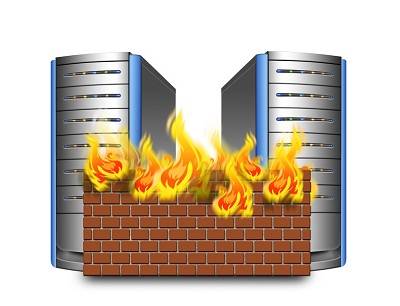
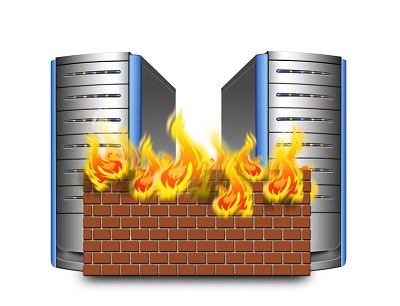
You know that having a strong firewall is a key component to having strong network security, but do you how firewalls work? Firewalls take their name from the protective barriers that keep buildings and engines safe from fire. While it’s unlikely that your computer is in danger of incineration, a firewall does protect it from cyber-threats; here’s how!