We’ve all had those days when motivation eludes us, and they can be extremely frustrating. Fortunately, there are ways that you can rejuvenate your drive in either your personal or professional life. Let’s go over some of these tactics to try and keep burnout at arm’s length.
Tech Minutes
Compared to an enterprise corporation, a small-to-medium-sized business is going to have far fewer resources, especially in terms of its IT. Having said this, an SMB isn’t necessarily without a few quality options. Let’s review the needs that any business needs to have filled, and how they can do so with the right solutions.
There are over two billion active devices currently using Android. Most of them that have been purchased in the past year or so have come with, or have been subsequently updated to, Android 9.0 Pie. With the introduction of their newest mobile OS, Google has ensured that their software powers more mobile phones than any other software in the world. Today, we’ll take a look at some handy tips you can use to get the most out of your Android Pie experience.
At the end of the day, do you shut down your computer or do you put it into sleep mode? Depending on what you need from your device the next day, you might want to consider which option benefits you the most. Here are some of the pros and cons of both approaches so that you can pick which one best suits your situation.
Social media might make it easy to stay connected, but it comes with a lot of negative side-effects--particularly in regard to security for both personal and professional use. If social media isn’t used properly, it could spell trouble for your organization. How can you foster proper social media usage so that your organization doesn’t suffer from poor security practices? It all starts by spreading awareness.
When engaging in business-to-business marketing, your content plays a huge role in your success. Whether you’re creating social media content, blogging, creating articles for your web pages, creating newsletter content, or even working an in-person event, you need to make sure your content is effectively benefitting your marketing.
We’re here to help, so we’ve compiled some key considerations to make as you shape your content marketing strategy through each of the above tactics.
The Internet is notorious for being a minefield of threats, many of which lurk hidden behind innocent-looking links. In order to go about business safely, you need to be able to identify which links you can click; and, which should be skipped.
You don’t need us to tell you that it’s extremely dangerous to hand out information to just anyone that contacts your business. This is important to keep in mind, especially considering how the majority of threats can be sent via email. You’ll likely encounter situations where you need to consider whether or not to click on attachments, as you could potentially put your business at risk.
Email is a solution that needs to be protected, lest you expose important information to any onlookers while messages are in transit. Encryption is one of the key ways you can make sure that your messages are safe, but email hasn’t always used this method to secure messages. In fact, it wasn’t until relatively recently that encryption became a staple of the major email providers.
Your business relies on its data to succeed, which lends itself to the fact that your organization needs to have some sort of security measures put into place to guarantee its safety. 2018 is thought to be the year of ransomware, so it stands to reason that your business should prepare to deal with it. One of the best ways to deal with ransomware is to make sure that your company has a plan to restore data affected by said ransomware.
Passwords are all over the place these days, whether they’re required to access an online account, or access the devices used to open these accounts. While both types of passwords can make for ideal security conditions, this is only the case if the passwords are strong. If your passwords can be guessed by just about anyone, can you really call it a security measure? New insights from SplashData show that passwords aren’t being considered as much as they need to be.
You can never know whether or not that app you just downloaded to your smartphone can expose your data or identity to risk. While Google Play and the iTunes store certainly put efforts into ensuring that users can safely browse their app stores, it’s unlikely that they can find every single malicious app out there before it infects someone’s device. Therefore, you need to consider the following measures to ensure that you don’t put your business at risk by downloading unsecure apps.
January 28th marks Data Privacy Day, a day intended to raise awareness of the importance of data privacy and educate users and business owners of its benefits. Spearheaded by the National Cyber Security Alliance, there are plenty of lessons the NCSA has to share with businesses as this day puts their, and their clients’, privacy in the spotlight.
As a business adopts certain “best practices,” it is important for business leaders to consider why they are adopted, and more importantly, are they really for the best? There are many problems that subscribing to false best practices can produce, and so it becomes important to identify, adjust, and resolve them.
Insider threats contribute to a significant number of data breaches. These cases of data exposure are enabled by a member of your staff, whether they intended to harm your business or simply made an honest mistake. With so much focus directed toward the threats out in the world, sometimes we forget that the biggest dangers can be among our ranks. To make up for this, we’ll discuss a few ways to keep insider threats from doing your business too much harm.
There are good emails, and there are bad emails. You know them when you see them, but can you write an email that’s more likely to be read and acted upon? There are a few key steps to writing them more effectively. For this week’s tip, we’ll walk you through five steps to improving your emails.
Mistakes happen, especially where technology is involved. There are plenty of ways that user error can occur when using a computer--many of which are avoidable through simple preventative measures. For our tip this week, we’ll go over some behaviors to avoid when using a computer.
You’ve used a mouse for years, but do you know of all the neat little tricks that it’s capable of? We’ll show you just how much you can get done with your mouse.
Physical security is more or less what it sounds like: security intended to protect the physical infrastructure that houses your business and your critical data. Many of the pieces of physical security will seem very familiar, even if you didn’t know the right terms for them.
Considering how often hackers target financial credentials like credit card numbers and expiration dates, it’s not surprising that ATMs can provide a wealth of information to them. Hackers are willing to go exceedingly far just to get their hands on these credentials--including physically altering the devices themselves to install skimmers and other technology on them. Unless you know what to look for, it can be difficult to tell if a machine has been tampered with.
Data security, always an important topic, has been made even more urgent by the Equifax data breach and the fact that 143 million users had their personal information stolen after entrusting it (or not) to Equifax. You need to consider what would happen if your business were on the receiving end of a data breach, and prepare to handle this truly unpleasant circumstance.
Each worker within an organization is delegated some sort of responsibility based on their role. Managers are responsible for managing, while human resources keep all workers accountable for their responsibilities. Yet, there are multiple responsibilities designated to all employees who use technology for their everyday duties.
Some organizations want to better understand the process that they use to take backups of their data and restore them in the event of an emergency. This is great, because the value of being able to do so cannot (and should not) be understated. A proper data backup and disaster recovery system could be all that stands between prosperity and failure.
Putting together your workforce is something that requires painstaking attention to detail. You found workers who are willing to work as hard as possible to further your organization’s goals. Yet, you have to remember that even the most perfect employees are still human, and that they can make mistakes and can put the organization’s data at risk. User error is a common problem, and it is one of the most important things to keep in mind while you set up your information systems.
Do you let your employees bring their own devices in for use on your company network or Wi-Fi connection? If so, we’re sure that they love the freedom that you provide for them, but we must warn you of the dangers that this can bring to an otherwise careful business. We’ll discuss some of the benefits, as well as the pitfalls, of allowing your employees to use personal devices in the workplace.
Security is one of the most crucial pain points of all businesses, but sometimes it can be tricky to implement solutions if you’re not sure what you specifically need. Network security isn’t easy, but it doesn’t necessarily have to be hard. If you have difficulty reinforcing a security state of mind in your office, we have good news for you; by keeping these tips in mind, you’ll be able to keep your business more secure than it would be otherwise.
It doesn’t matter where your business is located--chances are you’re susceptible to thunderstorms. Lightning storms are very unforgiving, and they can lead to all sorts of problems for unprepared businesses. We’ll discuss some of the ways that your organization could be affected by a lightning storm, as well as how you can take measures to mitigate these dangers in the future.
Here’s something that you might have noticed about opening Windows applications on your desktop; by default, they will generally open in a smaller window, giving you the ability to customize their size as you see fit. If you want a full size Window, it’s as easy as clicking on the maximize button in the top-right corner, but what if you didn’t want to go through this every time you open the app? There’s a solution for this, and we’ll help you find it.
Just over a third (36 percent) of businesses don’t back up business data at all, and apparently this number isn’t keeping some IT providers up at night (not the case for us). Your businesses’ data is precious, irreplaceable, and extremely expensive to lose. Let’s talk about how delicate and dangerous it is to not have it backed up.
Business owners require ubiquitous access to certain information stored on their organization’s infrastructure. Thus, there’s an immediate need to safeguard this data from any sort of impending destruction. We’ll discuss ways that you can prevent the worst when it seems like your data will fall victim to a loss incident.
Is your business prepared to handle all kind of online threats? A recent study shows that it probably isn’t. According to the think tank Ponemon Institute, four out of five businesses don’t have the infrastructure or security experts they need to spot and prevent incoming cyber attacks from succeeding. This is a significant statistic that can’t be ignored, especially if you want to secure your business.
Additional findings from the study include:
Only about 17 percent of respondents claim that they have any sort of process for gathering intelligence about network threats.38 percent of companies don’t have any method of intelligence gathering at all.Other companies either have one for specific purposes, or have one that’s not spread out throughout their entire organization.Regardless, the point stands that not enough is being done to learn about, and prevent, threats from accessing business infrastructures.
The Ponemon Institute claims that businesses are experiencing, on average, at least one or more external cyber attacks every month, and these breaches are costing the businesses about $3.5 million annually.
Your business’ administration should consider whether or not it can afford to become the target of further data breaches. More often than not, we expect the answer to be “no.” Yet, so many businesses refuse to accept that they could become the target of a data breach.

The advantage of Facebook is also its disadvantage: the fact that you’ve likely got a large variety of people on your friends list. While this works out great for networking, it may mean holding back on posting a personal opinion if it isolates or offends someone you’re friends with. To get around this social dilemma, Facebook allows you to hide your status from one or more friends. Here’s how to do it.

Security is a hot-button issue for all types of businesses, but cyber security is such a complex subject that it’s difficult to jam-pack its many intricacies into one blog article. Sometimes understanding just a few ways to improve your business’s security practices can be a significant benefit for your organization.
Business owners who spend a lot of time on the road, like during a commute or on a business trip, understand how difficult it is to use smartphones while driving. Despite the fact that it’s illegal in many places, some people refuse to put down their phones and concentrate on the task at hand: driving. Doing so puts not only themselves, but everyone else on the road at risk of an accident, which can lead to expensive insurance payments and vehicle maintenance costs.
Most companies have to have a workforce, generally one of considerable size. Unfortunately, the more users you have, the more potential risks you run into. Of course, your workforce doesn’t collectively intend to be a security risk, but the digital world is a complicated place, with threats around every corner and malicious programs just waiting for your employed end-users to slip up. Here are ten such honest slip-ups to watch out for:
When you call tech support, you’re probably going to get the same response every single time: “Have you tried turning it off and on again?” There’s a reason that this happens so often, and it’s because restarting your computer is a great, low-tech way to resolve some basic issues with your system. However, it’s still good to be cautious about more serious issues that a reboot won't fix. We’ll walk you through what a reboot does, and it can be effective at fixing minor issues with your PC.
There are some workdays where distractions are abound and you can’t even remember what you’re supposed to be doing. In trying times like these, you need all the help you can get, just to stay focused and on task. Here are four simple adjustments to your work routine that have been proven to do wonders to increase productivity.
Have you ever been in a situation where you have a friend who wants to use your personal computer for who-knows-what? In cases like this, you would want them to use a guest account, so as not to put your personal files at risk. Here’s how you can set it up in all commonly used Windows operating systems.
Security is a top priority in today’s business environment, especially following high-profile hacks of notable enterprises. Unfortunately, the fact of the matter is that these hacks could have been prevented if both the employees and employers of these organizations followed strict security best practices for their technology. Thankfully, it doesn’t have to be hard to teach your team how to properly use technology.
The addition of the smartphone to every consumer’s repertoire has been great for enhanced productivity and accessibility, but it’s not all bright and sunny for everyone’s favorite mobile device. While productivity might be on the rise, manners seem to be in decline, thanks to people not knowing how to properly use their smartphone in public without annoying everyone around them. Here are four smartphone etiquette tips that every device owner should keep in mind.
One of the most basic functions that the average Windows user should understand is how to get rid of applications and programs that are unnecessary or potentially threatening. Previous versions of Windows made users jump through hoops to get rid of their unwanted apps and programs, but Windows 10 makes it much easier to do so. In fact, there are three easy ways to eliminate your unnecessary apps and programs.
Today, just about everyone has a digital camera in their pockets, which has led to an unprecedented amount of picture taking compared to the days when photos had to be developed. Having more cameras has turned us into a more visual society, but not every amateur photographer understands how to best manage all of their photos, which causes problems.
Sometimes the best thing you can do for yourself is return to the basics. For example, you can know all of the keyboard shortcuts in the world, but that doesn’t help you properly shut down your computer. Here are three tips for every computer user who wants to make sure that they’re using PC best practices.
One sometimes-frustrating aspect about computer networking comes from the always-changing nature of technology. For example, let’s say that you have your network perfectly set up with everything running smoothly, then comes along some newfangled IT trend or mission-critical technology workflow that requires you to change everything. You can’t prevent this from happening, but you can stay on top of the latest IT trends so that you’re not caught off guard.
Most of the time, when it comes to cybersecurity, businesses tend to focus primarily on external threats rather than those that might be lurking in the shadows of their internal operations. Believe it or not, the most dangerous entities out there could very well be working for you, right under your nose.
October is Cyber Security month. We want to bring attention to this very important issue affecting every person and organization connected to the Internet. When discussing cyber security, we often talk about computer viruses and malware, but these threats are only part of the cyber security equation. It’s just as important that you, your staff, and even your family, are mindful to not overshare information online that can compromise your organization’s security and personal identities.
As a business owner, you’re proud of your company’s logo because of everything it represents. Do you love your logo enough to get it tattooed on your body? What about your staff? Would they be willing to make such a permanent commitment to their job? Yes, tattoo marketing is a real thing. What can your business learn from this bold marketing trend?
The Internet can be a dangerous place thanks to the anonymity it provides. Yet, this anonymity is limited, especially if you take part in questionable Internet browsing activities. Take, for instance, the hack of Ashley Madison, a website dedicated to cheating on one’s spouse. This July, a hacker group called the “Impact Team,” infiltrated the site and is now threatening to expose these cheaters.
For many office workers, there seems to be some confusion concerning the privacy of employee-to-employee communications made over a company network. It is okay for an employer to go through an employee’s email or instant messaging history? Many workers may be surprised to learn that an employer is in their legal right to do so.
Paid time off is somewhat of an anomaly to the business owner. They don’t want to provide too little and destroy morale, yet they don’t want to lose capital by providing too much to their employees. It might seem strange to suggest unlimited paid time off, but according to some business owners, it might be a quality solution to this dilemma, with enough care put into its integration.
The key to a productive workday may be the tomato. Not in the sense that eating more tomatoes will make you smarter; instead, we’re talking about the classic tomato-shaped cooking timer that counts down from 25 minutes. It turns out that 25-minute-tomato increments could be the most effective way to accomplish your work.
Have you ever found yourself neck deep in a major business project and nothing seemed to be working? In times like these you may have thrown up your hands and said, “There must be a better way to do this!” Often times there is, and it’s in the form of new technology. Is your current IT provider familiar with the latest technologies that can make operations easier for your business?
Does your office practice proper maintenance and security against the latest threats, like Sandworm and CryptoWall 2.0? You should, or else your business might get a nasty holiday gift in the form of the Schannel vulnerability in Microsoft Office. This particular threat allows a hacker to take over the entire system, making it an exceptionally dangerous vulnerability that you can’t ignore. Thankfully, a patch is available to the general public, so you want to apply it as soon as possible.
A laptop with no power can be a pain, especially when it only lasts a minimal amount of time. Sometimes it feels like you can’t operate at full capacity without leaving your laptop plugged in at all times. Thankfully, you don’t have to suffer from this, and with a little bit of troubleshooting and basic PC maintenance, you can prolong the life of your laptop’s battery significantly.
With all the attention given today to scams over the Internet, it’s easy to neglect classic scams like con artists using the phone to exploit people. You may think that you’re safe because you have a smartphone with caller ID, but thanks to new spoofing tactics, reliable defenses like caller ID can no longer be depended upon to safeguard you from telemarketer scum.
Whether it’s warranted or not, some people are worried about the spread of the Ebola virus. Office employees should also be concerned with the many other cooties that remain on common surfaces. This points to sanitation as a primary issue, especially in public places like your office. Among many other surprising germ-transmitting mediums, like money, cats, and dogs, technology accumulates a lot of ilk which could potentially spread to the entire office… that is, if you’re not careful to nip it in the bud.
Hackers are mysterious. Not much is known about them - until they get caught, at least. But until the divine hammer of justice is brought down upon them, they will continue to stalk the shadows and wait for us to unknowingly hand over our personal information. What they don't want you to know is that they generally act according to a few particular variables, and that it is possible to avoid their pitfalls.
You've just started your own small business, and your head is swimming with ideas that you want to share with the entire world. You create a blog and publish a few articles, but only get a few hits. You sigh, write another entry, and then shut down your computer for the night. This happens for a few days, which turn into weeks, and months, and something doesn't feel right to you. Why aren't you getting any viewers?
Everyone dreads presentations, but for different reasons. Some people are just afraid of public speaking, or they are just overall unorganized. In the end, well designed presentations are essential for your company's success, whether they are given to clients or to your employees. Thankfully, there are ways to minimize the stress that giving a presentation can cause. One of the best ways to prepare a presentation is to use a Microsoft PowerPoint slideshow as an aid.
However, it's very easy to fall into "PowerPoint Purgatory", a place filled with overburdened slideshows that last for hours on end. The amount of professionals who don't use PowerPoint effectively far outweigh those who do. Directive is here to help by providing you with some useful tips to make your presentations both easy for the presenter and for the audience!
Last week, the Heartbleed bug was identified as a weakness in the OpenSSL cryptographic library, potentially leaking two-thirds of the Internet's secure information from any websites utilizing this encryption style. While most major websites such as Google, Yahoo, and Facebook released patches quickly, it does little to actually remediate the problem. Your data could have been leaked over the year-plus that the vulnerability could have been accessed. There is no way to know if it has been compromised.
Not too many years ago comedian Jeff Foxworthy became a star with his trademark "You Might Be a Redneck If..." jokes. Rednecks are an interesting breed that do things backwards because they stubbornly believe that it's the best way, and like all of us, rednecks use technology. Are you a technology redneck? Check out our redneck technology list to find out.
We've reached a point with technology that we're totally dependant upon it to accomplish most mission-critical business tasks. This is great for getting business done efficiently, but being dependent upon technology makes operations virtually impossible when technology fails. This is called downtime, and your business needs to be prepared for every downtime scenario possible.
Before the XXII Olympic Games in Sochi, Russia, there were concerns from several influential entities about the data security at the Olympics. These concerns were reported leading up to the games and on the eve of competition, the NBC Nightly News with Brian Williams ran a story by reporter Richard Engel that intimated that visitors to Sochi were immediately being hacked when they signed into the public WiFi accounts provided to athletes, media, and guests of the games.
There seem to be some commonly unspoken rules about the appropriateness of using certain technology throughout the course of the workday. You may have an IT practices policy in your office, but for some of us, we need to infer proper times, places, and limits of our technology use. Here are some courtesy tips for tech use throughout your day at the office.
You may think that the standard security policies that come with your email account can protect you from hackers. It's an easy mistake to make, but the truth of the matter is that, if a hacker really wants access to an account, then they will employ every tactic possible to get it, which can make standard password security measures woefully inadequate.
You may have realized that marketing and advertising tactics are shifting toward reaching mobile leads. Even superstar companies like Google and Facebook are delegating more marketing dollars to their mobile marketing budgets after a discovery that nearly one-fifth of Google's revenue comes from mobile searching. Here are three ways your company can start up your mobile marketing initiative.
One of the most common ways computer viruses spread is through email. Most of the malware-carrying messages are caught in your account's spam filter, so you don't have to worry about those. It's the malicious emails that make it to your inbox that you need to be mindful of, and phishing emails are by far the most dangerous.
On December 3, 2013, security company Trustwave discovered over two million stolen user passwords for popular online services like Facebook, LinkedIn, Google, Twitter, Yahoo, and 93,000 other websites. There's a high probability that you use one of the services affected by the hack. Is your personal information compromised?
Language is one of the biggest contributors to determining office culture. For example, a workplace where the management motivates with threats will be a completely different environment than an office where encouragement is liberally applied. The allowance or forbiddance of swearing is another major indicator of your company's culture. How does the language in your office reflect your company's values?
Today's business environment is environmentally conscious. Companies that implement green policies and use energy-saving technologies are making a positive impact on the environment. Going green is the responsible thing to do and will also positively impact your business. Here are three ways using green technology can benefit your business.
If your house was on fire and you only had one trip to rush in and rescue one item, what would it be? Most family-minded individuals would choose their photo album because it's irreplaceable. Insurance money can replace most household and personal items, but not photos. It's important to have a backup plan to keep your prized pictures safe from disasters.
As a business owner, your business is your baby. Therefore, it's easy to take it personally when a customer says something negative about your company. It feels kind of like a stranger calling your newborn baby ugly. Don't overreact to negative opinions by overhauling your business model; you can actually use negative customer feedback to your advantage.
There is a common misperception that strong anti-virus software is all you need to cover the security of your network. While anti-virus software is an important component to network security, there's more to it if you want a secure network. You need to also take into account the human factor, which can disable even the strongest software solution.
As a business owner, you are always on the lookout for money saving solutions. Technology offers cost-effective options because it can be used to save money by implementing something new, instead of making cuts. A print server solution is one example of how upgrading your technology can save you money.
The fact that over half of all working adults own a smartphone is changing not only the way we do business, but also how we interact as a species. With the development of smart glasses and watches, we are seeing technology becoming even more intertwined with our bodies, effectively turning people into cyborgs.
Upselling and add-ons are the reason why you go to buy a new smartphone, expecting to pay the too-good-to-be-true sale price, and walk out locked into a contract that costs twice as much as you planned on spending. One add-on that's pushed hard is the device protection plan (smartphone insurance). Is a protection plan worth the expense?
What would you say if we told you that disc error rates have been found to be ten times worse than what the vendor's drive specifications state? They're not lying, they are just predicting their own drive's failure rate. In order to be accurate, you must account for failure rates associated with the disk controller, the cables, the PCI bus, the memory, and the processor as well.
The cool thing about using mobile devices equipped with tools that will allow you to remotely access your company's files from anywhere, is that you now have the freedom to work from literally anywhere. Just be careful not to abuse this freedom. Here are 4 tips to help you work on the go without annoying everybody around you.
Driving a powerful car can be an exhilarating experience, but if you have no idea what you're doing, it can be dangerous. This is why governments require drivers to pass a safety class before they can speed down the road encased in steel and glass. The Internet is also a powerful tool that can be exciting, beneficial, and dangerous.
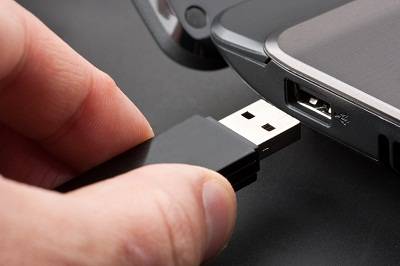
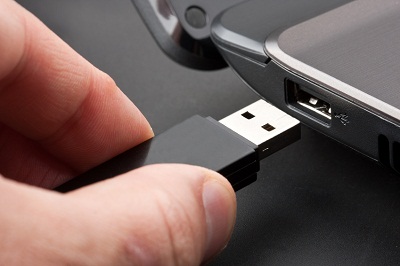
At the end of the workday you may be in a hurry to leave, and as you start tossing your belongings into your bag, you come across your USB drive plugged into your PC. You're now faced with a tough decision; do you take the time to safely remove the device, or do you save 30 seconds and just unplug it?
Voice over Internet Protocol (VoIP) is a communication tool designed for business. VoIP takes advantage of your Internet connection to dramatically reduce your phone bill, sometimes by as much as 80% compared to traditional long distance plans. VoIP also comes with unique features to that will assist your company in customer service and employee training.
The expiration date for Google Reader is set for July 1, 2013. Google’s decision to axe the Reader was not because it was unpopular, but rather, it seems like Google wants to focus their energy into fewer products. This announcement leaves many Google faithful out in the cold, and Feedly has welcomed the Google huddled masses yearning to read free.
There was a time when tape backup was the cheapest and the standard data backup solution for businesses. Over the years, cloud services have become more affordable, and now cloud backup solutions like a BDR are cheaper and give businesses more security features. If you are still backing up with tape, then you may be losing money and even putting your business at risk!
What do hackers look for when choosing a victim? While there are hackers out there that specialize in targeting high-profile companies and executives (a hacking method call whaling), most hackers do a broad sweep of the Internet and choose the easiest targets. If your company has weak network security, then you have a target on your back.
Hopefully, you have a list of personal items that you regularly clean. Obvious belongings that need a good scrubbing are things like bed sheets, dishes, and your bathroom floor. If your computer is not on your cleaning chore list, then it needs to be. A clean computer is a happy computer, and not disgusting like a dirty one.
We are not guaranteed a life without problems. Problems will happen and your plans will be ruined (okay, it's not ALWAYS that bad!). While you can't totally eliminate problems from life, you can greatly reduce them by being proactive. This proactive problem solving approach also works great with technology!
One shocking IT scenario that we regularly encounter is expensive computer hardware plugged into inexpensive power strips. Power strips are adequate if you need a few extra outlets for your kitchen appliances, but if you want to protect the computer hardware that is mission critical to your business, like servers and NAS devices, then you will need a solution that is more powerful.
We understand your desire to upgrade to a new computer, using the latest technology has its advantages. Although, upgrading because your old PC has "worn out" may be an inaccurate assessment. There are many reasons why a computer's performance slows down, but it is doubtful that hardware deterioration is a cause. This is because PC hardware is built to last.
Everybody has a weakness; Superman has Kryptonite, the Wicked Witch of the West had water, and the Death Star had a womprat-sized exhaust port. Character weaknesses make for solid storylines because they drive conflict. Your company has its own set of vulnerabilities that you may not know about, and unlike stories, conflict in business is not a good thing. Here are a few of the lesser known IT weaknesses, and what you can do to resolve them.