Nowadays, social media companies have a lot of power and influence, which is part of the reason that so many of today’s largest businesses have adopted social media as a critical promotional tool. With the average person spending about two hours and 24 minutes on social media and messaging applications per day, this makes social media a clear opportunity for any sized business to embrace. Let’s consider a few ways this can be accomplished for these different businesses.
Tech Minutes
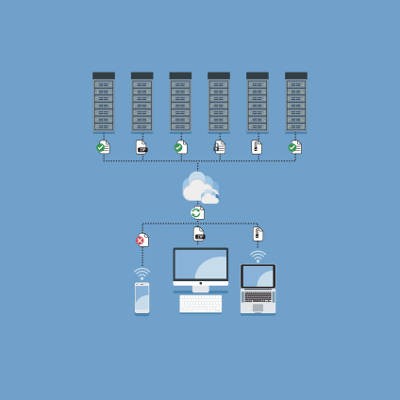
Your business relies on technology to ensure operations proceed smoothly, but the way that it’s managed can have a major impact on the way your company functions. Think about it like this: if you have software solutions hosted on different computers, but not in any centralized location, only those computers will be able to use these solutions--potentially hampering your staff’s ability to be productive. How can you make sure that this doesn’t become a major problem?
Security is a part of business that is constantly changing and evolving. What worked ten years, five years, or even two years ago may not be relevant in today’s security environment. What are some of the major changes that your company can expect to see in the coming years? We’ll walk you through some of the ways that security will be changing in the foreseeable future, and what you can do about it.
This guide was created so that business owners, office managers, and IT departments can provide it as an educational resource to showcase some of the most basic IT security practices that can be implemented in your workplace. We recommend printing this out and handing it out to your staff for maximum results.
The following guide is designed to be used by business owners and office managers as an educational resource to establish some basic IT security best practices in the workplace. Feel free to print it out and hand it out or post it in common areas.
What one organization considers a disaster might be much different than what another business might see as disastrous. Perhaps one sees the loss of a few hours and a few files as something that can be recovered, while another sees every lost moment and each iota of data as a catastrophe. Whichever camp you find yourself in, you need to be able to do two things: first, gauge how serious a given data loss disaster is, and secondly, establish what must be done to get back in action following said disaster.
As 2018 progresses, certain technologies and implementations are becoming more prominently used by businesses. These trends are anticipated to continue, so it only makes sense to embrace these technologies sooner rather than later. Today, we’ll review some of these technologies, why they are expected to grow, and how you can use them to benefit your business operations.
There’s no denying that digital records have quite a few advantages over paper documentation. Benefits of ‘going paperless’ include simplified search capabilities, more efficient storage, heightened security and automated backup capabilities. There are plenty of sources around the Internet that discuss making the switch to paperless documentation, but to keep your business documents safe, it is better to know what you’re getting into.
When tablets first hit the market, the general prediction was that they would eventually replace PCs as the de facto device for computing, However, based on their steadily declining sales, this prediction seems to be a little off base--but, why? A closer examination provides some insight into why tablet sales have dipped.
The variety of malware known as ransomware exploded in popularity in 2016, encrypting victims’ files and demanding cryptocurrency payments to restore the data to the estimated tune of $1 billion. This may seem to suggest that large corporations and companies are the primary targets of these cyber criminals--and for some, they are.
Data backup. It’s something that all businesses need, but not all businesses know how to approach the implementation of it. This is largely due to the tendency to underestimate how disastrous data loss scenarios can be for their business. You know how it goes; it’s impossible, until it happens. Thankfully, you can significantly reduce the damage done by data loss incidents with a little bit of preventative, proactive thought and a comprehensive backup system.
Small and medium-sized businesses have increasingly turned to SaaS, or Software as a Service, to access the tools and resources they need to complete their objectives. Rather than maintaining a solution in-house, SaaS is delivered as a web application or through the cloud. However, not all SaaS solutions deliver the same functionality.
It goes without saying that businesses that don’t want to invest in the latest and greatest software solutions will be denying themselves the opportunity for more productivity and efficiency, but most of all, security will be put on the line. A new study has proven that there is a direct correlation between businesses that run older versions of out-of-date operating systems and web browsers, and organizations that suffer from data breaches.
Smart organizations are always looking for ways to improve how they do business. Digital transformation is a way for businesses to get the most out of their technology by improving workflows and overall efficiency. What does digital transformation look like and how can you implement it in your business?
Businesses today rely heavily on software solutions to function, and so these solutions need to be on-hand whenever and wherever a business opportunity may arise. As a result, mobile solutions have risen in importance, despite the continued need for what a desktop has to offer. To meet both these requirements, we recommend a convertible ultrabook, also known as a 2-in-1 device.
By now you’ve heard about the cloud and all that it can do for businesses, but not all cloud providers can claim equal levels of availability and overall quality as others. Therefore, one of the most critical considerations you have to make when rolling out a cloud service regards who will be managing your company’s cloud computing platform.
When it’s time to replace your technology, it might bring about a sense of panic. How can you replace your technology without breaking your budget, or worse, exposing data on your old technology to potentially threatening actors? Only one thing is for sure; you need to make sure that you have a solid strategy to adhere to when you need to replace your broken-down technology.
A connectivity to the cloud is a great opportunity that your organization can leverage to its advantage, but only if it’s done well. No two businesses will have the same exact configuration when it comes to cloud, as the needs and responsibilities that are accomplished through that cloud solution will change. This week’s tip is dedicated to helping you discover which cloud solution is right for you.
Everyone knows that everything in the break room fridge needs to be replaced after a certain amount of time, but that’s not all that’s at your business that needs regular updates. The solutions you use every day will also need maintenance, for quite a few reasons.
While news sources might lead the layman to believe that most issues facing the typical SMB come from cyber criminals lurking online, the reality is far less dramatic. However, this misconception makes these issues no less serious, and still things to prepare for. Let’s review some of the most common causes of technological issues in the office environment.
New technology paves the way for businesses to leverage their resources in exciting ways. Of course, it’s impossible to take advantage of these benefits if you don’t even know these new technologies exist. Therefore, to help you achieve an edge over your competition, consider how these four new technologies can enhance your business model.
Smart Virtual Personal Assistants (SVPAs)Think of SVPAs as virtual executive assistants. These "predictive intelligence" apps use voice recognition to sort through personal data from email messages, address books, calendars, and task lists in order to anticipate the next logical step and drastically boost daily efficiency. Apple, Google, and Yahoo all recently acquired SVPA apps to integrate into predictive products, from mobile apps to smart speakers, helping users get tasks done even before they would remember to do it otherwise.
Security and Privacy SolutionsA perennial on Webbmedia's list, privacy concerns remain top-of-mind for wired Americans. According to a Pew Internet and Society poll, 91 percent agree that consumers have lost control of their personal data. Adobe, Dropbox, and Snapchat have experienced major password breaches, and Target and Home Depot had credit card data from millions of customers stolen by hackers. To address these system breaches and reduce the widespread public mistrust, companies are looking to spend more resources on password security and encryption management. To assist with this, Twitter released Digits, a two-way authentication service that sends one-time confirmation codes via texts, which will be offered to mobile apps.
Internet of ThingsThanks to the Internet of Things, the world we live in is now surrounded by an unprecedented number of devices with the ability to communicate directly with one another, similar to how the Nike FuelBand connects to the coffee maker. These devices will become a vital part of our day-to-day home, work, travel, and shopping experience. The implications on how IoT devices can enhance the productivity and connectivity of businesses as only limited by imagination and the ways that these vast networks can be secured.
Collaborative SoftwareLooking to make the workday more efficient, a new slew of services combine the best of email, instant messaging, social media, and cloud storage into one platform for collaborating with co-workers. Salesforce's Chatter and Microsoft's Yammer are currently two top players in this space, and with the launch of apps like Facebook for Work, the race to further socialize the office is far from over.
The cloud has seen explosive use of its services and solutions since it was first introduced, and for good reason--it offers benefits that are too useful for a business to pass up. These benefits vary, but all serve a singular purpose: to make the user’s experience easier. Here are some of the ways that the cloud can enhance the daily operations of your business.
Security: Starting off with a critical consideration for any business, the cloud can offer improved data security. Cloud providers base their entire business on their ability to safely store your data, and so they invest heavily into their security protocols.Furthermore, you can greatly reduce the risk of a lost device leading to a security breach, as there is cloud-based software that permits you to wipe the device remotely. This prevents your data from falling into the wrong hands, whether the device is misplaced or stolen.Reliability: Cloud providers stake their reputations on the ability to guarantee service to their clients at all times. While true 100 percent uptime is impossible, a cloud provider will keep the necessary skilled manpower on-hand to resolve any issues as efficiently and quickly as possible.Cloud services also allow you to enjoy the use of resources without worrying about keeping them up-to-date. Most providers will take the liberty of implementing operational and security updates on your behalf. This leaves you free to remain productive, instead of interrupting the workflow to install another patch.Access: A cloud solution allows productivity to have a place outside of the office. If an employee gets sick, or otherwise can’t leave their home, a cloud solution gives them a way to access their work files and maintain their output.The same goes for an employee on the road. If they can establish a secure connection, the cloud will allow them to continue their progress on work-related tasks.Financial Effects: Perhaps the most enticing feature, the cloud also allows for some considerable cost savings upon implementation. Since cloud computing utilizes your provider’s hardware instead of your own, you are no longer responsible for its acquisition and upkeep. As a result, you can otherwise utilize the funds that would have been devoted to your on-site infrastructure and the not-always-considered utility bill.
Directive can help you to enjoy these benefits. Call us at 607.433.2200 to find out more about what cloud-based services we offer.
Let’s say that your team is deep within the throes of productivity on a major project, and even the slightest hiccup will knock off their momentum and derail all progress. What would happen if the software they need to do their job suddenly became unusable, or settings on their workstation get changed without their knowledge? Without a reliable IT department, you might be out of luck.
You may have heard about the Internet of Things in passing, but do you truly understand the nature of these connected devices, and how they will affect your business in the coming years? The Internet of Things is a major trend that needs to be addressed if your business plans on succeeding in the near future.
Every business has to deal with a certain amount of risk from various factors, from hackers, natural disasters, or user error. As a business owner, it’s your responsibility to ensure that your organization can bounce back from a potentially dangerous situation with minimal casualties. We’re here to help you understand the importance of a risk assessment, and what you need to look out for.
Technology is supposed to make things easier, yet it’s a common source of frustration when it doesn’t do what it’s supposed to. As an IT company, we experience technology frustrations all the time, and we wish that many of these frustrations could just be eliminated altogether. In our opinion, here are four technology frustrations that need to go.
When you call tech support, you’re probably going to get the same response every single time: “Have you tried turning it off and on again?” There’s a reason that this happens so often, and it’s because restarting your computer is a great, low-tech way to resolve some basic issues with your system. However, it’s still good to be cautious about more serious issues that a reboot won't fix. We’ll walk you through what a reboot does, and it can be effective at fixing minor issues with your PC.
There comes a time when your business needs to upgrade its technology. Holding out for as long as possible might seem beneficial for your wallet, but in the end, it’s much more cost-effective to replace outdated and inefficient technology before it winds up becoming a liability. In many cases, businesses might not even realize how much their outdated technology is hurting their bottom line. How can you know with certainty that it’s time to upgrade your technology?
The cloud is a technology that’s taking the business world by storm. Most organizations take advantage of some form of the cloud or another, be it for data storage, email hosting, or application deployment. Either way, it’s clear that the cloud is a technology that your business should be investing in, especially if you want to stay current in an increasingly competitive environment.
The most recent edition to the Windows family of operating systems, Windows 10, offers several new features that appeal to business owners. Yet, many businesses are still skeptical about adopting it for their entire infrastructure. Still, there’s good news abound for Microsoft’s OS, as compared to the unpopular Windows 8, Windows 10 is being tested on twice as many computers following its release date.
The cloud might be a great new data storage resource for SMBs to get more done during the workday, but it’s far more than that. Uses for the cloud are constantly evolving to adapt to a shifting online environment, and it’s now an indispensable tool for the serious modern business. The cloud is changing the way businesses handle their data and information, but it can do so much more.
In an age when working remotely is a commonly accepted practice, many organizations are still skeptical about letting their employees work from home. They think that doing so will disengage them from the workplace environment and that they’ll be too distracted to perform their work to specification. Yet, businesses that aren’t flexible on this issue could be missing out on several significant cost savings.
As an increasingly more important component of the modern technology infrastructure, the cloud can be a daunting new addition to any organization’s business strategy. Yet, many businesses still haven’t made the jump to the cloud, perhaps out of fear that their use of the cloud won’t significantly benefit them.
A very large shift has taken place in the annals of baseball. The “Moneyball” revolution has produced a dependence on analytics, both for measuring individual player performance and for overall team makeup. This shift has now presented at least one Major League Baseball franchise with major data security questions.
There’s a reason why so many businesses have adopted the cloud as a valuable asset, and it’s because it improves the deployment and accessibility of critical information and applications. These benefits are so valuable that organizations are always trying to find a reliable way to replicate them for the rest of their business systems. This includes your internal network infrastructure.
Cloud services are growing more common to the world of small and medium-sized businesses, to the point where almost all businesses take advantage of the cloud in some way, shape, or form. However, a business’s specific cloud needs vary, and the same solution doesn’t work for everyone. Still, there are a few notable qualities that most SMBs want for their cloud in 2016.
Most computer users should practice the policy of ensuring optimal security on their PCs. To this end, assuming that you’ll be hacked (or at least targeted) at some point is pretty reasonable, as it allows you to plan ahead and take preventative actions. Still, there are plenty of people in the world who don’t care enough or worry enough to make security-minded decisions. Contrary to popular belief, there are countless ways that a hacker can take advantage of a hacked PC.
Businesses invest a significant amount of time and energy into growing their business, but what some organizations don’t understand is that this growth comes with what we like to call “growing pains.” When an organization grows, there are all sorts of problems that must be addressed in order to maintain optimal operations. Among these is your network. Is it ready to handle your organization’s growth?
The technological landscape of the office environment has evolved significantly over the past few years, especially in terms of technology that fosters inter-office collaboration. What could only be accomplished by sitting down together in the same room, can now be done remotely through the use of video conferencing and VoIP technologies. It’s a true golden age of business technology achievement, and if your business isn’t fully leveraging your communications technology, you’ll quickly fall behind.
How messy is your server room? When was the last time you took note of how many machines you have, and what each of them are contributing to your business’s goals? If either of these situations sound familiar, it might be time to take a closer look at your technology and examine how you can improve operations. One of the best ways you can do so is by eliminating unnecessary costs from unused and underutilized servers.
Do you know the difference between virtualization and cloud computing? If you don’t, it’s not a reason to be embarrassed. Most business owners have a hard time distinguishing the two and find the topic to be rather technical. Yet, we think businesses can benefit greatly from knowing the differences so they’ll end up with the right solution.
Despite the clear advantages that cloud computing offers to modern businesses, some organizations are hesitant to incorporate it into their IT infrastructure. Due to the cloud’s fairly recent insurgence, it’s natural to feel some sort of anxiety toward cloud integration. However, these fears aren’t necessarily warranted, and some can directly influence your ability to grow and expand.
A few short years ago, it seemed like one of our primary missions was to educate the public on the benefits of cloud computing. Now, almost everyone uses the cloud (whether they fully understand it or not), and, they’ve developed expectations on what the cloud should do. If a cloud service isn’t meeting these expectations, then consumers will find another one that does.
Most companies are moving to the cloud in hopes of revolutionizing the way they maintain their mission-critical data and applications. Despite this fact, there are some businesses that don’t know the first thing about cloud computing, or even the different kinds of cloud offerings that can be chosen from.
New technology is meant to improve upon its previous design. This is technology 101. Despite this well-known fact, many business owners are hesitant to adopt new technology, choosing instead to continue using older equipment in an effort to save money. A better approach to technology for your business is to have a long-term replacement plan.
Cloud computing has taken the business world by storm, but despite this, some entrepreneurs aren’t so convinced that migrating their data to the cloud is a good idea. These business owners usually make this decision based off of misconceptions surrounding the cloud, which might be preventing them from making full use of it. Here are two of the most common misconceptions surrounding the cloud.
There are several factors at work when scoping out your current network security situation. According to a study from 1&1, 67 percent of people confirmed that someone they know has had information stolen from them while online, which means that your business could be next. In order to remain one of the few unaffected by security breaches, consider these three network security features for your business.
Businesses look to technology to solve their problems and make operations more efficient, and rightfully so, after all, technology is synonymous with “solution.” Although, just purchasing new technology isn’t enough to automatically see the desired results. New technology must be accompanied by intentional implementation efforts, which includes adapting it to your company’s culture. In other words, working with people.
A few weeks ago, a new vulnerability was discovered in the Internet Explorer functionality of SSL 3.0. Due to the encompassing nature of the vulnerability, all operating systems are affected. This makes it a big problem that must be resolved. Thankfully, Microsoft has released a fix to the vulnerability, called Fix It, making it far easier to prevent the vulnerability from becoming an issue.
It's the nature of trends for people to want to capitalize on them, which means that many sellers of what's trendy may have little experience working with the trends that they're selling. As a business looking to take advantage of the latest technology trends, it's important that you're not bamboozled by a smooth talking technology marketer with no depth.
People in 1967 were fascinated with new technology. During this era, technology advanced so quickly in such a short amount of time that people looked in wonderment at the future and made wild predictions at what the 2000s would look like. How accurate were the predictions of the 1960's scientific community? Let's check in with Walter Cronkite to find out!
We are creatures of habit. We love our routines and live in "comfort zones." Getting anybody to do anything outside of their comfort zone is always challenging. A comfort zone typically applies to social situations, but it can also apply to technology. Don't let an emotional attachment to old technology keep you from taking advantage of new money-making solutions!
Small business owners accept that they need to find alternative solutions to issues that larger organizations can just throw money at. Money is often tight for a small business and no where is this more evident than when dealing in technology. Larger organizations can afford state-of-the art IT, but thanks to the cloud, your business can experience enterprise-level IT at a price that makes sense for your budget.
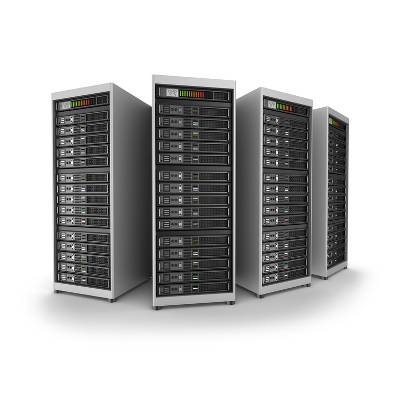
Due to the irreplaceable nature of data, server units may be your company's most important assets. Therefore, when it comes time to purchase a new server, you will want to make sure that your new unit will be exactly what your business needs. Getting a model that's too small or too powerful can be costly. Here's what to look for when purchasing a new server.
The International Data Corporation (IDC) recently stated that the fastest growing sector of cloud computing is Infrastructure as a Service (IaaS). IaaS allows technology end users to use Internet connections to tap into entirely virtualized computing systems in order to get their work done. This cloud service is changing the way we do IT. Is it time for your business to join in?


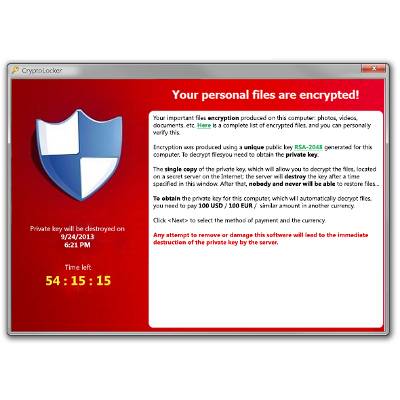
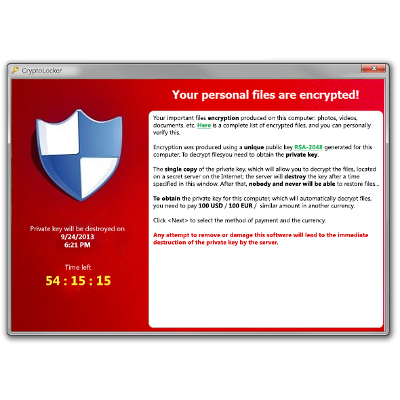
In September, a new ransomware came on the scene and it's been wreaking havoc on computers the world over ever since. Given the name CryptoLocker, it's capable of taking over your system, encrypting your files, and literally holding your data ransom in order to extort money from you. If you don't pay, then your files are deleted. What's an honest business to do against such a threat?
Thanks to cloud computing technology, many businesses are taking advantage of having a mobile workforce by allowing their staff to work from home. Working from home can be beneficial by making workers more productive, saving employees' time and money from commuting, and increasing worker satisfaction, but how can you know for sure if work is really getting done?
Do you have what it takes to win the annual National Texting Championship? 17-year-old Austin Wierschke has the texting speed, dexterity, and accuracy to be crowned the most recent texting champion, an accomplishment accredited to sending 500 texts a day for training! This is a major achievement for young Alex, but does it translate to a hirable skill?
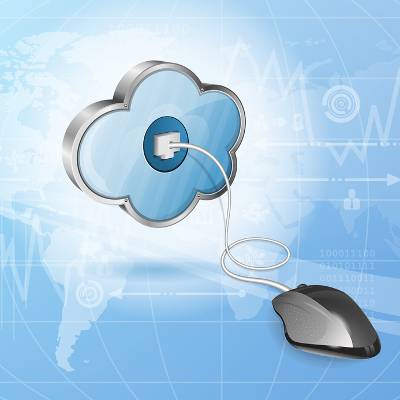
You hear a lot about "migrating to the cloud." Using Internet technologies, cloud computing gives users scalable IT solutions that are hosted offsite in data centers, which look nothing like clouds. Cloud computing is a hot trend that many companies are taking advantage of, but is the cloud right for your organization?
Your company's technology infrastructure is made up of several complex systems that all work together in order to keep your business running smoothly. Your IT infrastructure functions much in the same way as another type of infrastructure, your house. It's surprising how much you can learn about computer networking by looking at "This Old House."