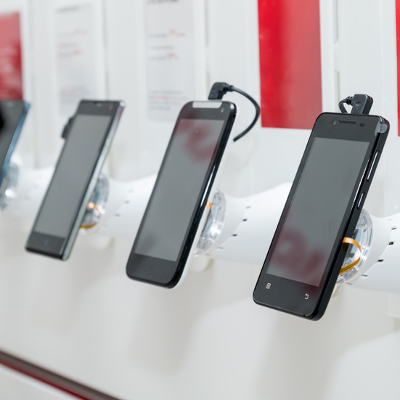
Last week, we explored the flagship smartphone market. This week we thought we would explore some innovative new devices. There have been some advances in some of the technology used by smartphone manufacturers to create cool new features. Today, we take a look at some of these devices.
Tech Minutes
The smartphone is a transcendent innovation of a brilliant idea. As these devices have gotten more and more powerful, it has seen a situation where the batteries powering these devices keep having to outperform the batteries from the previous year’s devices. The technology, however, hasn’t changed very much in over a decade. Today, we take a look at modern smartphone batteries and innovations to power sources that you can expect to see going forward.
Compared to an enterprise corporation, a small-to-medium-sized business is going to have far fewer resources, especially in terms of its IT. Having said this, an SMB isn’t necessarily without a few quality options. Let’s review the needs that any business needs to have filled, and how they can do so with the right solutions.
When security and efficiency are some of the biggest benefits to updated information technology, it sounds that IT is something that a governing body should prioritize internally. However, many governments have trouble doing so, oftentimes to their own detriment. Why is that, and what can a business learn from this phenomenon?
The sad truth about computers is that when they inevitably break, you have to get them fixed; or, you have to order a new one. When PCs started to be utilized for mass productivity, however, businesses had to find a better way. It’s been years since the first managed services provider hung out their shingle, and over that relatively short time the managed services industry has grown to be a $150 billion-a-year industry. The combination of IT becoming an important part of nearly every business resulted in the obvious demand for affordable IT support. This trend has seen many businesses cutting IT staff to make way for outsourced managed services, and all it provides. A problem that both businesses, and the MSPs that they hire, face is that computers eventually break.
Businesses today rely on so much technology that it’s impossible to think about operations without considering how technology can make them more efficient. In fact, many organizations would completely collapse without the innovations brought about as a result of technology development. One of the hottest trends over the past few years has been the shift from in-house assets to web-based assets, ranging from application access to infrastructure hosting.
Your business either has a sound plan to manage its IT maintenance, or it does not. There is no middle ground here. Either you have an internal team dedicated to maintaining your IT infrastructure, or it’s not being taken care of as well as it should be. Even if you do have an internal team, you might notice that they simply don’t have time on their hands to handle all of their responsibilities. We’re here to introduce you to one of the most notable ways of keeping your technology in proper working order: managed IT services.
As we discuss business technology, we occasionally broach topics that not everyone may be familiar with. Despite the recent media coverage that has been afforded to it, Bitcoin and blockchain technology may be a good example of one such topic. To resolve this, we’ve put together the following primer on this technology and how it will impact data security in the future.
The holiday season has always been one of deep-seated traditions, some that draw from ancient customs, and some that are inspired by more contemporary trends. These traditions have been shaped, and often inspired by, the technology available in the day. Today, we’ll reflect on how the technologies we have now have impacted our celebratory traditions.
Selecting a managed service provider should be like selecting any employee. You need to make sure that your expectations are going to be fulfilled, and that your selection will be there when you need them to be. However, the criteria you examine your potential IT service provider by should be a little different than how you evaluate your other prospective team members.
It’s true that email is such a common solution that most people don’t think twice about how it works. However, it’s imperative that you at least understand the concept, as it can provide you with a considerable advantage when it comes time to optimize email access on your mobile devices. First, we’ll discuss the ways in which the two major message exchange protocols differ, and then dig into the specifics of why you should choose one over the other.
Technology is a necessity for businesses everywhere if they are to reach their goals, which are themselves influenced by the technology that businesses have access to. If this cycle is to continue, a business needs to establish what is expected to come next in the line of IT innovation. From the looks of it, businesses are currently placing convenience in high regard.
With 2017 on its way out, there are many great technology solutions that businesses can take advantage of. Some of the most notable topics in business technology in recent years include business intelligence, artificial intelligence applications, and machine learning. What are some of the most important technologies that you’ll want to keep in mind for the 2018 business year?
For the last several years, we have annually asked the members of our team what they were grateful for. It doesn’t have to be a major thing, just some way that technology has improved our everyday lives. After a few silly answers, like memory foam (which is great) and forks (also important technology), they ended up coming up a few great technologies that they are thankful for. Here’s a few stand out items that we wanted to highlight:
You’ve used a mouse for years, but do you know of all the neat little tricks that it’s capable of? We’ll show you just how much you can get done with your mouse.
Vince Lombardi, one of the most successful head coaches in NFL history, once said “If you are five minutes early, you are already ten minutes late.” Although it wasn’t its intended use, this quotation can easily apply to technology. The tech industry is constantly changing, improving, and innovating. Adapting to changes is something all businesses must do to thrive, small and medium businesses included.
Have you ever felt like talking to someone in the technology industry was like speaking with someone who spoke a different language? You’re not alone. It’s no secret that the IT industry loves their jargon - and has dozens of buzzwords at any given time. These are a few such words that have the industry buzzing right now!
Technology plays a pivotal role in the way modern businesses function, and as a result it carries some element of risk. An example of this is how companies store electronic records. While the implementation of measures that are designed to provide greater ease of use and organization for a business’ employees make business move faster, it also makes it that much easier for a hacker to locate and steal data. Small and medium-sized businesses, in particular, are vulnerable, as they may not have dedicated IT security.
Every business is searching for ways to improve productivity. There are now quite a few methods being used to boost the amount that each employee can accomplish, many of which revolve around technology. Admittedly, some of these methods may not be attainable for the average SMB… yet. However, as technology advances you may find yourself able to leverage some of these productivity-enhancing tools to improve the look of your bottom line.
It should come as no surprise that a crash occurring in your computer network is a bad thing for your business. However, the real ramifications of such an event might not immediately come to mind. Fortunately, there are precautions that may be put into place that can help you to mitigate the chances of a network crash.
It doesn’t matter where your business is located--chances are you’re susceptible to thunderstorms. Lightning storms are very unforgiving, and they can lead to all sorts of problems for unprepared businesses. We’ll discuss some of the ways that your organization could be affected by a lightning storm, as well as how you can take measures to mitigate these dangers in the future.
Businesses today rely heavily on software solutions to function, and so these solutions need to be on-hand whenever and wherever a business opportunity may arise. As a result, mobile solutions have risen in importance, despite the continued need for what a desktop has to offer. To meet both these requirements, we recommend a convertible ultrabook, also known as a 2-in-1 device.
How would you like to be able to charge your smartphone by simply walking down the street? Or to be able to turn the tie you’re wearing into a voice-recognition security system? Thanks to a team at Michigan State University, these abilities may not be so out of the question, as they have developed a promising little device that could be used to achieve these goals and many others.
As technologies emerge and trends change, organizations face massive paradigm shifts involving the tools and methods they use to conduct business. Right now, we’re in the middle of one of the most significant shifts in decades; more and more businesses are relying on cloud computing.
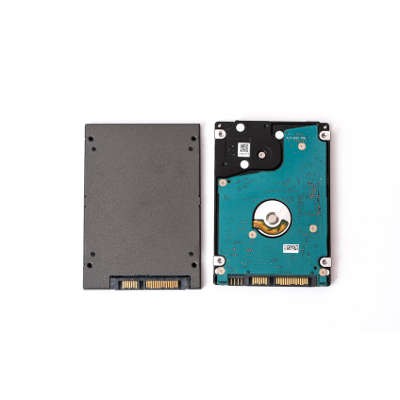
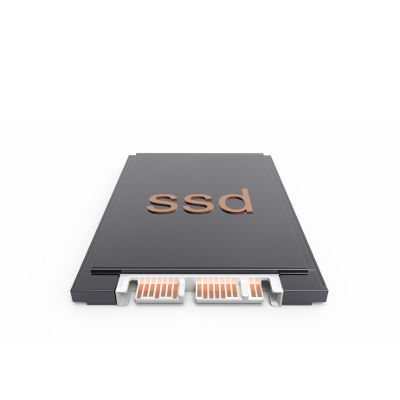
Your business has plenty of choices for data storage, but there are few options better suited for business environments than the solid state drive. Even though the hard disk drive is more common, the solid state drive offers many benefits that your organization cannot dismiss--certainly not if you want to seize all possible opportunities.
In recent years, the familiar hard disk drive has slowly been losing ground to the much faster solid state drive. As they operate through very different processes, there are a few critical differences that you need to be aware of: SSDs have a limit to how many times data can be rewritten on the drive. This limit isn’t small, a standard consumer SSD drive is rated to sustain 40 gigs of data writing per day for 10 years. This may seem like a lot, but you’ll only get good results if you meet certain requirements and practices.
There’s a pretty good chance that you’ve seen us throw the term BDR around quite a bit, or reference what we have in place as far as a Backup and DIsaster Recovery solution is concerned. However, do you know what we’re really talking about when we toss out this industry jargon?
Everyone knows that everything in the break room fridge needs to be replaced after a certain amount of time, but that’s not all that’s at your business that needs regular updates. The solutions you use every day will also need maintenance, for quite a few reasons.
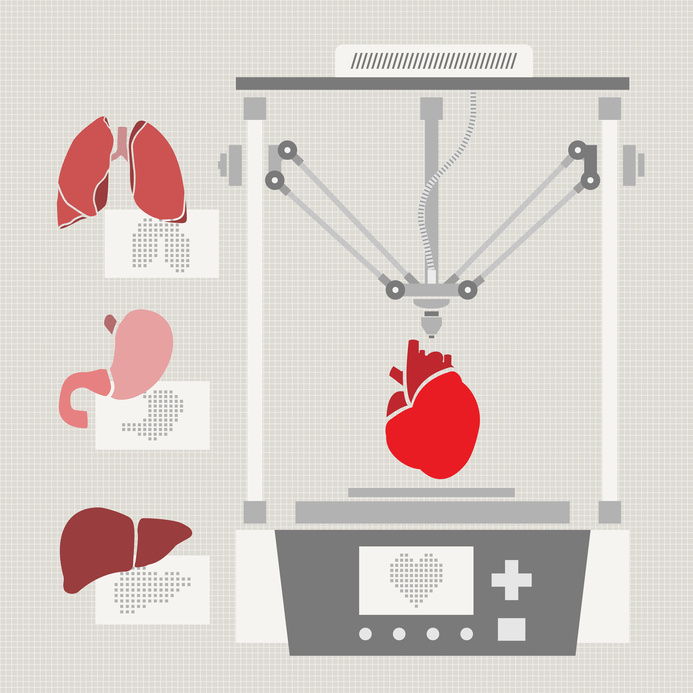
The concept of 3D printing is becoming a factor in more and more industries, perhaps most promisingly in the healthcare sector. This specialization has the potential to revolutionize how patients are treated for some very serious maladies, as well as how well they adjust to their life during the post-treatment stages. However, this application of 3D printing is not without its concerns.
While news sources might lead the layman to believe that most issues facing the typical SMB come from cyber criminals lurking online, the reality is far less dramatic. However, this misconception makes these issues no less serious, and still things to prepare for. Let’s review some of the most common causes of technological issues in the office environment.
During your time in the business world, you may have heard about the Dark Web. It’s a place that’s filled with illegal activity, with some of the most notable being online marketplaces where credentials and personal records can be sold to the highest bidder. However, there’s much more to the Dark Web than meets the eye.
Here are four things that you may not have known about the Dark Web.
Anyone Can Access ItAccessing the Dark Web is as easy as downloading a couple pieces of software. However, you should consider your reasons for accessing the Dark Web. While it’s mostly known for hosting illegal activity, there are plenty of legitimate ways to use the Dark Web. Many web companies have a large presence on it, and journalists or those who deal with sensitive information use it for sharing this data. In fact, your IT department could use it to find data that’s been stolen from your organization.
Of course, you should also be prepared to deal with some unsavory things while you’re on the Dark Web. Be sure to do everything in your power to back up any important data that you might have, and to always be using the maximum security measures possible.
Anonymity Isn’t GuaranteedThere’s nothing anonymous about being on the Internet, even if you’re connected to the Dark Web. Anonymity might be more likely, but there’s no guarantee that someone isn’t watching your every move. Encrypted sites that utilize the “.onion” domain can only be accessed by using the Tor web browser, but with the right tools you can unmask most anyone using the Dark Web. It’s thought that the FBI has malware that can track IP activity, which wouldn’t surprise us at all.

Businesses today want to save money and cut costs whenever possible, and technology has made it much easier to do so. Now, organizations can eliminate unnecessary hardware, clear the office space of file storage systems, and even eliminate clutter associated with paper documents.
Business owners who spend a lot of time on the road, like during a commute or on a business trip, understand how difficult it is to use smartphones while driving. Despite the fact that it’s illegal in many places, some people refuse to put down their phones and concentrate on the task at hand: driving. Doing so puts not only themselves, but everyone else on the road at risk of an accident, which can lead to expensive insurance payments and vehicle maintenance costs.
Regardless of how your business’s administration is set up, you should be aware that anyone in a position of authority must have a basic understanding of how IT, and its related responsibilities, functions for your business. Here are four ways that you can learn more about how IT works within your organization.
The 1990s were a golden time of technology with VHS, floppy disks, and beige computing hardware aplenty. Back then, learning of new technology shortcuts was totally rad. Although, looking back, many of these cool tech tips are now obsolete. Yet, they still hold a special place in our hearts. Here are some of our favorite technology tips from the ‘90s. Which ones do you remember?
Computer monitors have become streamlined in appearance and design over the years. One of the biggest improvements was the addition of the LCD screen, which in comparison to the old CRT monitors is more pleasing to the eye. However, its brightness means that there are side effects that can lead to eye strain and headaches. You can lower your screen brightness to preserve both your eyesight and your sanity, in addition to saving precious battery life.
Windows 95 changed the way that consumers saw personal computing, and it heavily influenced future versions of Microsoft’s Windows operating system. Over twenty years later, you can expect to see significant changes and improvements, to the point where those who weren’t exposed to older technology don’t have any clue what it is. Nowhere is this more painfully true than watching how teens react to Windows 95.
Every time that you purchase a new piece of business technology, you’re faced with a choice: go with a product that’s been around for awhile, and thus, is cheaper, or pay a little extra for the latest solution. We like to encourage business owners to go with the latest tech because it saves them money in the long run - an IT concept known as “future proofing.”
By its nature, technology is always changing, evolving, and moving forward. Organizations that understand this and plan for these changes end up making the most out of their technology. Those that don’t, get left behind. Here are three ways to make sure that your company’s technology will best serve your future needs.
Technology is a wondrous thing, allowing your business to achieve greatness and change the way you approach business. However, it has also brought about an extremely wasteful society that tosses old technology aside in favor of the latest and greatest devices. This is a habit that society has yet to break, but it’s not too late to do the right thing and commit your business to environmentally-friendly practices.
The world might not see legitimate artificial intelligence for quite some time, but that doesn’t mean developers aren’t taking baby steps in the right direction. A current example of this is Google and its automated vehicles. If Google is capable of successfully making a self-driving car that’s aware of its surroundings, we might see them on the roads as early as 2020.
Your business needs technology to function properly, but it can be unpredictable and challenging to manage. The slightest discrepancy, like an unexpected hardware failure or software hiccup, can throw off your business’s IT budget and potentially cause disastrous downtime. This doesn’t mean that upgrading your hardware and software has to be hard, though.
While they might seem like glorified toys for adults, drones are fantastic tools that can help people take some breathtaking photos and videos of their local scenery. Unfortunately, as is the case with most good technology, there are people out there who want to use them for nefarious purposes. This leads authorities to a tough question: how do you knock an illegal or dangerous drone out of the sky without harming those down below? The answer is simple: eagles.
Microsoft’s most recent addition to the Windows family of operating systems, Windows 10, is full of new features, but when it comes to implementing it, many businesses are still dragging their heels. However, the primary reason for this seems to be the fact that organizations want to make sure Windows 10 won’t break their IT infrastructure. Despite this handicap, Windows 10 is still being tested on twice as many PCs as Windows 8 was following its release.
Your business’s wireless Internet connection is one of its most valuable assets, and without it, your operations would surely suffer. Your wireless technology, like smartphones, tablets, laptops, and even your network depend on it in order to function properly. WiFi is known to be pretty inconvenient at times due to questionable connections and security, but a new technology wants to change all of that: Li-Fi, wireless Internet connections delivered by special light bulbs.
With technology being so important in the modern office, there are thousands of gadgets produced each year that are designed to work with existing technology to deliver marginal-to-significant increases to an individual’s productivity. Each year, many of these gadgets fail in some way or fall out of public consciousness quickly, becoming nothing but the answer to a trivia question a decade from now at your favorite watering hole.
The technological landscape of the office environment has evolved significantly over the past few years, especially in terms of technology that fosters inter-office collaboration. What could only be accomplished by sitting down together in the same room, can now be done remotely through the use of video conferencing and VoIP technologies. It’s a true golden age of business technology achievement, and if your business isn’t fully leveraging your communications technology, you’ll quickly fall behind.
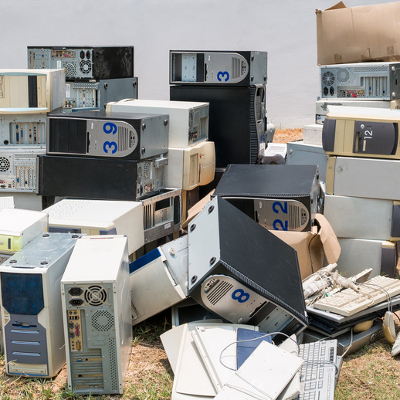
Today’s civilization might be the most technologically advanced in the history of the world as we know it, but this also comes with the burden of properly disposing outdated technology. Unfortunately, the world faces a significant e-waste problem that cannot be ignored. As consumers of technology, this responsibility falls on your shoulders.
Technology has the potential to make the future of your business a success. Although, if you don’t manage your company’s technology properly, it can hinder your business, causing you to miss out on future success. In order to take full advantage of what technology can do for you, you’ll have to keep the future in mind.
Technology changes constantly, and as such it can be difficult to change and adapt to new trends in the industry. Cloud services are making the implementation of scalable solutions somewhat easier, but often times integrating cloud solutions is forgotten by business owners who don’t really know what the cloud can offer their organization.
Does your office still use a fax machine? You know that it’s an outdated piece of equipment, but this fact might not deter its continued use if you don’t care about the latest technology (we admit that not everyone does). Perhaps by taking a look at all the money wasted by using a fax machine, we can convince you otherwise.
Remote workers are changing the way that both employees and their employers are viewing their workspace. It’s been proven that businesses can mitigate their overhead costs and increase their employee retention rate by allowing their team to work from home, but without the proper technology, they have no chance of being as productive as they can be if they were in the office.
Millennials may be looked down upon in the average workplace for a number of reasons that are entirely subjective, whether it be that they’re “spoiled rotten” or “just plain rude.” But in today’s workplace based around technology, millennials have a huge advantage, and have even given long-time CIOs a run for their money when it comes to technology management.
When it seems like every idea has already been patented or brought to fruition, that’s a key indicator that innovation in your company is lacking. Traditionally, advancements in business technology have driven innovation for companies. If your company’s innovation well is running dry, then there are measures that your business can take to become more innovative.
There’s no denying that smartphones are the predominant consumer technology in the world at the moment. Over a billion smartphones were sold each of the past two years, with growth coming in at a fairly impressive 23 percent from 2013 to 2014. Growth is projected to decrease slightly in future years (around 12 percent in 2015), but it’s obvious by now, smartphone usage will be the principal manner people will access the Internet going forward.
In a world where time is a luxury that the average business owner lacks, it can be burdensome to come up with new technology initiatives. The main issue that this presents is that it can be difficult to improve your operations if your technology’s growth is stunted. Stagnate technology deployment can be detrimental to your business’s success.
Chances are that when you begin going through your expense reports, one of the most glaring expenses your business has is payroll. It is possibly the most crucial cost you will be subject to. In fact, small businesses need to realize that by hiring employees, a large portion of your operational budget is out the window. To properly grow a business, you may need to take an alternative view to the traditional business model; including your technology management.


As technology grows more advanced, humans turn to robots to replace certain monotonous jobs. The goal here is to create a society where people are free to spend more time enjoying life. However, technology is prone to both technical problems and user error, which can lead to disastrous consequences.
Entertainment has grown so synonymous with smartphones and technology that it’s almost impossible to think about these innovations without considering their entertainment value. Virtual reality augmentation, while slightly different, is an emerging technology that brings elements of virtual space to the lives of everyday users. So, how does virtual reality work, and can it be used for more than just entertainment purposes?
If you use Google Chrome as your browser of choice, you know that Chrome’s extensions provide a certain level of versatility. Basically, they’re add-ons to your browser, which can perform a number of functions. They’re mostly used for enriching your browsing experience or adding new features to your browser that might not be available on other platforms. Here are four useful browser extensions to help you get the most out of Chrome.
If you’re in the market for a new computer, then you’re going to have to make a decision: Go with a traditional hard drive (HDD), or a solid state drive (SSD). While a computer equipped with an HDD will cost you less money, an SSD promises to faster speeds and a longer lifespan. This begs the question, is SSD worth the extra money?
With Jurassic World hitting theaters, today seems fitting to talk about a new use for 3D printing that you might not have thought of: recreating fossils. Researchers in Kenya are taking advantage of this new technology to study and preserve fossils that could potentially be damaged by the intense weather conditions of the Turkana Basin.
In 1965, the technological landscape was much different from what we see now. The idea of having a small computer in your pocket in the form of a smartphone was but a distant dream. Now, it’s commonplace for all but the youngest of children to have a smartphone. How is this possible? Well, it’s all thanks to Moore’s law, which has led the development of new technology for the past 50 years.
When your website has content or makes changes to its existing content, it can be of great benefit to your business’s marketing endeavors. In fact, it’s so important that innovators and programmers have built software that’s designed to perform the act of content writing. In other words, there are robots that compose web content. How does the writing of a robot hold up to that which is written by a human?
In 1977 the first Star Wars movie premiered, entitled “A New Hope.” The science-fiction film became a hit and spawned a franchise that’s still going strong 38 years later, with the upcoming release of its much-anticipated seventh feature film, “The Force Awakens.” In fact, Star Wars is such a big deal that it has its own holiday, celebrated every May 4th (May the 4th be with you).
With the long-awaited release of Star Wars: Episode VII The Force Awakens this December, today’s Star Wars Day holiday may be the biggest yet (May the 4th be with you). As a technology-loving IT company, we’re happy to honor our favorite science fiction franchise by taking a fun look at its futuristic space technology.
Last February RadioShack declared Chapter 11 bankruptcy and announced plans to sell between 1,500 and 2,400 of its stores. IT techie’s around the country are mourning the loss. It almost feels like losing a friend that’s always been there for you. We need closure, so let’s all gather around the store’s silicone grave and say fare thee well to RadioShack.
Before investing in a solution for your business, it’s important to understand what you’re getting into. Sometimes it can be difficult, especially with all of the jargon floating around. In fact, an excessive amount of this “geekspeak” can intimidate prospective clients, and maybe even frighten away a sale. While it’s avoided as much as possible, it sometimes can’t be helped, and some business owners are still lost on certain sayings or acronyms.
When it comes to business communications technology, you don’t want to be caught using technology that’s outdated. Thanks to the innovations afforded to your company by Voice over Internet Protocol (VoIP), you can have access to lots of game-changing telephone features that blow traditional phone systems out of the water. Has your business switched to the VoIP advantage?
You know that one unlucky employee that seems to have the most problems with their computer? Perhaps they keep getting an error that no one can replicate, or they need a little help setting up a Mail Merge? Due to most managers only knowing of two technical support options, business owners can get stuck in a tough spot with employees like this.
A few weeks ago, Microsoft presented several of their latest projects at a live event. As expected, there was a lot of focus put on the new Windows operating system, Windows 10, in addition to their in-development browser Spartan; but what we didn’t expect Microsoft to show off was a slew of brand spanking new consumer technologies.
New technology is meant to improve upon its previous design. This is technology 101. Despite this well-known fact, many business owners are hesitant to adopt new technology, choosing instead to continue using older equipment in an effort to save money. A better approach to technology for your business is to have a long-term replacement plan.
As a small business owner, you want the best technology that will assist your company and allow it to grow. Not all technology vendors can do this for you. In order to get the most out of your technology, you need to separate the champs from the chumps. That’s where our vendor management service comes in.
In these times, passwords are losing their effectiveness. Hackers can now input millions of passwords every second to crack your code. Even now, professionals are working on new solutions which can jumpstart online security. While using a password is still an ideal choice, there are plenty of other options that are being discussed in the two-factor authentication field.
Businesses look to technology to solve their problems and make operations more efficient, and rightfully so, after all, technology is synonymous with “solution.” Although, just purchasing new technology isn’t enough to automatically see the desired results. New technology must be accompanied by intentional implementation efforts, which includes adapting it to your company’s culture. In other words, working with people.
In 1859, our planet was hit with the largest recorded solar flare. This particular flare was known as the Carrington Event and it produced auroras that could be seen all around the world, even as far south as the Caribbean. The 1859 solar flare caused minimal damage and was seen mainly as an oddity. If such a flare struck today, however, the world would erupt into chaos.
Who's in charge of making the decisions in your business concerning technology? Ideally, you want an internal IT manager or a CIO with IT experience calling the tech shots. However, many businesses don't have this luxury. According to a CompTIA survey from last November, 48 percent of businesses have managers making decisions about technology implementation that don't have IT experience.
If we told you that a battery's performance decreases as time goes on, how many of you would be surprised? The same goes for anything. Nothing lasts forever, and batteries are no different. However, there are ways you can increase the lifespan of your laptop's battery. Portable technology is important for your business, and a good, strong laptop battery is necessary.
People in 1967 were fascinated with new technology. During this era, technology advanced so quickly in such a short amount of time that people looked in wonderment at the future and made wild predictions at what the 2000s would look like. How accurate were the predictions of the 1960's scientific community? Let's check in with Walter Cronkite to find out!
When we think of technology in terms of age, we often look at how long the machine has lasted for. Some machines from the mid-90's are still running, which makes them almost twenty years old. In terms of human life, that's not a very long time, but if you look at it in terms of quality working conditions, you'll find that these computers are kind of like dogs and cats. They may only be several years old, but in terms of actual age, their lifespan makes them much older than you realize.
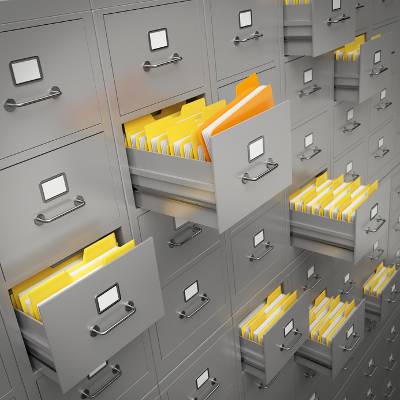
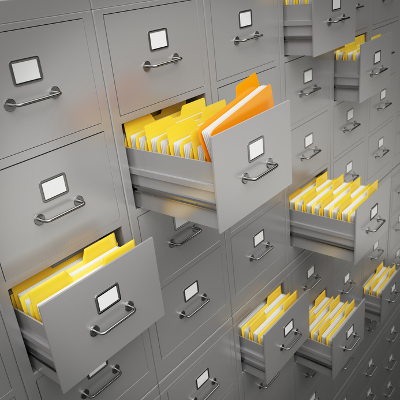
Trivia time! Do you know what device was invented in 1892 that changed the face of offices around the world? If you guessed the fax machine then you're close, but you need to think further ahead by almost 50 years (the first fax machine was patented in 1843 by Alexander Bain). More influential than even the fax machine is the file cabinet, established in 1892.
You may think that you're awesome at multitasking, but according to cognitive psychologist Art Markman, "You are your own worst judge of how good a multitasker you are." This is because the same areas of your brain that monitor performance are the same areas activated by multitasking, which means that it's difficult to accurately evaluate your own performance.
We are creatures of habit. We love our routines and live in "comfort zones." Getting anybody to do anything outside of their comfort zone is always challenging. A comfort zone typically applies to social situations, but it can also apply to technology. Don't let an emotional attachment to old technology keep you from taking advantage of new money-making solutions!
There's been a lot of exciting talk lately about brand new technology including biometrics, smart appliances, and wearable technology. With all of this kind of buzz, it's easy to forget about older technology, even if it still provides value to the industry. Bluetooth technology is one of the most exceptional technologies of recent history, and it's celebrating its 20th birthday this year!
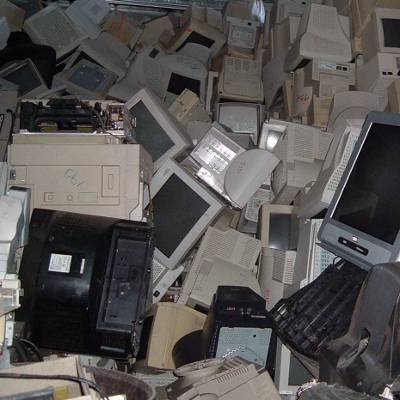
Remember when you upgraded to a flat screen TV or monitor just a few years ago? You may have marveled at the increased picture quality and celebrated getting rid of your old and bulky equipment, but do you know what happened to the old CRT monitor after you threw it out? Unfortunately, the answer doesn't bode well for the environment.
Not too many years ago comedian Jeff Foxworthy became a star with his trademark "You Might Be a Redneck If..." jokes. Rednecks are an interesting breed that do things backwards because they stubbornly believe that it's the best way, and like all of us, rednecks use technology. Are you a technology redneck? Check out our redneck technology list to find out.
19 years ago, a class of fifth graders from Helena, Montana was featured in a PSA video that, looking back, made some eerily-close predictions about how the Internet is used today. When this PSA was shot in 1995, only 0.4% of the world's population regularly used the Internet. Today, nearly 39% of the world uses it, and for good reason, as predicted all those years ago.
We've reached a point with technology that we're totally dependant upon it to accomplish most mission-critical business tasks. This is great for getting business done efficiently, but being dependent upon technology makes operations virtually impossible when technology fails. This is called downtime, and your business needs to be prepared for every downtime scenario possible.
One of the greatest trends to hit business culture within the last few years has been going green, aka, being environmentally conscious. Companies that adopt green culture end up helping the Earth, improving their brand reputation, gaining tax credits, and attracting new green-minded customers. If you're considering going green, one of the easiest places to start is with your technology.
Small business owners accept that they need to find alternative solutions to issues that larger organizations can just throw money at. Money is often tight for a small business and no where is this more evident than when dealing in technology. Larger organizations can afford state-of-the art IT, but thanks to the cloud, your business can experience enterprise-level IT at a price that makes sense for your budget.