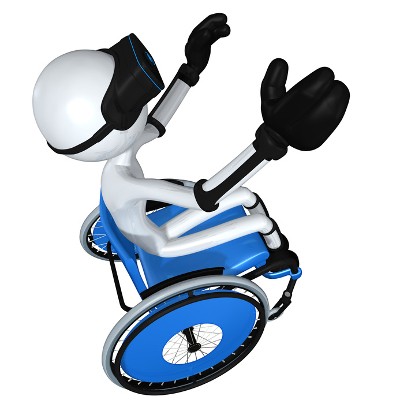
Virtual reality is quickly becoming a smash hit with many industries, but one of the most incredible and unexplainable phenomenons has to do with VR’s use in the medical sector. While it’s been thought that VR can be used to help paraplegic patients to walk again using brain-controlled robotic limbs, recent innovations have shown that this has the ability to go above and beyond its expectations.
The project, titled the Walk Again Project, was first introduced in 2013. Scientists came together from all over the world with the goal of giving paraplegics the ability to walk again using the power of technology. The study examined eight patients who had been diagnosed as being entirely paraplegic (they can’t move or feel their legs). There were several simulations performed, but they required the use of a haptic feedback device, which issued sensory feedback when their thoughts translated to movement.
The first experiment used brain-machine interface therapy combined with virtual reality. The patient would wear a device that sent brain signals to an Oculus Rift (a recently launched commercial VR headset). The patient would then see themselves walking. In the other type of therapy, the patient would use a robotic walker to help with walking therapy. The patient was suspended over a treadmill, with their legs being controlled by a robot. This activity was then sent to a computer, where the data could be analyzed.
However, the most interesting type of therapy involved using the robotic legs to send brain signals back to the patient. The legs used electronic sensors, which were placed at key locations along the leg, to send signals to the patient. The idea was to offer some sort of stimulation to the patient, so that they knew when their legs were supposed to be moving.
Thanks to ongoing long-term brain machine interface therapy, these patients found that they could sometimes feel--or move--their paralyzed limbs again. In particular, the treatment improved bladder and bowel function, and the treatments were so overwhelmingly successful that in many cases doctors changed the diagnoses to only partial paralysis.