2020’s holiday season is going to be much like the rest of 2020: distanced. Most people are taking precautions and therefore have put the kibosh on much of their holiday shopping trips, choosing instead to do a majority of their shopping online. By avoiding one risk, people take on others. Today, we thought we’d outline some of the problems people may experience when shopping online and what to do to reduce your risk.
Tech Minutes
When over 16 million people are scammed out of over $16 billion, there’s likely some type of problem that needs to be addressed. Famous con artist, Frank Abagnale, the man immortalized in Steven Spielberg’s Catch Me If You Can, a movie that was based off his own memoir, has been working as a security consultant with the Federal Bureau of Investigation for over 45 years. In that time, he has become an expert in cybersecurity and fraud prevention.
Smartphones are the predominant mode of communication, as well as now being the devices most used to access the Internet. With so much depending on the modern smartphone, it has become one of the largest, and most competitive, markets of any consumer item. As a result, manufacturers are building devices with software that is able to encrypt the phone against unauthorized access.
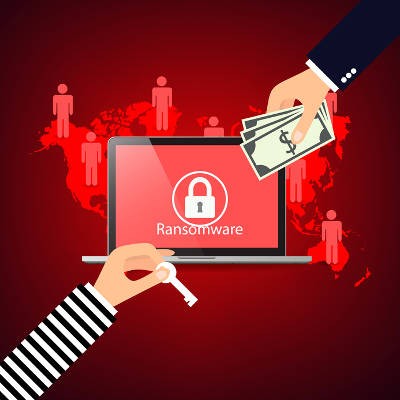
In 2017, ransomware became a huge threat for businesses, so when discussing how nefarious actors will be leveraging new ransomware streams in 2018, you have to do so with some urgency. Today we will provide some information on ransomware, the current trends, and some trends you have to be very mindful of going forward.
Ransomware is a growing problem for businesses, being one of the most difficult threats to remove from an infrastructure. Not only is it easy to spread, but difficult to avoid as a whole. How can your organization prepare for this threat? It starts by being mindful of how ransomware is spread and how your employees react to it, both now and in the future.
There is no understating the importance of strong, reliable passwords to your organization’s network security, especially to protect its wireless connection. However, this can create some friction with your staff when they try to connect to Wi-Fi using their mobile device. To make accessing the Internet easier, scannable QR codes can be used to connect to the Internet.
This guide was created so that business owners, office managers, and IT departments can provide it as an educational resource to showcase some of the most basic IT security practices that can be implemented in your workplace. We recommend printing this out and handing it out to your staff for maximum results.
The following guide is designed to be used by business owners and office managers as an educational resource to establish some basic IT security best practices in the workplace. Feel free to print it out and hand it out or post it in common areas.
The Internet is notorious for being a minefield of threats, many of which lurk hidden behind innocent-looking links. In order to go about business safely, you need to be able to identify which links you can click; and, which should be skipped.
Mobile devices are so common nowadays that you’ll likely encounter your employees bringing multiple devices to the office on a regular basis. Little do they know that everything they bring with them, from their Fitbit to their laptop, poses a security threat. Of course, the threat level from each individual device will depend on what it is exactly, but the point stands that the less you do about mobile device security now, the more danger your organization will be in down the road.
Someday, you’re going to encounter a situation where you absolutely need Wi-Fi and the only option will be a public connection. This becomes rather problematic, as a public Wi-Fi connection is far from secure for business purposes. A method to maximize productivity without compromising security is needed for every business that has employees working out of the office, but what’s the best way to do it?
The unfortunate truth of increased technology use in the workplace is that there is a corresponding increase in the potential for cybercrime, more specifically identity theft, to strike the workplace. The question is, what can you do to help prevent it, and how should you react to it should it strike?
Virtual private networks are vulnerable to an exploit that was recently brought to light. Cisco has announced that this exploit undermines its ASA, or Adaptive Security Appliance tool. If this issue isn’t patched immediately, you could find your organization vulnerable through remote code exploitation.
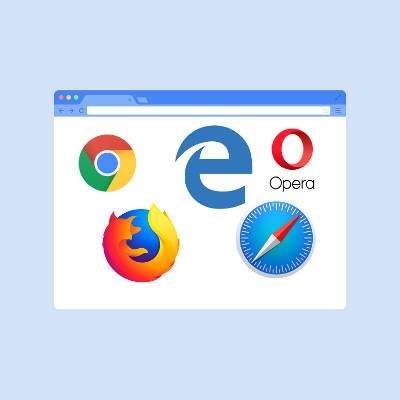
For most users the Internet browser is one of the most utilized applications on their computer or mobile device. With the influx of aggressive problems, it is mighty useful to know which Internet browser is the best for keeping your data, identity, and network secure. Today, we will take a look at the five most popular Internet browsers found on desktop and laptop computers and decipher which are the most reliable.
Passwords are all over the place these days, whether they’re required to access an online account, or access the devices used to open these accounts. While both types of passwords can make for ideal security conditions, this is only the case if the passwords are strong. If your passwords can be guessed by just about anyone, can you really call it a security measure? New insights from SplashData show that passwords aren’t being considered as much as they need to be.
With the meteoric rise of Bitcoin’s value, and just as sudden decline to less than half of its highest value, cryptocurrency has been pulled into the public eye. However, cryptocurrency is only one use of blockchain technology. We’ll examine a few of its other potential applications.
We all love the Internet. We all use it almost every day. For this week’s tip, we’ll review a few ways to help keep yourself from getting in trouble while browsing.
As cybercriminals become increasingly sophisticated in their methods of attack, it is important that your staff--the ones on the front lines--are educated to spot these attempts and know what to do if one is encountered. In order to spot these attacks, it is important to know what to look for.
Put yourself in the shoes of a cybercriminal. If you were to launch a ransomware attack, who would be your target? Would you launch an indiscriminate attack to try to snare as many as you could, or would you narrow your focus to be more selective? As it happens, real-life cybercriminals have largely made the shift to targeted, relatively tiny, ransomware attacks.
Spyware, like other malware, is a problem for any organization. Since your business generates, collects, and uses considerable amounts of data, there are plenty of organizations that want to get their hands on it. You spend so much time and money protecting your data against threats on the Internet, but what if the spyware were to just come standard on the computer you just bought?
Connectivity is one of the major benefits of mobile technology, but some developments have taken this aspect to crazy (and borderline ridiculous) heights. The Internet of Things is forcing businesses to rethink the conventions of connectivity in ways which previously weren’t particularly necessary. Unsurprisingly, the Internet of Things is forcing business owners and normal users alike to remain skeptical of connected technology to a certain degree, and a survey from Cisco showcases this trend perfectly.
2FA, or two-factor authentication, is a simple and effective means of boosting your cybersecurity. Despite this, a study performed by Duo Labs suggests that 2FA has not been adopted as much as one might expect, or as much as it should be.
Android is a very common operating system on mobile devices around the world, and because of this, you won’t be surprised to hear that hackers are always trying to one-up security developers. If your business takes advantage of Android devices like smartphones or tablets, you’ll want to consider these 11 security tips that will help keep your organization safe.
The holidays are a time filled with good food, visits from dear friends and family, and exchanging gifts with those you care about. However, to keep the season bright and merry, you need to be a little cautious during your next gift exchange, as many gifts can present some unexpected risks to your recipient’s security. Be mindful if you see the following items on someone’s wish list.
Insider threats contribute to a significant number of data breaches. These cases of data exposure are enabled by a member of your staff, whether they intended to harm your business or simply made an honest mistake. With so much focus directed toward the threats out in the world, sometimes we forget that the biggest dangers can be among our ranks. To make up for this, we’ll discuss a few ways to keep insider threats from doing your business too much harm.
Business security is a common issue for many small organizations with limited budgets, but it doesn’t have to be an issue. We’re here to help you master the seemingly endless threats and security problems that major vulnerabilities present to the small business environment, and it all starts out by understanding how even basic security solutions protect your organization.
Google is taking steps to protect the data of a small group of its users who run the highest risk of experiencing a data breach or hack. This new service, the Advance Protection Program, shows promise in protecting the information that these select few can access.
The ability to vote is considered one of the great rights in the world, putting one’s voice and opinion into action to shape history. However, it has been demonstrated that the electronic voting machines that some states in the U.S. use simply aren’t secure enough to ensure that the democratic process is preserved.
There are many organizations in the world that simply can’t have cybercriminals and hackers interfering with their data. One of these organizations, CERN (whose acronym translates to the European Laboratory for Particle Physics) has far too powerful of a computer grid to allow hackers to access it. To keep it safe, CERN has deployed what may be the future of cybersecurity: artificial intelligence.
You’re lucky to go a month without seeing news of some devastating data breach. With more businesses gearing up for the worst, what are you doing to protect your organization’s intellectual property and sensitive data? You can start by implementing a new type of authentication system that’s much more secure than your current security strategy--two-factor authentication.
Physical security is more or less what it sounds like: security intended to protect the physical infrastructure that houses your business and your critical data. Many of the pieces of physical security will seem very familiar, even if you didn’t know the right terms for them.
Considering how often hackers target financial credentials like credit card numbers and expiration dates, it’s not surprising that ATMs can provide a wealth of information to them. Hackers are willing to go exceedingly far just to get their hands on these credentials--including physically altering the devices themselves to install skimmers and other technology on them. Unless you know what to look for, it can be difficult to tell if a machine has been tampered with.
You might be surprised by how many of your organization’s security issues originate from within. A major contributor is user error, which can lead to some pretty severe problems reaching from your data security, to your workflow, all the way to the continuation of your business itself.
Students generally love it when classes are cancelled for whatever reason, but thanks to a cybercriminal group called TheDarkOverlord Solutions, a school in Flathead Valley, Montana was disrupted for an extended period of time. This downtime resulted in a disruption of operations for over 30 schools, as well as the threat to the personal information of countless teachers, students, and administrators due to a ransomware attack.
Would you be surprised if we told you that cybercrime is one of the biggest threats to the success of your organization? Unfortunately, there’s no escaping the fact that your business will be under fire from all sides by security threats. One of the most notorious methods includes phishing--email scams that are designed to harvest credentials and other information from unsuspecting users.
Considering that since January 1st of this year, there has been upwards of 10 million personal information records lost or stolen each day, odds are that you, or someone you know, has had their records compromised by a data breach. With such a high incident rate, individuals and businesses that have never received any kind of notification that their records were included in a breach, generally consider themselves lucky and assume that they are not at risk of identity theft or unauthorized account usage. Unfortunately for them, that is not always the case.
A surprising number of security issues come from inside your organization. User error on the part of the employee can present major problems for your workflow, data security, and the integrity of your business. User error could be something as simple as an employee clicking on the wrong links when they receive a suspicious email in their inbox, or if they are accessing data that they simply have no business accessing in the first place. Sometimes businesses will even completely forget to remove employee credentials when they leave a project or the company creating a breachable hole in your network. Regardless of the reason, user error can be a detrimental occurrence, and one which must be prepared for.
If you run a small business, you might consider yourself a small target of hacking attacks. It might make sense to think of it in this way, but this actually is not advisable to think of it in this way. According to a recent survey by CNBC and SurveyMonkey, only two percent of small businesses see cyber attacks as anything worth worrying about. This leads us to the next question… are you one of them?
If you’ve watched the news lately, chances are you’ve seen the Equifax breach and the ridiculous fallout it has caused. Over 133 million personal records have been stolen. While it’s difficult not to feel individually victimized by such a breach, it’s important to remember that it’s often not your specific credentials targeted by hackers. Since businesses often hold onto valuable information, they have big crosshairs painted onto them. It doesn’t even stop there--any vendors or partners you deal with are also in danger of hacking attacks.
Data security, always an important topic, has been made even more urgent by the Equifax data breach and the fact that 143 million users had their personal information stolen after entrusting it (or not) to Equifax. You need to consider what would happen if your business were on the receiving end of a data breach, and prepare to handle this truly unpleasant circumstance.
The 2016 United States presidential election was an ugly one for multiple reasons--chief among them the accusation that hacked voting machines could have altered the outcome of the election significantly. Thankfully, there are steps being taken to alleviate the worries that third parties might alter the outcome of such important events.
Dealing with disasters are a part of doing business. You know how difficult it is to recover from a devastating flood or storm. While businesses tend to suffer from these situations, countless individuals suffer every time a natural disaster hits. Just take a look at the United States in recent weeks. Even though you may want to donate to people suffering from hurricanes, there are illegitimate charities out there that want to make a quick buck off of your generosity.
In the last few months, there have been several high-profile data security breaches that resulted in the theft of millions upon millions of non-public information records. Though much of the focus in the aftermath of the breaches was on personal identity theft and prevention, it’s important to keep in mind that not all the stolen data records target individuals. Business entities are also at risk. Vendors and partners that you do business with regularly will probably have record of your company’s non-public information, payment information, or tax ID number.
About two and a half years ago, Lenovo was brought under fire for manufacturing products that had adware preinstalled on them. This malware, a variant called Superfish, was installed on up to 750,000 Lenovo devices, and the company--eager to put this incident behind them--still refuses to admit fault, despite paying reparations and other fees as a result. Superfish allowed access to sensitive information and a root certificate, which could be used to access encrypted data on the same network. All in all, it was a rather embarrassing and dangerous scenario for Lenovo, and it comes with its fair share of consequences.
When it comes to Internet threats, ransomware is the one that causes the most fear, especially for small and medium-sized businesses, as it should. According to the Cisco 2017 Annual Cybersecurity Report, ransomware is growing at a yearly rate of 350%. It’s time to make sure that you’re doing what you can to stop your business from becoming another ransomware statistic. Here’s five very good tips that will help you avoid becoming a victim of the next big ransomware attack!
Businesses can benefit from the use of personal mobile devices in the workplace, yet there are also potential dangers in allowing mobile and Internet of Things devices to access your network. In order to reduce these dangers, you need to put some limits and guidelines on the use of such devices in the workplace.
Network security is an important part of keeping both your business and your staff away from online threats, but it’s not enough to implement the best, most comprehensive solutions on the market. There are a surprising number of facets to network security, and in order to optimize protection against online threats, you’ll need to know all of them. Thankfully, you don’t have to do this alone.
When a hacker tries to infiltrate your network, they are doing so with a purpose in mind. Usually they are looking for specific information, like account credentials, personal information, or files that can be used to blackmail victims. Regardless, we’ll go over what a hacker can do with the information that they collect from you, and how you can best protect it from them.
Your IT is a central part of your organization’s operations, but its role has changed significantly as business processes have grown more streamlined. There are always shifts and changes in the way that businesses function which must be accounted for, especially in the modern office environment. How have these shifts affected your business’s IT management?
Security best practices demand that a workstation should never be left unlocked. However, it can be really tempting to leave it unlocked if you only plan on stepping away for a moment--but unfortunately, that moment can easily turn into many if you are distracted from your task. Fortunately, there is now a fix that relies on the one device most of us are never without: our phones.
Phishing scams have had a supporting role in many of the latest cyber threats, often as the means the attacker has used to start off their attack. This attack vector is relatively easy to avoid in most cases, but requires education for the end user.
Chances are, you’ve heard of spam, but many don’t know how to identify it in the first place, let alone work around it. Frankly, spam can cause some serious damage to your business if not properly dealt with. In today’s blog, you’ll learn what makes spam, “spam,” and how you can keep it from infecting your inbox.
Everyone has a right to privacy. However, with the popularity of social networks, the Internet is a very hard place to remain a private individual. Digital communication is everywhere. Cybercrime has become a fairly regular event. This week’s tip of the week takes a glance at three websites that you can use to help enforce your right to privacy.
Over the past several months, while watching the news or reading about business and technology, you’ve probably encountered a few words, such as ‘ransomware’ ‘exploit weakness’, and ‘security patch’. These terms are used often, and you may be confused as to what they really mean, and how they relate to you and the security of your business’ data.
When your organization is implementing a new project, there are a lot of expectations and deadlines that are watched with a close eye. While it might be ideal to get the project finished as quickly as possible, doing so can put a lot of pressure and stress on it that can ultimately be its downfall. For example, if you don’t think out the planning phase carefully, the entire implementation process can suffer--particularly when working on new IT initiatives.
It doesn’t matter if you’re a small business, a large enterprise, or if you're in a rural town, or a larger city. You still have to worry about the security of your data and the integrity of your infrastructure. Thankfully, there are services out there that allow even small businesses to leverage powerful, enterprise-level tools for maximum network security. The most valuable of all is perhaps the Unified Threat Management (UTM) tool.
Putting together your workforce is something that requires painstaking attention to detail. You found workers who are willing to work as hard as possible to further your organization’s goals. Yet, you have to remember that even the most perfect employees are still human, and that they can make mistakes and can put the organization’s data at risk. User error is a common problem, and it is one of the most important things to keep in mind while you set up your information systems.
With the mountainous success of Game of Thrones, the BBC-produced show has always been understandably concerned with their security. However, with the show officially overtaking the original source material, A Song of Ice and Fire, there is an increased presence of curious fans and members of the press with an eye out for a sneak peek at the action. This has led to more; somewhat more modern measures being adopted to keep the production’s secrets safe.
Phishing attacks have been around for decades, first being recorded in 1995 where scammers would pose as AOL employees and request a user’s billing information through instant messages. Nowadays, email phishing attempts have tricked users into handing over personal information of all kinds. There are many methods of identifying a phishing attempt, but today we’ll focus on one.
Security is one of the most crucial pain points of all businesses, but sometimes it can be tricky to implement solutions if you’re not sure what you specifically need. Network security isn’t easy, but it doesn’t necessarily have to be hard. If you have difficulty reinforcing a security state of mind in your office, we have good news for you; by keeping these tips in mind, you’ll be able to keep your business more secure than it would be otherwise.
A new malware swept across the globe Tuesday, incorporating facets of many ransomwares that have made headlines recently. While it originally appeared to be a variant of the Petya ransomware, it has been determined that it shares more in common with WannaCry. However, “NotPetya,” as it has been named, has a few additional features that experts say make it worse than either of its predecessors.
Looking for a way to protect sensitive files on your PC? For Windows users, one easy safeguard you can take is to encrypt the files and file folders containing your sensitive information.
The more users on your network, the more risk that user error could create a costly mistake for your infrastructure. While untrained employees could certainly ignore security policies, the greatest risk to your organization is an unexpected one. Research has proven that your company’s CEO, as well as other C-suite employees, hold one of the greatest risks for your business’ security.
It doesn’t matter which industry your organization falls into. Your business will always be susceptible to threats in some way, shape, or form. Therefore, it’s your responsibility to ensure that your business understands how to protect itself from these threats, before it’s too late. We’ll help you learn more about the various issues that you need to watch out for, and what you can do to stop them.
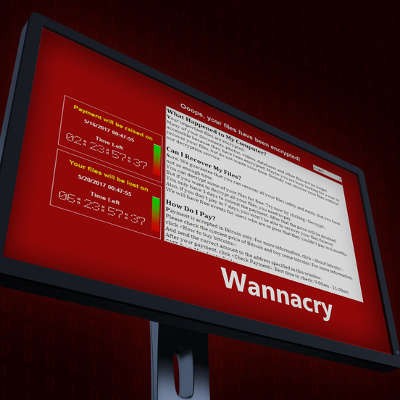
On May 11, 2017, the WannaCry ransomware spread around the globe like wildfire and disabled computing infrastructures belonging to organizations of all shapes and sizes. As the world watched the news unfold, it seemed as if practically no business was immune to this ultra-powerful ransomware. Yet, many quick-thinking organizations were. All because they had the foresight to follow IT best practices.
On May 11th, 2017, the world was introduced to the WannaCry ransomware. The ransomware spread around the globe like wildfire, infecting hundreds of thousands of devices and catching many major organizations and businesses by surprise. The full extent of the ransomware’s damage is still being assessed, yet, one thing we do know: this whole fiasco was preventable.
The Internet of Things is all around us, in our homes, our offices, and even our cars. While this connectivity can provide a more unified and automated approach to daily tasks, it has the downside of enabling certain security threats to go unfettered. A prime example are the IoT-driven botnets that seem to be increasing in popularity.
How big a role does security play in your business’s network management? If it takes a secondary role more in favor of operations, you might want to reconsider why this is the case. After all, your organization’s critical assets--namely sensitive data like employee information, payment credentials, and usernames or passwords--all hold immense risk for exploitation from hackers. Therefore, even if you don’t fear a potential attack, you should at least consider it as a possibility.
Run your Windows Updates and be very skeptical about opening unsolicited emails. Failure to do so may result in a very dangerous strain of ransomware that could infect your entire network and spread to your clients, partners, and prospects.
If fiscal reasons have stopped you from securing your network against ransomware thus far, you may want to reconsider your strategy. Not only are attacks still becoming more and more prevalent, but the developers of ransomware have lowered the price of admission for aspiring cyber criminals. Fortunately, there are some steps you can take to keep your business protected against a ransomware attack.
It’s difficult to know what you can and can’t trust in the realm of cybersecurity. However, you’re likely to trust your own security solution. Yet, even this could be a devastating oversight, as some malware masquerades as your security software.
ATMs are, surprisingly enough, not the most secure pieces of technology out there, though there are efforts to improve security by taking advantage of mobile devices. Granted, this won’t be enough to protect against the considerable vulnerabilities in ATMs. In order to maximize security and minimize the amount of damage done by vulnerabilities, the user needs to understand how to protect themselves while using ATMs.
An unfortunate fact about the modern business world is that any organization that utilizes technology is playing with fire. Cyber attacks can circumvent even the most well-protected networks through the company’s users. This is, unfortunately, something that business owners often don’t learn until they’re on the receiving end of an attack; just like the two companies that fell victim to phishing attempts that were supposedly operated by Evaldas Rimasauskas, a Lithuanian hacker who has been accused of stealing $100 million from them.
The average office worker needs to access the Internet in order to do their job. What they don’t need to access is cat videos, memes, social media, online games, and malware-ridden websites. How can a business owner clamp down on Internet activity in their office? By equipping their network with a content filtering solution, of course.
Security issues can have any number of causes, meaning that every business needs to have a comprehensive security solution. This doesn’t mean, however, that there aren’t additional, small measures to implement that can give your organization’s security an added boost. Here, we’ll talk about two: keeping your software patched, and identifying social engineering attempts.
In the course of doing business your organization needs to lean on its communications investments. Efficient discourse between vendors, clients, and employees allows for productive action to be made quickly. If you have recently decided to deploy a feature-rich hosted VoIP business phone platform because of its ubiquity, you have to be cognizant of how to best secure your solution. Here are three variables that help you get the most out of your hosted VoIP solution.
Set Up and Utilize Private VLANsA Private VLAN (virtual LAN) gives your organization’s IT administrator more control over your hosted VoIP solution. It acts as a single access and uplink point to connect a device to a network or server. By partitioning your network, you present your administrators with the ability to secure specific devices, essentially creating separate networks. By being able to single out devices, it makes it easier to group devices together, even if they don’t share the same network switch. A private VLAN gives your organization's another layer of security while allowing access to the same feature-rich phone system; and, it helps mitigate risk, something every business is looking for in their security solutions.
Track Your UsageNo matter what platform VoIP solution you use, there is a chance it may get hacked. Most of the hacks that businesses see are ATO attacks, or traffic pumps, which aim to utilize the target organization's phone system for calls that will cost them capital. To be sure to avoid this type of interference, tracking your organization’s call usage is a solid practice. Having an up-front conversation with your VoIP vendor about what they are doing to protect your business can be a good strategy to secure it from taking on parasitic users that drain your company’s resources.
Enable Strong Authentication ProceduresYou can’t talk about security today without mentioning access control. To ensure that only your users are able to access your hosted VoIP solution, there are several practices you can implement. You can go ahead and implement a two-factor authentication strategy, or go for the gusto and deploy a powerful identity management solution. Whatever you decide, securing your solution through all applicable manners of entry is important. This includes the physical phones on your desk, mobile applications, and anywhere access can be granted.
A hosted VoIP solution is a great service to implement for the growing business. It allows you to save money while receiving all the dynamic features you are looking for in a business communications solution. For more information about hosted VoIP, communications, or how to better secure your company from threats, call Directive today at 607.433.2200.
Regardless of what industry a company is classified under, they all are responsible for upholding particular standards to ensure compliance with industry regulations. However, according to the 2016 State of Compliance survey, a shockingly high number of organizations were shown to be a bit fuzzy on their requirements.

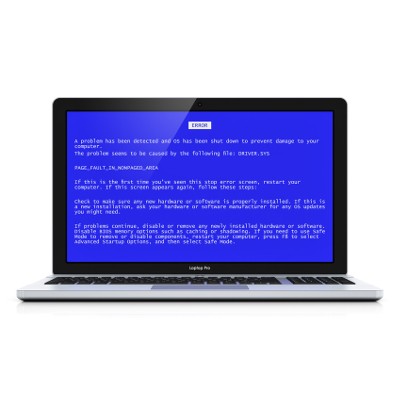
If you happened to plug your Kindle into your computer and get a blue screen of death, you aren’t alone. Many Kindle users have discovered that the Anniversary update to Windows 10 has caused an issue when attempting to use USB to charge the device or transfer books. It would seem that, within moments of connecting the Kindle to a Windows 10 device, the device will lock up and display the dreaded Blue Screen of Death before rebooting.
Those users who have experienced this issue have taken to Microsoft’s forums, posting their grievances and describing their troubleshooting experiences. Unfortunately, these accounts seem to vary from user to user - some of whom are those who updated to the Anniversary version of the OS, as well as some on pre-release software testing service Microsoft Insider.
Some users have found that their devices are restored to normal function after the reboot, only to encounter the issue again on the next reboot. Some find that having the OS of their desktop or laptop asleep as they plug in their e-reader tablet will prevent the BSoD issue from occurring. However, this does not seem to be a rule among those affected, as many have experienced their device crashing regardless of what they do.
These experiences are documented in posted descriptions of what users did to troubleshoot the issue. However, the issue was persistent, despite elements (like the USB cable used) being used as variables.
This isn’t the first issue Microsoft has contended with since the release of the acclaimed operating system’s Anniversary update. In addition to the increased usability and features that the update brought, it also brought a bug that led to many Windows 10 users being unable to use their webcams.
The average business owner may already be aware of what are called phishing attacks - scams that attempt to deceive and trick users into handing over sensitive credentials. However, not all phishing attacks are of the same severity, and some are only interested in hauling in the big catch. These types of attacks are called “whaling,” and are often executed in the business environment under the guise of executive authority.
Security is a hot-button issue for all types of businesses, but cyber security is such a complex subject that it’s difficult to jam-pack its many intricacies into one blog article. Sometimes understanding just a few ways to improve your business’s security practices can be a significant benefit for your organization.
Most companies have to have a workforce, generally one of considerable size. Unfortunately, the more users you have, the more potential risks you run into. Of course, your workforce doesn’t collectively intend to be a security risk, but the digital world is a complicated place, with threats around every corner and malicious programs just waiting for your employed end-users to slip up. Here are ten such honest slip-ups to watch out for:
There are many types of malware out there, but few are as scary as ransomware. Imagine being struck by a threat that instantaneously locks down your files and keeps you from accessing them until you pay a certain amount of money. If your business is targeted by ransomware, would you be able to protect it from dragging your operations into a bitter pit of despair?
Hackers have proven that they will do whatever it takes to get to your valuable assets, even if it means taking advantage of physical objects that work alongside a specific frequency. As it turns out, this is exactly how hacking a garage door works, and all it takes is a decade-old communications device to capture the frequency and unlock any garage door that utilizes it.
Which database management system is running on your company’s server units? For end users, it’s not something that they put a whole lot of thought into. However, if you completely overlook your Microsoft SQL Server, you may end up running an expired version that puts your data at risk. Case in point, SQL Server 2005, which Microsoft recently ended support for.
Hackers have always gone after industries that are profitable, or hold sensitive information that can be lucrative when sold under the table. As such, retailers that accumulate financial credentials are often hit by hacks. The entertainment industry is no different, and hackers continue to grow craftier in their pursuit of wealth and power. Not even Steam, the PC gamer’s most valuable software solution, is safe from the dangers of hacking attacks.
Any business that deals with online technology needs to be aware of the dangers that come with the territory. Hackers are more common nowadays than ever before, and organizations that don’t take a proactive approach to keeping threats out of their systems will have to suffer the consequences. Unfortunately, some organizations won’t be aware that they’ve been hacked until it’s far too late.
Businesses today are responsible for keeping the data in their care safe from hackers. There are two kinds of data that a business must protect: the information of their customers, and their own data (eg. company policies and employee information). Which of the two do you think the average business does a better job of protecting?
There’s a reason why IT professionals think that the Internet of things is a major security discrepancy. Around 5.5 million new devices are being connected to the Internet every day, and are giving security experts a run for their money. The Internet of Things and its devices could potentially become a security hazard for businesses that aren’t prepared to protect their assets from hacks.
Small and medium-sized businesses continue to have problems shoring up their cyber security. Even with the latest solutions, like antivirus and firewalls, they still need to be wary of impending attacks. New threats are created on a daily basis, all of which want to infiltrate your network and cause harm to your business. In fact, 27.3 percent of all malware in the world was created in 2015 alone. Will we ever escape from the clutches of malware?
Google might be best known for its search engine and groups of desktop apps, but it’s also known for innovating and rattling the cages of how we live our lives. One of the ways it’s doing so is with Google Wallet, an app that’s designed to make sharing cash and money transfers online even easier. What a lot of people forget, however, is that Google Wallet, and its associated card, can still be the target of fraud.
Businesses all over the world are taking advantage of two-factor authentication, causing the password’s value to depreciate over time. Passwords aren’t powerful enough to keep users safe from advanced threats. Hackers are finding ways to punch holes in even the most comprehensive security solution, forcing users to focus on improving security through other means.
2015 was a brutal year for major corporations, as one by one they fell victim to hacking attacks. Major organizations like Blue Cross Blue Shield, Anthem, and even the United States Office of Personnel became victims of major hacking campaigns. A fact that’s often lost amongst these details is that not all hackers use their skill for evil actions, even if they are still illegal.
Firewalls are one of the most common IT security measures on the market today, and for good reason. They act as the first line of defense against any incoming threats, and without them, your organization would have to deal with one data breach after another. Of course, that’s only if you’re taking advantage of a proper firewall; if not, you should seriously consider doing so as soon as possible.
We talk about a lot of frightening technology scenarios for businesses; data loss, identity theft, and expensive hardware failures that can inflict substantial downtime and, therefore, cripple the ability of your business to sustain operations. One industry that has changed the way they manage risk, specifically the potential failure of important security systems, is the nuclear power industry. Any business can learn how to mitigate disaster by looking into the specifics of the two most horrendous nuclear meltdowns in history, the meltdown at Chernobyl in 1986, and the tsunami-induced disaster at Fukushima in 2011.
Let’s say you get an email from a close friend. It looks like it’s legitimate, until you check the contents of the message. It’s an advertisement, or it’s trying to get you to click on a link to see something “important.” Regardless of what the content of the message is, you should probably slap that bad boy in the Spam section of your email inbox. You’ve just been the target of email spoofing, and it’s more common than you might think.
Security is a huge problem for businesses that take advantage of the cloud, but never to the same degree. It’s often the nature of the industry which dictates how much a business should invest in cloud security. However, despite these differences in policy, there are some aspects of cloud security that absolutely can’t be overlooked, including data permissions, account security, vulnerability to malware, and other online issues.