





We’ve all seen our friends and family sharing quizzes on their social media profiles, prompting people to find out what their celebrity stage name or what Hogwarts house you would be in, or to share what their first concert experience was. These fun, lighthearted quizzes are a great way to get to know a little more about the people we’re connected with… and that’s the biggest problem.
Tech Minutes
2020’s holiday season is going to be much like the rest of 2020: distanced. Most people are taking precautions and therefore have put the kibosh on much of their holiday shopping trips, choosing instead to do a majority of their shopping online. By avoiding one risk, people take on others. Today, we thought we’d outline some of the problems people may experience when shopping online and what to do to reduce your risk.
The threat landscape is filled with more types of malware than ever. To keep your business’ network running effectively, it’s important to have a strategy to keep malware out. Today, we’ll talk about a few basics you should know to keep your cybersecurity strategy working properly.
When over 16 million people are scammed out of over $16 billion, there’s likely some type of problem that needs to be addressed. Famous con artist, Frank Abagnale, the man immortalized in Steven Spielberg’s Catch Me If You Can, a movie that was based off his own memoir, has been working as a security consultant with the Federal Bureau of Investigation for over 45 years. In that time, he has become an expert in cybersecurity and fraud prevention.
As smartphones have become smarter, they have become filled with more and more data that needs to be kept private for the owner’s safety and security. This is why it is fortunate that there are also more ways to secure a smartphone against unauthorized use. We’ll examine the many options to devise which is the most secure.
Security is a part of business that is constantly changing and evolving. What worked ten years, five years, or even two years ago may not be relevant in today’s security environment. What are some of the major changes that your company can expect to see in the coming years? We’ll walk you through some of the ways that security will be changing in the foreseeable future, and what you can do about it.
In 2017, ransomware became a huge threat for businesses, so when discussing how nefarious actors will be leveraging new ransomware streams in 2018, you have to do so with some urgency. Today we will provide some information on ransomware, the current trends, and some trends you have to be very mindful of going forward.
This guide was created so that business owners, office managers, and IT departments can provide it as an educational resource to showcase some of the most basic IT security practices that can be implemented in your workplace. We recommend printing this out and handing it out to your staff for maximum results.
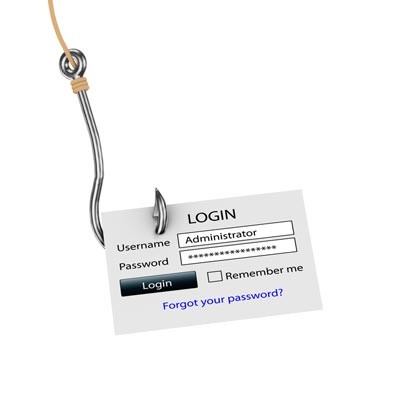
Spam is a tricky subject to talk about, as it seems everyone has a different definition for it. Yet, most have come to the conclusion that spam is a bad thing. For today’s Tech Term, we want to delve deep into the different kinds of spam out there, as well as theorize where the term even came from.
The following guide is designed to be used by business owners and office managers as an educational resource to establish some basic IT security best practices in the workplace. Feel free to print it out and hand it out or post it in common areas.
The Internet is notorious for being a minefield of threats, many of which lurk hidden behind innocent-looking links. In order to go about business safely, you need to be able to identify which links you can click; and, which should be skipped.
Data loss can have lasting effects upon your business, usually measured in lost productivity and capital. In other words, data loss is often measured by the cost required to retrieve, restore, and/or repair its effects. Of course, this is only the beginning of how data loss can impact your operations.
Mobile devices are so common nowadays that you’ll likely encounter your employees bringing multiple devices to the office on a regular basis. Little do they know that everything they bring with them, from their Fitbit to their laptop, poses a security threat. Of course, the threat level from each individual device will depend on what it is exactly, but the point stands that the less you do about mobile device security now, the more danger your organization will be in down the road.
Someday, you’re going to encounter a situation where you absolutely need Wi-Fi and the only option will be a public connection. This becomes rather problematic, as a public Wi-Fi connection is far from secure for business purposes. A method to maximize productivity without compromising security is needed for every business that has employees working out of the office, but what’s the best way to do it?
The unfortunate truth of increased technology use in the workplace is that there is a corresponding increase in the potential for cybercrime, more specifically identity theft, to strike the workplace. The question is, what can you do to help prevent it, and how should you react to it should it strike?
Does your business need an antivirus solution to keep threats out of your network? It’s a simple question with a simple answer, but some companies still don’t see the need for antivirus software on their computers. They might think they are immune, but hackers know the truth--and it’s all too apparent in the face of a data loss incident that hindsight is 20/20.
Email is a solution that needs to be protected, lest you expose important information to any onlookers while messages are in transit. Encryption is one of the key ways you can make sure that your messages are safe, but email hasn’t always used this method to secure messages. In fact, it wasn’t until relatively recently that encryption became a staple of the major email providers.
Hackers are always trying to find creative and new ways to steal data and information from businesses. While spam (unwanted messages in your email inbox) has been around for a very long time, phishing emails have risen in popularity because they are more effective at achieving the desired endgame. How can you make sure that phishing scams don’t harm your business in the future?
Passwords are all over the place these days, whether they’re required to access an online account, or access the devices used to open these accounts. While both types of passwords can make for ideal security conditions, this is only the case if the passwords are strong. If your passwords can be guessed by just about anyone, can you really call it a security measure? New insights from SplashData show that passwords aren’t being considered as much as they need to be.
As invaluable as the security solutions that protect a network are, they can be effectively rendered useless if a cybercriminal is skilled in social engineering. Social engineering is the practice of using manipulation to access protected resources, as we will review later. If your business and its team are vulnerable to a social engineering attempt, you are missing a critical piece of your data security strategy.
With more and more businesses relying on mobile devices for their business they have to be sure that the use of these devices doesn’t present security issues for the company. With all that is happening in business computing today, finding out how you can protect yourself in lieu of the prevalence smartphones play in the business world is important. Here are a few tips on how to lock it up or lose it, altogether.
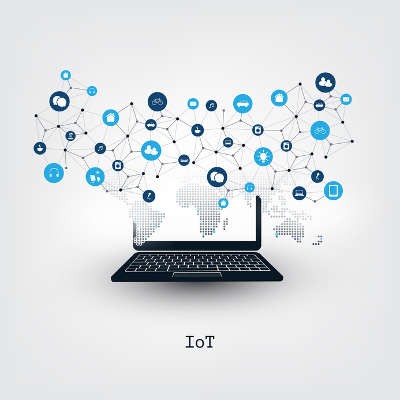
The Internet of Things is everywhere, which means that potential security risks are also everywhere. Your business needs to take the risks presented by the IoT into account and prepare accordingly.
When considering solutions to help ensure your business’ IT security, mobile devices often go overlooked. This makes sense--for most of the time the telephone has existed, it has been attached to a wall, only capable of transmitting sound. However, with phones now being palm-sized computers that we carry in our pockets, keeping them safe from cyberthreats has a new importance.
As cybercriminals become increasingly sophisticated in their methods of attack, it is important that your staff--the ones on the front lines--are educated to spot these attempts and know what to do if one is encountered. In order to spot these attacks, it is important to know what to look for.
When so much of what we write is about the threats and attacks that exist (and are carried out) in cyberspace, it is particularly refreshing when we can discuss those responsible for these attacks in the context of their legal proceedings. For example, today we are able to discuss how actors in some of the biggest recent cybersecurity events have entered guilty pleas.
Put yourself in the shoes of a cybercriminal. If you were to launch a ransomware attack, who would be your target? Would you launch an indiscriminate attack to try to snare as many as you could, or would you narrow your focus to be more selective? As it happens, real-life cybercriminals have largely made the shift to targeted, relatively tiny, ransomware attacks.
Tech support is there to help you, except when it isn’t. Many fraudsters will pose as a support technician to gain a target’s trust, only to cause them serious issues. To keep your organization safe, make sure that you are able to spot the warning signs of tech support fraud.
January 28th marks Data Privacy Day, a day intended to raise awareness of the importance of data privacy and educate users and business owners of its benefits. Spearheaded by the National Cyber Security Alliance, there are plenty of lessons the NCSA has to share with businesses as this day puts their, and their clients’, privacy in the spotlight.
The Internet of Things is now a commonality. IoT devices are in our homes, in our offices, and in our pockets. While these devices are incredibly convenient, they also contribute to some major security risks. For today’s tip, we’ll review some of the ways to reduce these risks while still leveraging the IoT.
Connectivity is one of the major benefits of mobile technology, but some developments have taken this aspect to crazy (and borderline ridiculous) heights. The Internet of Things is forcing businesses to rethink the conventions of connectivity in ways which previously weren’t particularly necessary. Unsurprisingly, the Internet of Things is forcing business owners and normal users alike to remain skeptical of connected technology to a certain degree, and a survey from Cisco showcases this trend perfectly.
Mere months after the firmware in their computer chips was found to be seriously flawed, Intel’s flagship product has once again brought some unpleasant attention to the company. While the issue now has a fix, there was the possibility that a solution could depreciate the functionality of the CPU.
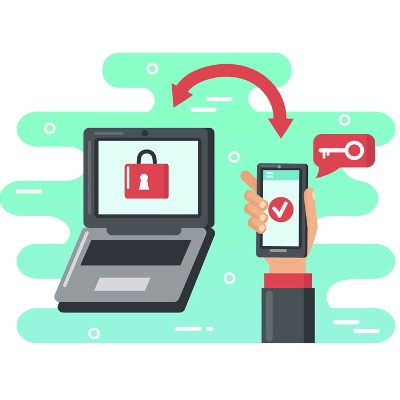
2FA, or two-factor authentication, is a simple and effective means of boosting your cybersecurity. Despite this, a study performed by Duo Labs suggests that 2FA has not been adopted as much as one might expect, or as much as it should be.

2018 could potentially be a big year for your business. However, your business needs to be around long enough to see any positives that may come its way, which means you need to be prepared for the negatives. Here are five resolutions for you to make this year to help preserve your organization’s cybersecurity.
Today’s business relies on mobile devices, like smartphones, to guide them to productivity and efficiency. In fact, the vast majority of people in today’s society own a smartphone. A report shows that 90 percent of people younger than 30 own a smartphone, which means that the forward-thinking business hiring talented millennials may want to start thinking about how to secure any mobile devices that they use to access company data.
Downloading an application on an Android device is fairly simple: access the Google Play store, find the app you want to download, and press the button that says install. However, it is also too easy to simply hit ‘Allow’ once the app starts asking for ambiguously-worded permissions. Today, we’ll examine what these permissions actually mean.
This Christmas, technology is everywhere. Traditionally, the holidays were a time when things slowed down for businesses and people spent time with their families and put their work on the back burner. Those days are over. Today’s professional is lucky to get a day off for Christmas; and, because of the way business works today, may be asked to do more than ever around the holidays.
Few security problems are more dangerous than a network breach. Considering how much you could lose from an unexpected bout with a hacker, it’s no surprise that businesses are concerned. Yet, even some of the most troublesome threats like phishing attacks are often ignored. A new study introduces the groundbreaking thought that phishing attacks should be at the forefront of a business owner’s mind regarding network security.
Android is a very common operating system on mobile devices around the world, and because of this, you won’t be surprised to hear that hackers are always trying to one-up security developers. If your business takes advantage of Android devices like smartphones or tablets, you’ll want to consider these 11 security tips that will help keep your organization safe.
The holidays are a time filled with good food, visits from dear friends and family, and exchanging gifts with those you care about. However, to keep the season bright and merry, you need to be a little cautious during your next gift exchange, as many gifts can present some unexpected risks to your recipient’s security. Be mindful if you see the following items on someone’s wish list.
Data security has to be a core consideration of the modern business, so every small effort you can take to protect your business is important. One such effort is the implementation of two-factor authentication. However, your employees may not initially feel entirely comfortable with some facets of two-factor authentication.
While many might see having a credit card stolen as identity theft, this is an oversimplification that can prove dangerous. While credit card theft can be an element of identity theft, equating the two means that other forms of identity theft are overlooked. In today’s blog, we’ll go over why identity theft and credit card theft aren’t exactly the same thing, and what you can do to help keep your business safe from damage.
Insider threats contribute to a significant number of data breaches. These cases of data exposure are enabled by a member of your staff, whether they intended to harm your business or simply made an honest mistake. With so much focus directed toward the threats out in the world, sometimes we forget that the biggest dangers can be among our ranks. To make up for this, we’ll discuss a few ways to keep insider threats from doing your business too much harm.
If your business were to be struck by a Distributed Denial of Services (DDoS) attack, would it be able to recover in a timely manner? Do you have measures put into place to keep them from hampering your operations? While most organizations claim to have sufficient protection against these dangerous attacks, over half of them have simply proven to be ineffective against DDoS.
Business security is a common issue for many small organizations with limited budgets, but it doesn’t have to be an issue. We’re here to help you master the seemingly endless threats and security problems that major vulnerabilities present to the small business environment, and it all starts out by understanding how even basic security solutions protect your organization.
Without competition, there would not be businesses. However, this competition needs to be fair in order for small businesses to embrace new opportunities that arise. A U.S. bill that allows for both of these goals has passed in the House of Representatives and will be voted on in the Senate.
The ability to vote is considered one of the great rights in the world, putting one’s voice and opinion into action to shape history. However, it has been demonstrated that the electronic voting machines that some states in the U.S. use simply aren’t secure enough to ensure that the democratic process is preserved.
There are many organizations in the world that simply can’t have cybercriminals and hackers interfering with their data. One of these organizations, CERN (whose acronym translates to the European Laboratory for Particle Physics) has far too powerful of a computer grid to allow hackers to access it. To keep it safe, CERN has deployed what may be the future of cybersecurity: artificial intelligence.
You’re lucky to go a month without seeing news of some devastating data breach. With more businesses gearing up for the worst, what are you doing to protect your organization’s intellectual property and sensitive data? You can start by implementing a new type of authentication system that’s much more secure than your current security strategy--two-factor authentication.
Physical security is more or less what it sounds like: security intended to protect the physical infrastructure that houses your business and your critical data. Many of the pieces of physical security will seem very familiar, even if you didn’t know the right terms for them.
Considering how often hackers target financial credentials like credit card numbers and expiration dates, it’s not surprising that ATMs can provide a wealth of information to them. Hackers are willing to go exceedingly far just to get their hands on these credentials--including physically altering the devices themselves to install skimmers and other technology on them. Unless you know what to look for, it can be difficult to tell if a machine has been tampered with.
You might be surprised by how many of your organization’s security issues originate from within. A major contributor is user error, which can lead to some pretty severe problems reaching from your data security, to your workflow, all the way to the continuation of your business itself.
Considering that since January 1st of this year, there has been upwards of 10 million personal information records lost or stolen each day, odds are that you, or someone you know, has had their records compromised by a data breach. With such a high incident rate, individuals and businesses that have never received any kind of notification that their records were included in a breach, generally consider themselves lucky and assume that they are not at risk of identity theft or unauthorized account usage. Unfortunately for them, that is not always the case.
A surprising number of security issues come from inside your organization. User error on the part of the employee can present major problems for your workflow, data security, and the integrity of your business. User error could be something as simple as an employee clicking on the wrong links when they receive a suspicious email in their inbox, or if they are accessing data that they simply have no business accessing in the first place. Sometimes businesses will even completely forget to remove employee credentials when they leave a project or the company creating a breachable hole in your network. Regardless of the reason, user error can be a detrimental occurrence, and one which must be prepared for.
If you run a small business, you might consider yourself a small target of hacking attacks. It might make sense to think of it in this way, but this actually is not advisable to think of it in this way. According to a recent survey by CNBC and SurveyMonkey, only two percent of small businesses see cyber attacks as anything worth worrying about. This leads us to the next question… are you one of them?
Most small businesses don’t have the luxury of an in-house IT department. Even if they do have one, it’s likely a small department run by a handful of folks who have their hands full with either implementation projects or simply staying afloat. With opportunities to invest in the improvement of your infrastructure few and far between, a network audit can help you identify where your network suffers most, and what you can do about it.
If you’ve watched the news lately, chances are you’ve seen the Equifax breach and the ridiculous fallout it has caused. Over 133 million personal records have been stolen. While it’s difficult not to feel individually victimized by such a breach, it’s important to remember that it’s often not your specific credentials targeted by hackers. Since businesses often hold onto valuable information, they have big crosshairs painted onto them. It doesn’t even stop there--any vendors or partners you deal with are also in danger of hacking attacks.
Data security, always an important topic, has been made even more urgent by the Equifax data breach and the fact that 143 million users had their personal information stolen after entrusting it (or not) to Equifax. You need to consider what would happen if your business were on the receiving end of a data breach, and prepare to handle this truly unpleasant circumstance.
Cybercrime is the fastest growing criminal activity in the world. From the largest enterprise to the individual, it can affect anyone, anywhere. To help ensure the cybersecurity of American citizens and their businesses, the Department of Homeland Security (DHS), United States Computer Emergency Readiness Team (CERT), and the Federal Bureau of Investigation (FBI) and other agencies work together every October to raise awareness about the threats people face online through a series of educational events and activities.
The 2016 United States presidential election was an ugly one for multiple reasons--chief among them the accusation that hacked voting machines could have altered the outcome of the election significantly. Thankfully, there are steps being taken to alleviate the worries that third parties might alter the outcome of such important events.
Dealing with disasters are a part of doing business. You know how difficult it is to recover from a devastating flood or storm. While businesses tend to suffer from these situations, countless individuals suffer every time a natural disaster hits. Just take a look at the United States in recent weeks. Even though you may want to donate to people suffering from hurricanes, there are illegitimate charities out there that want to make a quick buck off of your generosity.
In the last few months, there have been several high-profile data security breaches that resulted in the theft of millions upon millions of non-public information records. Though much of the focus in the aftermath of the breaches was on personal identity theft and prevention, it’s important to keep in mind that not all the stolen data records target individuals. Business entities are also at risk. Vendors and partners that you do business with regularly will probably have record of your company’s non-public information, payment information, or tax ID number.
About two and a half years ago, Lenovo was brought under fire for manufacturing products that had adware preinstalled on them. This malware, a variant called Superfish, was installed on up to 750,000 Lenovo devices, and the company--eager to put this incident behind them--still refuses to admit fault, despite paying reparations and other fees as a result. Superfish allowed access to sensitive information and a root certificate, which could be used to access encrypted data on the same network. All in all, it was a rather embarrassing and dangerous scenario for Lenovo, and it comes with its fair share of consequences.
When it comes to Internet threats, ransomware is the one that causes the most fear, especially for small and medium-sized businesses, as it should. According to the Cisco 2017 Annual Cybersecurity Report, ransomware is growing at a yearly rate of 350%. It’s time to make sure that you’re doing what you can to stop your business from becoming another ransomware statistic. Here’s five very good tips that will help you avoid becoming a victim of the next big ransomware attack!
Chances are, you’ve heard of phishing before--emails that promise some benefit or prize if you only click on the included link, that actually only results in trouble for you and your data. Unfortunately, as technology has embraced mobility, so have phishing attempts. This is why you must also be aware of SMiShing scams.
Network security is an important part of keeping both your business and your staff away from online threats, but it’s not enough to implement the best, most comprehensive solutions on the market. There are a surprising number of facets to network security, and in order to optimize protection against online threats, you’ll need to know all of them. Thankfully, you don’t have to do this alone.
There are dozens of surveys and reports produced each year that evaluate digital threats and cybercrime. Not every publication applies to every business - but many of them do have some important take aways about the best practices of handling IT. Here’s few highlights from the 2017 Cyberthreat Defense Report that offer important insight for SMBs and their use of technology.
Does your business focus enough on security? One of the best solutions that you can consider is a virtual private network, or VPN. By implementing a VPN solution, you can improve the security and privacy on your devices even while out of the office on important business trips or at conferences. What can a VPN do for your business?
In February of 2016, President Barack Obama passed a Cybersecurity National Action Plan. The plan implemented near-term actions and developed a long-term strategy to enhance cybersecurity awareness and protections, protect privacy, and maintain public safety. Taking action against cybersecurity now will assist with ensuring economic and national security, as well as empowering Americans to take better control of their digital security.
August saw yet another Patch Tuesday designed to resolve security issues in Microsoft products. Out of the 48 vulnerabilities resolved, 15 affected Windows, while 25 were rated as critical, 21 as important, and 27 that allowed for remote code execution. This might sound a little overwhelming, so we’ll try to simplify it a bit--a lot of flaws were fixed, and the majority of them can be considered dangerous for your organization.
It’s one of the most commonly-known computer issues: infection. There are plenty of threats out there that could potentially take hold of your PC. The question is, do you know how to proceed if one does? This blog will go into just that.
Security best practices demand that a workstation should never be left unlocked. However, it can be really tempting to leave it unlocked if you only plan on stepping away for a moment--but unfortunately, that moment can easily turn into many if you are distracted from your task. Fortunately, there is now a fix that relies on the one device most of us are never without: our phones.
Phishing scams have had a supporting role in many of the latest cyber threats, often as the means the attacker has used to start off their attack. This attack vector is relatively easy to avoid in most cases, but requires education for the end user.
Chances are, you’ve heard of spam, but many don’t know how to identify it in the first place, let alone work around it. Frankly, spam can cause some serious damage to your business if not properly dealt with. In today’s blog, you’ll learn what makes spam, “spam,” and how you can keep it from infecting your inbox.
Everyone has a right to privacy. However, with the popularity of social networks, the Internet is a very hard place to remain a private individual. Digital communication is everywhere. Cybercrime has become a fairly regular event. This week’s tip of the week takes a glance at three websites that you can use to help enforce your right to privacy.
Over the past several months, while watching the news or reading about business and technology, you’ve probably encountered a few words, such as ‘ransomware’ ‘exploit weakness’, and ‘security patch’. These terms are used often, and you may be confused as to what they really mean, and how they relate to you and the security of your business’ data.
There are some tasks that are essential to the health of your business’ network. For example, you need to make sure that you are engaging in regular network management activities. Do you know what this task entails?
It doesn’t matter if you’re a small business, a large enterprise, or if you're in a rural town, or a larger city. You still have to worry about the security of your data and the integrity of your infrastructure. Thankfully, there are services out there that allow even small businesses to leverage powerful, enterprise-level tools for maximum network security. The most valuable of all is perhaps the Unified Threat Management (UTM) tool.
After a year like 2016, it should come as no surprise that 2017 has been a year of significant cyber threats. Looking back on the events of the year so far may help us to anticipate what kind of threats we can anticipate in the second half of 2017.

Security is one of the most crucial pain points of all businesses, but sometimes it can be tricky to implement solutions if you’re not sure what you specifically need. Network security isn’t easy, but it doesn’t necessarily have to be hard. If you have difficulty reinforcing a security state of mind in your office, we have good news for you; by keeping these tips in mind, you’ll be able to keep your business more secure than it would be otherwise.
It goes without saying that businesses that don’t want to invest in the latest and greatest software solutions will be denying themselves the opportunity for more productivity and efficiency, but most of all, security will be put on the line. A new study has proven that there is a direct correlation between businesses that run older versions of out-of-date operating systems and web browsers, and organizations that suffer from data breaches.
Looking for a way to protect sensitive files on your PC? For Windows users, one easy safeguard you can take is to encrypt the files and file folders containing your sensitive information.
The more users on your network, the more risk that user error could create a costly mistake for your infrastructure. While untrained employees could certainly ignore security policies, the greatest risk to your organization is an unexpected one. Research has proven that your company’s CEO, as well as other C-suite employees, hold one of the greatest risks for your business’ security.
It doesn’t matter which industry your organization falls into. Your business will always be susceptible to threats in some way, shape, or form. Therefore, it’s your responsibility to ensure that your business understands how to protect itself from these threats, before it’s too late. We’ll help you learn more about the various issues that you need to watch out for, and what you can do to stop them.
The term ‘spyware’ has some clearly negative connotations to it, and rightly so. This variety of malicious software can cause no small amount of trouble if left unchecked. What follows is a brief overview of spyware, and what measures you can take to protect yourself and your business from it.
Patrons of Chipotle Mexican Grill might soon start to feel sick to their stomach, but it will have nothing to do with the food--the company has disclosed the full list of upstate New York restaurants affected by the point-of-sale malware that infected the company between March 24th and April 18th of this year. Could this breach have compromised one of your cards? Could you be vulnerable in some other ways, too?
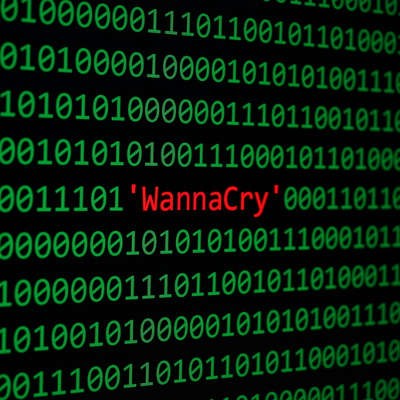
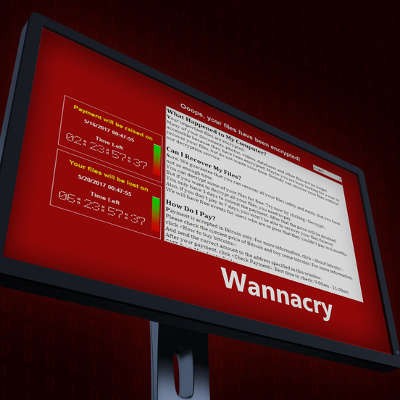
On May 11, 2017, the WannaCry ransomware spread around the globe like wildfire and disabled computing infrastructures belonging to organizations of all shapes and sizes. As the world watched the news unfold, it seemed as if practically no business was immune to this ultra-powerful ransomware. Yet, many quick-thinking organizations were. All because they had the foresight to follow IT best practices.
On May 11th, 2017, the world was introduced to the WannaCry ransomware. The ransomware spread around the globe like wildfire, infecting hundreds of thousands of devices and catching many major organizations and businesses by surprise. The full extent of the ransomware’s damage is still being assessed, yet, one thing we do know: this whole fiasco was preventable.
The Internet of Things is all around us, in our homes, our offices, and even our cars. While this connectivity can provide a more unified and automated approach to daily tasks, it has the downside of enabling certain security threats to go unfettered. A prime example are the IoT-driven botnets that seem to be increasing in popularity.
Microsoft has resolved what a security researcher tweeted was “the worst Windows remote code exec” in his memory. This vulnerability allowed a targeted file to implement remote code execution processes, manipulating the infected system and spreading the infection to other machines. In other word, it’s a bad problem to have. The scariest part: the attack would be triggered if a particular file were to be scanned by the Microsoft Malware Protection Engine.
If fiscal reasons have stopped you from securing your network against ransomware thus far, you may want to reconsider your strategy. Not only are attacks still becoming more and more prevalent, but the developers of ransomware have lowered the price of admission for aspiring cyber criminals. Fortunately, there are some steps you can take to keep your business protected against a ransomware attack.
How many emails does your organization receive every day? Chances are that you can’t find time in your day-to-day operations to maintain and manage your email solution as well as you’d like, and in a world where threats to your organization’s network lurk around every corner, you can never be too careful. How can you make sure that you’re taking proper care of your business’s email infrastructure, without sacrificing the time and manpower required to do so?
It’s difficult to know what you can and can’t trust in the realm of cybersecurity. However, you’re likely to trust your own security solution. Yet, even this could be a devastating oversight, as some malware masquerades as your security software.
One thing that both fishing and phishing have in common is the use of lures. With the right lure, the chance of successfully catching the target improves. When it comes to the digital lures seen in phishing scams, research shows that social media is the most effective.
An unfortunate fact about the modern business world is that any organization that utilizes technology is playing with fire. Cyber attacks can circumvent even the most well-protected networks through the company’s users. This is, unfortunately, something that business owners often don’t learn until they’re on the receiving end of an attack; just like the two companies that fell victim to phishing attempts that were supposedly operated by Evaldas Rimasauskas, a Lithuanian hacker who has been accused of stealing $100 million from them.
When you hear the term “hacker,” what do you imagine? You likely see what many see, a lone user hunched over a computer, creating chaos for chaos’ sake. However, this is a dangerously narrow view of those who qualify as “hackers.”
Every time you pick up a personal computer from a vendor, chances are that it will have an extremely basic firewall pre-installed. These consumer-grade firewalls leave much to be desired, especially in the business environment. You’ll want to make sure that your organization is equipped with enterprise-level solutions designed to protect on both a fundamental level and an advanced level. To do this, you want to take advantage of a Unified Threat Management solution.
There are an unfortunate number of cyber threats out there; protecting your company’s network from these threats is paramount. In order to find out how acquainted you are with the malicious programs and attacks that could harm your business, we’ve devised this quick quiz to test your knowledge.
You might take extreme measures to keep your business’s devices from contracting the odd virus or malware, but what if all of your efforts are for nothing? You could have the greatest preventative solutions out there, but you can still get infected by some nasty threats, the reason being that the device was infected before you even started using it. You might be surprised by how often this happens, even to wary business owners.
The average office worker needs to access the Internet in order to do their job. What they don’t need to access is cat videos, memes, social media, online games, and malware-ridden websites. How can a business owner clamp down on Internet activity in their office? By equipping their network with a content filtering solution, of course.
Security issues can have any number of causes, meaning that every business needs to have a comprehensive security solution. This doesn’t mean, however, that there aren’t additional, small measures to implement that can give your organization’s security an added boost. Here, we’ll talk about two: keeping your software patched, and identifying social engineering attempts.