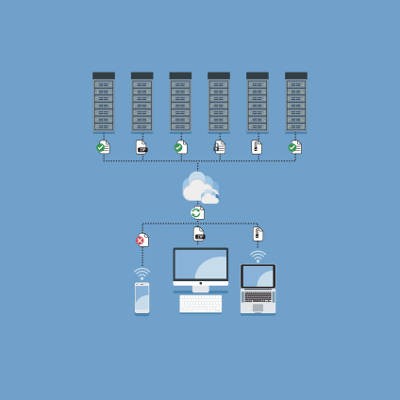
Your business relies on technology to ensure operations proceed smoothly, but the way that it’s managed can have a major impact on the way your company functions. Think about it like this: if you have software solutions hosted on different computers, but not in any centralized location, only those computers will be able to use these solutions--potentially hampering your staff’s ability to be productive. How can you make sure that this doesn’t become a major problem?
Tech Minutes
The cloud has revolutionized the way that businesses approach computing. Companies can implement solutions in a flexible and accessible model that makes it much easier to take advantage of technology solutions. Yet, you should know that not all clouds are the same, and you can’t treat them as such. Here are four questions that you need to ask your cloud provider about the services that you’ve been rendered.
Data management is exceptionally important for any business, and companies that use the cloud in any sort of capacity need to be considerably more cautious in the way that it’s managed than a business that only hosts data on an internal server or network. The cloud makes things more complicated at times, but if managed correctly, it can lead to unprecedented efficiency for your organization.
Cloud computing is one of the best ways that your business can compete with larger enterprises. Today, you can adopt the cloud and take advantage of countless services, but are you doing so yet? If not, we’ll help walk you through some of the best ways that your organization can leverage the cloud.
Regardless of where it is kept, your data’s security is of paramount importance. However, this doesn’t mean that the decision between leveraging the cloud or an on-premise server for your data storage needs isn’t an important one. For this week’s tip, we’ll weigh these options against each other to help you establish which is the better option for your business’ needs.
Any business’ IT is reliant on that business’ computing infrastructure, which makes the infrastructure an important topic for every business to consider. As we progress into 2018, it is important to stay up-to-date and considerate of each new development and trend.
Technology is a necessity for businesses everywhere if they are to reach their goals, which are themselves influenced by the technology that businesses have access to. If this cycle is to continue, a business needs to establish what is expected to come next in the line of IT innovation. From the looks of it, businesses are currently placing convenience in high regard.
Technology is a big deal for the modern business. This doesn’t mean just your organization’s workstations and servers either. Today there is a big shift in the way that small-to-large businesses get the computing resources they need to succeed. As cloud-based offerings continue to offer organizations computing options they haven’t had before, one hosted solution stands out for the value it presents: file sharing.
If you’re like most businesses, you almost certainly rely on email on a daily basis. However, if your email is hosted on an in-house server, you are becoming less like many businesses, as they are moving their solutions to the cloud. Here’s why you should follow suit and make the switch yourself.
Virtualization can change a lot for your business. Since you can use multiple types of solutions to expand the way your operations work, virtualization is the perfect strategy to improve your business. But what is virtualization, exactly?
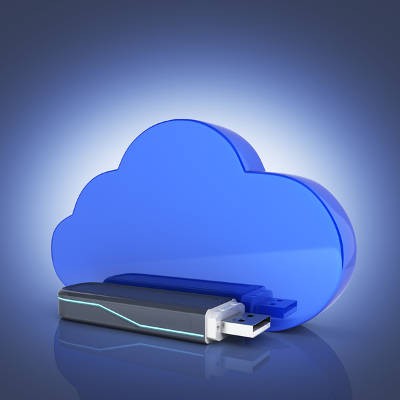
When it comes to quick and easy document sharing, most people will reach for a USB drive without a second thought. However, you may want to reconsider and use the cloud instead. Let’s explore why.
Smart organizations are always looking for ways to improve how they do business. Digital transformation is a way for businesses to get the most out of their technology by improving workflows and overall efficiency. What does digital transformation look like and how can you implement it in your business?
As technologies emerge and trends change, organizations face massive paradigm shifts involving the tools and methods they use to conduct business. Right now, we’re in the middle of one of the most significant shifts in decades; more and more businesses are relying on cloud computing.
When you hear us speak the world “cloud,” it’s not the fluffy white forms soaring overhead. The cloud that we refer to are computing systems that are delivered to you through an Internet connection. The popularity and demand for cloud services has led both ordinary consumers and businesses alike to seek them out. Despite this demand, in the United States alone, there are over 500,000 IT jobs available. This suggests that there may be a shortage of workers with the requisite skillset and can provide a unique incentive to join the industry as to take advantage of such massive growth.
Are you still hesitant to adopt cloud computing for your company’s IT needs? For the cautious business owner, adopting new technologies isn’t a move that’s to be made lightly. However, cloud computing is much more than a passing fad. In recent years, the cloud has become such a reliable and efficient tool for businesses that it deserves your attention. Take for example these three misconceptions about the cloud.
Misconception 1: The Cloud Isn’t SecureIt’s understandable why business owners are hesitant to store their sensitive data in the cloud. After all, stories of hacks against major corporations appear in the headlines all too often. Although, it’s important to keep in mind that these sensational stories don’t accurately reflect the state of cloud security today. In fact, studies show that in some instances, the cloud is actually more secure than storing one’s data on-premise. This proved to be the case in a study by Schneider Electric where 40 percent of participants were found to be hosting their security applications in the cloud, and 45 percent of participants said they are likely to move their security application to a cloud platform.
That said, you should still exercise caution when selecting a cloud platform to host your company’s data. It’s prudent to perform your own analysis of costs, opportunity, and risk, as well as to be wary of exaggerated security claims by cloud providers. One way to go about this is to check with vendors for references. They will be able to tell you what cloud providers are reliable, and which ones tend to overpromise.
Misconception 2: The Cloud Costs Too Much In the past, a move to the cloud may have been perceived by budget-minded business owners as too major of an expense to commit to. Today, the cloud computing market has become so varied that you’ll end up with several different estimates when you shop around with different cloud providers. Therefore, it’s worth it to be diligent when shopping for a cloud provider.
Then there are the cost benefits you should consider that extend beyond the initial price tag of cloud migration and the subsequent monthly fees. This includes opportunity costs such as time to market, disaster recovery savings, and customer satisfaction. Also, a business owner shouldn’t overlook finally being able to avoid paying for on-premise maintenance, remediation, hardware costs, application upgrades, and the list goes on.
A connectivity to the cloud is a great opportunity that your organization can leverage to its advantage, but only if it’s done well. No two businesses will have the same exact configuration when it comes to cloud, as the needs and responsibilities that are accomplished through that cloud solution will change. This week’s tip is dedicated to helping you discover which cloud solution is right for you.
Did you know that 43 percent of IT decision makers have plans to increase their cloud investments throughout 2017? This is according to a recent survey which, when combined with the steady rate of cloud adoption seen during the past decade, proves that the cloud is the next phase in the evolutionary development of business computing. While this shows great promise for the future, cloud adoption is not something to dive into blindly.
The cloud has seen explosive use of its services and solutions since it was first introduced, and for good reason--it offers benefits that are too useful for a business to pass up. These benefits vary, but all serve a singular purpose: to make the user’s experience easier. Here are some of the ways that the cloud can enhance the daily operations of your business.
Security: Starting off with a critical consideration for any business, the cloud can offer improved data security. Cloud providers base their entire business on their ability to safely store your data, and so they invest heavily into their security protocols.Furthermore, you can greatly reduce the risk of a lost device leading to a security breach, as there is cloud-based software that permits you to wipe the device remotely. This prevents your data from falling into the wrong hands, whether the device is misplaced or stolen.Reliability: Cloud providers stake their reputations on the ability to guarantee service to their clients at all times. While true 100 percent uptime is impossible, a cloud provider will keep the necessary skilled manpower on-hand to resolve any issues as efficiently and quickly as possible.Cloud services also allow you to enjoy the use of resources without worrying about keeping them up-to-date. Most providers will take the liberty of implementing operational and security updates on your behalf. This leaves you free to remain productive, instead of interrupting the workflow to install another patch.Access: A cloud solution allows productivity to have a place outside of the office. If an employee gets sick, or otherwise can’t leave their home, a cloud solution gives them a way to access their work files and maintain their output.The same goes for an employee on the road. If they can establish a secure connection, the cloud will allow them to continue their progress on work-related tasks.Financial Effects: Perhaps the most enticing feature, the cloud also allows for some considerable cost savings upon implementation. Since cloud computing utilizes your provider’s hardware instead of your own, you are no longer responsible for its acquisition and upkeep. As a result, you can otherwise utilize the funds that would have been devoted to your on-site infrastructure and the not-always-considered utility bill.

Directive can help you to enjoy these benefits. Call us at 607.433.2200 to find out more about what cloud-based services we offer.
By now, you've heard about the many advantages of hosting your data and applications in the cloud. To take advantage of these money-saving benefits, you'll want to select the right cloud provider to host and manage your data. Otherwise, you may end up with poor support and disappointing service.
To help you pick the right hosting provider, you first need to familiarize yourself with your options. Here's a walkthrough of what you need to look for.
A short time ago, cloud computing was a resource that was only taken advantage of by organizations that could afford to virtualize and manage their hosted platforms. Nowadays, many businesses, including startups, are using cloud computing for their organization’s primary computing functions. As this enormous shift happened, many of the world’s largest companies have pushed their cloud platforms forward to offer secure storage, software deployment, and even communications for organizations that are either just starting out, or are looking to reduce their capital computing and support costs.
Microsoft Office 365 offers many different solutions that allow your employees to be able to do their jobs, keep everything organized, and communicate efficiently. Although, it can be tricky to select a good Office 365 plan for your business. To help streamline operations, the Microsoft Office 365 Business Premium edition offers a versatile selection that can meet any needs your business may encounter.
The cloud is revolutionizing the way that businesses store and manage data, applications, and even abstracted hardware like servers and desktops. However, some businesses are still reluctant to adopt the cloud, despite its overwhelming advantages for small and medium-sized organizations. Therefore, we’re taking it upon ourselves to “demystify” the cloud, so you can see just how great of an innovation it is.
The cloud has embedded itself in the way that modern businesses manage their technology. By providing a way to access important data and applications on a whim, the cloud has made it easier than ever to stay productive both in and out of the office. How does your business plan to leverage the cloud in 2016?
There comes a time when your business needs to upgrade its technology. Holding out for as long as possible might seem beneficial for your wallet, but in the end, it’s much more cost-effective to replace outdated and inefficient technology before it winds up becoming a liability. In many cases, businesses might not even realize how much their outdated technology is hurting their bottom line. How can you know with certainty that it’s time to upgrade your technology?
Businesses have a lot of data that they need to access on a daily basis. However, where this data is stored can have a dramatic effect on your organization’s productivity. Whether it’s stored in the cloud, locally on your in-house server, or in a safe and secure data center, you need to know where your data is stored, and what purpose it holds for your business.
The cloud is a technology that’s taking the business world by storm. Most organizations take advantage of some form of the cloud or another, be it for data storage, email hosting, or application deployment. Either way, it’s clear that the cloud is a technology that your business should be investing in, especially if you want to stay current in an increasingly competitive environment.
The cloud might be a great new data storage resource for SMBs to get more done during the workday, but it’s far more than that. Uses for the cloud are constantly evolving to adapt to a shifting online environment, and it’s now an indispensable tool for the serious modern business. The cloud is changing the way businesses handle their data and information, but it can do so much more.
As an increasingly more important component of the modern technology infrastructure, the cloud can be a daunting new addition to any organization’s business strategy. Yet, many businesses still haven’t made the jump to the cloud, perhaps out of fear that their use of the cloud won’t significantly benefit them.
With the aid of technology, today’s workforce is more connected and faster at responding to problems than ever before. While this is great for productivity, it presents challenges for business owners to offer their workers current solutions that won’t hold them back. For many old-school employers, this may require a new way of approaching technology.
There’s a reason why so many businesses have adopted the cloud as a valuable asset, and it’s because it improves the deployment and accessibility of critical information and applications. These benefits are so valuable that organizations are always trying to find a reliable way to replicate them for the rest of their business systems. This includes your internal network infrastructure.
Cloud services are growing more common to the world of small and medium-sized businesses, to the point where almost all businesses take advantage of the cloud in some way, shape, or form. However, a business’s specific cloud needs vary, and the same solution doesn’t work for everyone. Still, there are a few notable qualities that most SMBs want for their cloud in 2016.
When one thinks about The Internet of Things, new and fantastic devices come to mind, like smart homes, smart cars, mobile devices, and more. While innovations like these are fueling the excitement behind the IoT, it’s actually the smaller, behind-the-scenes IoT devices which are poised to bring about the most significant change to our connected society.
Security is a huge problem for businesses that take advantage of the cloud, but never to the same degree. It’s often the nature of the industry which dictates how much a business should invest in cloud security. However, despite these differences in policy, there are some aspects of cloud security that absolutely can’t be overlooked, including data permissions, account security, vulnerability to malware, and other online issues.
There was a time when the cloud was considered nothing more than a novelty, but now that most serious businesses are taking full advantage of cloud computing, it’s time that you consider it a viable option for your organization. For those who are unfamiliar with cloud computing, though, you want to make sure that you properly plan out the process of moving to the cloud. When it comes to remodeling your IT infrastructure around the cloud, doing so can save you a lot of pain.

The cloud is a fantastic addition to the business environment that can aid your organization in achieving great things with your technology, but some professionals still feel that the cloud isn’t as secure as it needs to be, especially in light of the incredible number of threats loose on the Internet. However, contrary to popular belief, the cloud is a very effective way of storing data, particularly for your business’s data backups.
More businesses today are taking advantage of cloud computing than ever before, but one thing isn’t certain; what type of cloud solution a business needs to be using. While there are public, private, and even hybrid cloud solutions, the private cloud stands out as an ideal solution for organizations that want optimal control over their data. How can your business benefit from leveraging a private cloud solution?
Your business’s desktop infrastructure is an imperative part of operations, but thanks to the latest virtualization technology, there are easier ways to manage multiple desktops. For example, you can take advantage of an in-house virtual desktop infrastructure, or implement a dynamic outsourced Desktop as a Service (DaaS) offering. Let’s take a look at the differences between the two.
Cloud computing grows more popular by the day, and it continues to show its value to a modern business world. Being able to dynamically access content while online is a great asset, but of course, this doesn’t come without taking some risks and gambling your data’s security. Thankfully, there are some ways in which you can tip the odds in your favor.
In 19th century America, the hottest innovation for political campaigns was the exposed stump from a fallen tree, thus the stump speech. This technology revolutionized politics by allowing the candidate to elevate himself above the crowd for greater visibility and to better project one’s voice. Today, the political stump speech is obsolete, having its usefulness far surpassed by the technologies of the modern age.
Technology has the potential to make the future of your business a success. Although, if you don’t manage your company’s technology properly, it can hinder your business, causing you to miss out on future success. In order to take full advantage of what technology can do for you, you’ll have to keep the future in mind.
Technology changes constantly, and as such it can be difficult to change and adapt to new trends in the industry. Cloud services are making the implementation of scalable solutions somewhat easier, but often times integrating cloud solutions is forgotten by business owners who don’t really know what the cloud can offer their organization.

It’s been proven that the cloud is ideal for improving the way that organizations just like yours are handling their day-to-day operations, bringing both an increase in profits, net growth, and staff productivity. So, naturally, small businesses are moving in the direction of taking advantage of the cloud for their computing needs.
With so many businesses switching to the cloud for their data storage needs, it’s assumed that their data will be safe and sound. However, this is only somewhat true. While it’s true that the cloud is a secure and effective way to store your data, the virtual cloud is still vulnerable to freak accidents. Take, for example, the time when Google was struck by lightning last month… four times.
Cloud computing is already heavily utilized in the business world. Companies that were looking to add mobility, collaborative capacities, and overall flexibility, have rolled out cloud computing platforms for their business and it’s resulted in quite a few benefits. In fact, according to a 2014 survey, about 70 percent of enterprise-level companies have instituted some sort of IaaS, PaaS, or SaaS solution. As more companies implement cloud solutions for critical business functions, owners of smaller businesses are asking us the inevitable question, “Is the cloud right for my business?”

By now you’ve heard of managed services: Technology-related services that allow businesses to get the IT support they need without taking on the often large and unexpected expenses that usually accompany them. This allows a business the ability to budget a flat fee for their technology support each month, and address IT support needs that include communication, application deployment, and the proactive support of the business’ IT infrastructure. The overall managed services industry has seen immense growth as businesses look to cut their support costs, while continuing to build onto their IT infrastructure.

Most small and medium-sized businesses aren’t new to IT. For the past 15 years or so, SMBs have been attempting to keep up with their larger competitors through the implementation of technology systems. They’ve instituted computing systems from servers to workstations to mobile devices, peripheral technologies like fax machines and copiers, “state of the art” networking technology, and all other sorts of tech, just trying to keep a leg up on their competition.
How much thought have you put into your business’s cloud solution? If you haven’t already considered cloud computing, you definitely should. There’s a reason why cloud spending is in third place overall in IT expenditures, and that’s thanks to the overwhelming benefits that it offers in contrast to the traditional IT network model.
When it comes to your business' backup, you have a ton of options, but how much thought have you honestly put into it? It’s naturally one of the most imperative parts of your entire IT infrastructure, so you want to pay particularly close attention to how you are storing and receiving your data in the event of a disaster.
Do you know the difference between virtualization and cloud computing? If you don’t, it’s not a reason to be embarrassed. Most business owners have a hard time distinguishing the two and find the topic to be rather technical. Yet, we think businesses can benefit greatly from knowing the differences so they’ll end up with the right solution.
Despite the clear advantages that cloud computing offers to modern businesses, some organizations are hesitant to incorporate it into their IT infrastructure. Due to the cloud’s fairly recent insurgence, it’s natural to feel some sort of anxiety toward cloud integration. However, these fears aren’t necessarily warranted, and some can directly influence your ability to grow and expand.
A few short years ago, it seemed like one of our primary missions was to educate the public on the benefits of cloud computing. Now, almost everyone uses the cloud (whether they fully understand it or not), and, they’ve developed expectations on what the cloud should do. If a cloud service isn’t meeting these expectations, then consumers will find another one that does.
If you use Google Drive, you might notice that your storage fills up faster than you’d like, especially if you haven’t upgraded to get more storage. This can be devastating, and it can prevent you from storing important files when you need to most. Yet, you might not want to upgrade to more storage. What can you do to make the most out of your current data storage plan?
Most companies are moving to the cloud in hopes of revolutionizing the way they maintain their mission-critical data and applications. Despite this fact, there are some businesses that don’t know the first thing about cloud computing, or even the different kinds of cloud offerings that can be chosen from.
Most IT administrators see virtualization as a means of increasing efficiency, and they’re not wrong. Virtualization of your hardware is a great way of decreasing operating costs and improving accessibility to mission-critical applications and information. However, network virtualization has the potential to increase the security of your business’s data, too.
Cloud computing has taken the business world by storm, but despite this, some entrepreneurs aren’t so convinced that migrating their data to the cloud is a good idea. These business owners usually make this decision based off of misconceptions surrounding the cloud, which might be preventing them from making full use of it. Here are two of the most common misconceptions surrounding the cloud.
For those with weak stomachs, it’s not recommended to go back and read an email that was just sent. In doing so, a spelling or grammar error is likely to be found, which will cause one’s stomach to turn and fill with regret. If only there was a do-over button. Thanks to the new app called Pluto Mail, there is one.
From the perspective of a business owner, spending money on technology is an investment that one hopes to see a return on (ROI). After the initial investment is returned, then all funds generated by the technology are sweet profit--which is the driving goal for every business. One technology that’s the most capable of driving profits for business is cloud computing.
The history of movies is rooted in technological advancement. After all, there are well over 100,000 still photographs in any feature length motion picture. The persistence of vision allows for these images to be strung together by our perception to form the images we see. It didn’t take long after the discovery of this phenomenon for it to be utilized as entertainment, and giving birth to cinema as we’ve come to know it.
As we near the end of 2014, the topic of IT budgeting is on everyone’s minds. How much are you willing to spend, and on what? In order to provide optimal figures for the new year, you need to take some time to plan out what you think you need to spend, versus how much you’re willing to spend, on IT. Thankfully, you don’t have to do this alone.
It's the nature of trends for people to want to capitalize on them, which means that many sellers of what's trendy may have little experience working with the trends that they're selling. As a business looking to take advantage of the latest technology trends, it's important that you're not bamboozled by a smooth talking technology marketer with no depth.
Efficiency. As a business leader, this word has probably become a favorite of yours. An efficiently run business results in lowered costs and increased productivity. Who doesn't want that? As you know, efficiency requires intentionality. A great place to start is with your technology. Here are three solutions that will intentionally increase your technology's (and in turn, your business') efficiency.
Small business owners accept that they need to find alternative solutions to issues that larger organizations can just throw money at. Money is often tight for a small business and no where is this more evident than when dealing in technology. Larger organizations can afford state-of-the art IT, but thanks to the cloud, your business can experience enterprise-level IT at a price that makes sense for your budget.
"The Cloud" may mean very different things to different people, and has certainly been used in a number of ways that obscure its actual definition. The cloud a place to store and access files, run software, automatically back up files, virtualize data, and much more. Globally, smaller cities are becoming cloud cities using all of these capabilities to save money and improve their infrastructure and services.
Around the holidays, we are often reminded how important it is to give, and graciously receive good will. One story that sparks these thoughts is Charles Dickens' classic tale, A Christmas Carol. For those of you who are not familiar with the story, Ebenezer Scrooge, a wealthy, shrewd miser gets visits from the three spirits of Christmas after he believes that Christmas is no better than a day of wasted profits. Scared out of his wits by the legacy he would leave behind if he didn't change, Scrooge's transforms into a generous and caring man, literally overnight. This story has been told several different ways over a century, but the premise is still the same, profits aren't always what matters most.
Big changes are happening in the world of technology, and it's important that your business stays on top of these changes in order to stay competitive. By taking advantage of the latest trends, you will be provided with solutions designed to maximize profits. Here are five of the latest trends you need to watch for in 2014.
When considering network and computing infrastructure security for your business, you don't usually think about about alternative routes of delivery for these solutions; and especially don't consider that this technology is available without the traditional appliance. Now, comprehensive security solutions for your network, server, and end-user is available as a service, in the cloud.
Thanks to cloud computing technology, many businesses are taking advantage of having a mobile workforce by allowing their staff to work from home. Working from home can be beneficial by making workers more productive, saving employees' time and money from commuting, and increasing worker satisfaction, but how can you know for sure if work is really getting done?
You hear a lot about "migrating to the cloud." Using Internet technologies, cloud computing gives users scalable IT solutions that are hosted offsite in data centers, which look nothing like clouds. Cloud computing is a hot trend that many companies are taking advantage of, but is the cloud right for your organization?
Many businesses are taking advantage of cloud hosting because it's a convenient way to downsize their IT infrastructure. The cloud also makes installing new software easier, and has several more advantages; although, it's important to not rush to the cloud and go with just any cloud hosting service. Choosing an inferior cloud service with poor support can have disastrous consequences.
You have worked hard to gather and develop the perfect team and build a profitable business. It may have taken years to train your team in the intricacies of your business, and teach them to work together as a cohesive unit. Then life happens and messes up everything. When life hits, what can you do to save your team?
Many businesses are migrating their computing needs over to the cloud. In a worldwide survey, Gartner found that 60% of businesses have increased their budgets for cloud services through 2014. Yet, cloud computing may not be right for every business. For companies that would like cloud services, but may have cloud anxiety, going with a private cloud is a valid option.
When shopping for your personal computer, you will gladly pay the extra money to buy the best machine possible. However, when buying piles of workstations for your business, paying extra for the best equipment adds up quickly. Utilizing Desktop Virtualization for your business is a great way to get away with buying inexpensive computer hardware and that allows you to save money.
Much has been made of the cloud recently and you see more and more that companies of all sizes are beginning to utilize cloud computing services in some fashion. Whether it's simply the incorporation of web-based social networking interfaces as inexpensive (and seemingly valuable) marketing tools, or the complex hosting of your company's entire computing infrastructure, the cloud has several options that can work for your business. Below are three ways in which the cloud can present your organization reasonably valuable solutions.
Do you have reservations about using a public cloud computing service to host your company’s data and applications? Despite strong security measures taken by public cloud computing companies, there are businesses that choose to play it safe and build their own private cloud infrastructure. SMBs also have a third cloud computing option which is to adopt a hybrid cloud infrastructure.
There was a time when tape backup was the cheapest and the standard data backup solution for businesses. Over the years, cloud services have become more affordable, and now cloud backup solutions like a BDR are cheaper and give businesses more security features. If you are still backing up with tape, then you may be losing money and even putting your business at risk!
Cloud computing is a hot business technology. Research firm Gartner surveyed businesses worldwide and found that 60% have increased their budgets for cloud services through 2014. Gartner also predicts that the cloud services market will increase 18.5% this year. Are you looking to migrate over to the cloud? Here are a few considerations before your business goes cloud crazy.
Earlier this week we talked about ways to shave your IT budget by combining your servers with a process called virtualization. This can equal big savings when you are running multiple single-task servers. Another way businesses can save money is by migrating their entire server infrastructure to a managed cloud environment.