






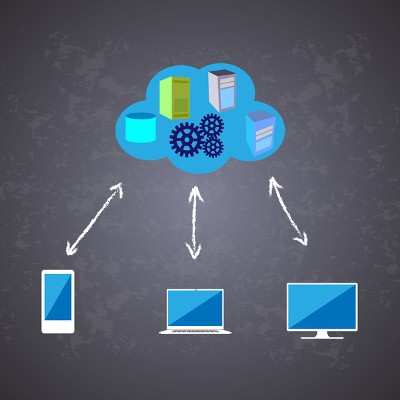
Most businesses rely on software solutions in order to stay productive throughout the work day. Whether it’s a word processor, a spreadsheet builder, or simple data storage in the cloud, software is deeply ingrained in the modern business world. Shouldn’t your organization be taking advantage of it to its full extent? You can start by implementing Software as a Service.
Tech Minutes
Small and medium-sized businesses have increasingly turned to SaaS, or Software as a Service, to access the tools and resources they need to complete their objectives. Rather than maintaining a solution in-house, SaaS is delivered as a web application or through the cloud. However, not all SaaS solutions deliver the same functionality.
All businesses have certain software solutions that they need to keep their operations going. Be it an email solution or a productivity suite that you lack, your business is held back from ideal operational efficiency. The traditional way of acquiring these pieces of software can be holding your organization back, so we’ve come to you with a solution: Software as a Service (SaaS).
Virtualized technology services are great assets for businesses with limited budgets. Three of the best ways that your organization can take advantage of cloud computing and virtualization services are Software as a Service (SaaS), Voice over Internet Protocol (VoIP), and hardware virtualization.
Businesses have focused on efficient utility software deployment for the better part of 30 years. Today, developers are increasingly offering software titles “as-a-service”, which gives users access to these powerful tools, via the cloud, for a consistent monthly payment. Distributing solutions through cloud technologies, be they a private cloud server or a reputable public cloud provider’s platform, can give your business considerable benefits.
Did you know that 43 percent of IT decision makers have plans to increase their cloud investments throughout 2017? This is according to a recent survey which, when combined with the steady rate of cloud adoption seen during the past decade, proves that the cloud is the next phase in the evolutionary development of business computing. While this shows great promise for the future, cloud adoption is not something to dive into blindly.
Your business thrives when your technology is running smoothly, but when it fails to function as intended, it can have unforeseen consequences that reach deep into your IT budget. One of the best ways that your organization can optimize your IT is by taking advantage of outsourced services, but you don’t want to approach these “as a service” offerings uninformed.