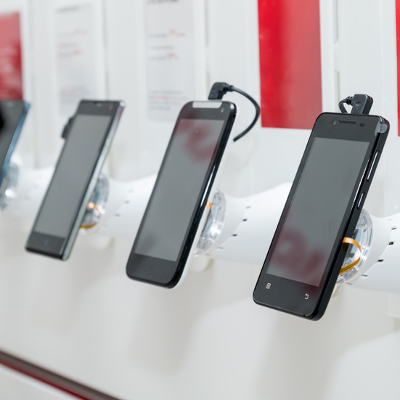






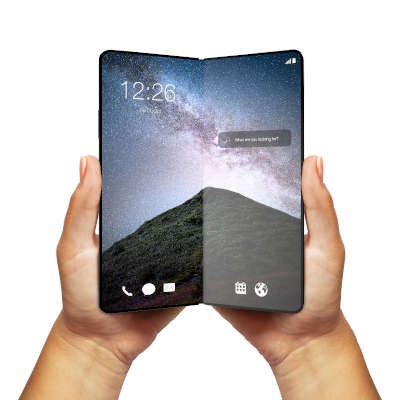
Last week, we explored the flagship smartphone market. This week we thought we would explore some innovative new devices. There have been some advances in some of the technology used by smartphone manufacturers to create cool new features. Today, we take a look at some of these devices.
Tech Minutes
The smartphone is a transcendent innovation of a brilliant idea. As these devices have gotten more and more powerful, it has seen a situation where the batteries powering these devices keep having to outperform the batteries from the previous year’s devices. The technology, however, hasn’t changed very much in over a decade. Today, we take a look at modern smartphone batteries and innovations to power sources that you can expect to see going forward.
Learning how to use a new technology can sometimes be troubling. If you’ve been a dedicated Apple customer throughout the years, but are considering switching allegiances to Android, you should know that simple differences between the two platforms can end up disorienting. Here are a few things you have to know when switching away from the iPhone.
It’s that time of the year again--the holiday season. Filled with lots of gift giving and sharing, you’ll want only the best and brightest smartphone on the market to ensure that you can keep in touch with friends, family, and even your clients should an emergency drag you back to the office suddenly. We’ll break down the specs of each major smartphone on the market so that you can make an educated decision about which one you would like to buy.
Digital payment options have become commonplace in today’s society. In fact, ever since people could purchase goods and services off of the Internet, some of the world’s most successful companies are a result of digital payment. It was a natural progression then, as the mobile device boom came, that mobile payment would take the place of cash and/or cards and bring these digital payment options beyond the Internet, and into our retail stores. This simply hasn’t happened and here are four reasons why.
Chances are, you’ve heard of phishing before--emails that promise some benefit or prize if you only click on the included link, that actually only results in trouble for you and your data. Unfortunately, as technology has embraced mobility, so have phishing attempts. This is why you must also be aware of SMiShing scams.
Have you ever received unsolicited calls from unknown numbers? Sometimes you might receive them at incredibly inconvenient times, such as while you’re home and trying to wind down after a long day’s work. While Caller ID and voicemail have allowed users to keep unwanted calls to a minimum, there are other ways that you can block a caller entirely from reaching your smartphone.
Years before Steve Jobs stood up on the stage in San Francisco and proclaimed Apple had brought you the future, the future he spoke of was already being developed, and in some cases utilized already by millions of people around the world. Cellular phone technology had been around for some time by 2007, but the iPhone, set in motion a mobile revolution.
In 19th century America, the hottest innovation for political campaigns was the exposed stump from a fallen tree, thus the stump speech. This technology revolutionized politics by allowing the candidate to elevate himself above the crowd for greater visibility and to better project one’s voice. Today, the political stump speech is obsolete, having its usefulness far surpassed by the technologies of the modern age.
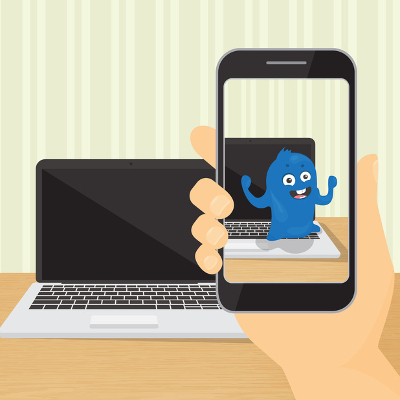
How smart are smartphones really making us? If we’re honest with ourselves, most of us would admit that our mobile phones are more for entertainment and efficient communications, and less about actually being used to make ourselves smarter. Thanks to augmented reality technology becoming more accessible, perhaps smartphones will one day live up to their name.
There’s no denying that smartphones are the predominant consumer technology in the world at the moment. Over a billion smartphones were sold each of the past two years, with growth coming in at a fairly impressive 23 percent from 2013 to 2014. Growth is projected to decrease slightly in future years (around 12 percent in 2015), but it’s obvious by now, smartphone usage will be the principal manner people will access the Internet going forward.
Your smartphone is, without a doubt, a valuable business asset. It keeps you connected to your business at all times, even when you’re home; but is this a good thing? Have you ever considered what your significant other might feel if you answer your phone while out to dinner? Thanks to the indisputable power of social science research, it’s been proven that smartphones are bad for our personal relationships. Gasp!
We always talk about protecting your computers and servers from outside threats, but what about protecting your smartphones? There isn’t much difference between a smartphone and a computer. They both function in very similar ways with access to a variety of apps, social media, and browsers. Your smartphone could hold much more valuable data than just contacts or text messages.
One telling sign of how far we’ve come as a society is the selfie. What’s a selfie you ask? Not only is the selfie a real thing, but it’s a legitimate word. According to the Oxford Online Dictionary, a selfie is, “A photograph that one has taken of oneself, typically with a smartphone or webcam and shared via social media.” Aiding in the popularity of selfies is the rise of selfie technologies, such as these three examples.
If you've ever had your smartphone stolen, you can attest to the frustration and potential risk that it brings. Many organizations and legislators are working to muzzle the issue, and there are steps that you can personally take to help prevent your device from being stolen. Let's take a look at how to prevent smartphone theft, and how to respond if your gadget is stolen.
Thanks to the explosion of mobile phones, the world is connected like never before and most people seem to have a good grip on how to talk to each other using proper telephone etiquette. Therefore, when someone breaks socially accepted phone etiquette practices, they make themselves or the business they represent look bad.
Mobile devices are changing the technology landscape in the modern office. What kind of changes are smartphones specifically having on human productivity? We are looking at this question in two parts. In our last blog article we looked at how mobile devices impact networking. In part two, we will take a look at smartphones and human awareness.
What kind of phone do you have? Or rather, what kind of person does your phone have? With people relying on constant connectivity and constant communication, do devices have an interface for constant productivity, or is it just a constant distraction? Do all these outstanding new gadgets have the kind of value business professionals claim they do?
Do you have what it takes to win the annual National Texting Championship? 17-year-old Austin Wierschke has the texting speed, dexterity, and accuracy to be crowned the most recent texting champion, an accomplishment accredited to sending 500 texts a day for training! This is a major achievement for young Alex, but does it translate to a hirable skill?
What is the scariest situation you can imagine? Being chased by a werewolf? How about being boiled alive in a witches brew? Or what about succumbing to a zombie hoard? For people that are nomophobic, these monster-filled situations would be preferred compared to their greatest fear; being without their cell phone!
What are you terrified of? Spiders? Heights? Deep water? Financial problems? Shockingly, the greatest anxiety among humans is public speaking, even ranking above the fear of death! But, for some people, these things would be readily faced in lieu of their greatest fear; being cell phone-less! Oh, the horror!
The fact that over half of all working adults own a smartphone is changing not only the way we do business, but also how we interact as a species. With the development of smart glasses and watches, we are seeing technology becoming even more intertwined with our bodies, effectively turning people into cyborgs.
Upselling and add-ons are the reason why you go to buy a new smartphone, expecting to pay the too-good-to-be-true sale price, and walk out locked into a contract that costs twice as much as you planned on spending. One add-on that's pushed hard is the device protection plan (smartphone insurance). Is a protection plan worth the expense?