For a lot of businesses, employee mobile phone usage was once a big problem for them. There have been some businesses that actually hired someone to walk around their office telling people to get off their phones. Some businesses outlawed employee devices altogether. There probably are some businesses out there that still limit the use of these devices in their office, but for most businesses, their employees’ smartphones are now completely part of their productivity strategy. Let’s take a quick look at the shift from banned to benefit in this month’s newsletter.
Tech Minutes
With more and more businesses relying on mobile devices for their business they have to be sure that the use of these devices doesn’t present security issues for the company. With all that is happening in business computing today, finding out how you can protect yourself in lieu of the prevalence smartphones play in the business world is important. Here are a few tips on how to lock it up or lose it, altogether.
Does your business use Google’s line of Android devices for business purposes? Well, you might be happy to hear about Google’s new zero-touch solution for enterprises for their Pixel line of smartphones. If you provide smartphones for your business’ employees, you know how much of a hassle it is to set up these devices. This new zero-touch policy attempts to make a change to this.
Businesses can benefit from the use of personal mobile devices in the workplace, yet there are also potential dangers in allowing mobile and Internet of Things devices to access your network. In order to reduce these dangers, you need to put some limits and guidelines on the use of such devices in the workplace.
Do you let your employees bring their own devices in for use on your company network or Wi-Fi connection? If so, we’re sure that they love the freedom that you provide for them, but we must warn you of the dangers that this can bring to an otherwise careful business. We’ll discuss some of the benefits, as well as the pitfalls, of allowing your employees to use personal devices in the workplace.
Smartphones, laptops, and Chromebooks empower today’s workforce to be more mobile, and employees are often the driving force behind this. Chances are, if your business hasn’t even begun to think about your mobile IT strategy, a percentage of your staff already has.
The small business is under siege. Many small business owners do what they can to compete, but it seems like there is no solution for their revenue woes, as larger organizations are able to attract a larger part of the market share. This has been the case for some time, but there are market forces at work today that make it even more difficult for businesses to contend with competitors that have more resources.
Many smaller businesses look to a niche market for sustainability; and, while this seems like a decent strategy on the surface, if demand falls in that niche, you could quickly be faced with some very disheartening questions. Other businesses decide to forgo this strategy and continue as intended, relying on their people’s expertise or experience to guide them through rough patches in business. This is a great strategy until your larger competitors pilfer your organization’s talent with offers of more pay and better benefits.
The truth is that there are no easy answers on how to sustain a small business through turbulent times. For this reason, one avenue almost any small business can venture down is to make improvements in technological resources to try and mitigate the gaps in financial and productivity deficits. Technology, if leveraged properly, can build additional efficiency to your offering, making business move faster. The problem for the modern small business owner or manager is ascertaining what technology investments make the most sense for you.
Where Do Mobile Devices Fit?Mobile has been a popular discussion point in every technology-of-the-future discussion for the past ten or twelve years. This means that the future is now for mobile and while there are a lot of things to love about mobile devices, for small businesses they may do more harm than good. For the small business that has already covered their bases with a thorough mobile device management platform and a BYOD strategy, leveraging the positive attributes out of mobile will be simpler than those who are starting from scratch. Of course, it’s easier to build a bridge if you’ve already procured the materials you need, but without some idea of what you’ll use it for, what’s the point?
For a small business, mobile devices can have some positive effects on employee engagement, awareness, and for cultivating the relationships you depend on. On the other hand, mobile devices can be a hopeless waste of time, which just happens to be one of the most critical resources to manage for the small business owner. With well over 90% of a smartphone’s utility wrapped up in distractions, it seems like that is an endless amount of monitoring and management for a very little return. As long as your organization has clear rules in place to manage data dissemination, access, and communication, mobile will continue to work for your business. But, if you are just getting on the mobile bandwagon, be sure to create your mobile policies before relying on mobile as a way to build more revenue.
For small and medium-sized businesses, technology management can be a tricky situation. You want to ensure that your IT doesn't break your budget, but you also want to make using your technology as easy as possible for your end users. Unfortunately, for many employees, your business’s technology conduct and practices could be driving them insane.

Mobile devices have taken the workplace environment by storm, and you’d be hard-pressed to find anyone who doesn’t use their smartphone, laptop, or other device for work purposes. This trend, called Bring Your Own Device (BYOD), helps employers spend less on new solutions, but it also presents a risk that needs to be managed: the Internet of Things (IoT).
With the aid of technology, today’s workforce is more connected and faster at responding to problems than ever before. While this is great for productivity, it presents challenges for business owners to offer their workers current solutions that won’t hold them back. For many old-school employers, this may require a new way of approaching technology.
Mobile devices are challenging the traditional perception of the office environment. When employees bring their own devices to work, this is called Bring Your Own Device (BYOD), and it’s an increasingly popular trend. Initially thought of as a threat, BYOD is proving to be a valuable option for businesses wanting to increase productivity, so long as it’s regulated properly.
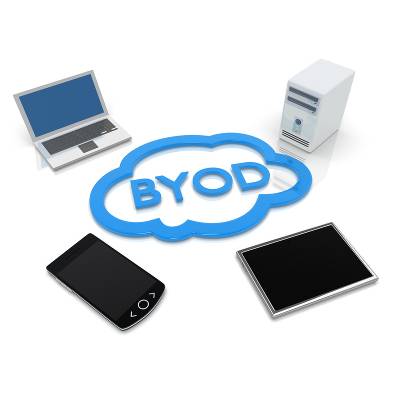
Bring Your Own Device, or BYOD for short, is an important business trend that’s growing in popularity. BYOD allows users to bring their own devices to the workplace and use them for their everyday duties. While we often discuss the security issues that BYOD presents, it’s crucial to also mention the many benefits that BYOD offers for small and medium-sized businesses.
If you’ve ever tried to work while out of the office on your smartphone or tablet, you’ll have realized that mobile devices aren’t the optimal productivity machine to get the most quality work done. However, if you take advantage of the proper gadgets, you can take back your productivity and continue to get work done, even under the worst circumstances.
Mobile devices are changing the way that businesses look at the workforce, but one of the main draws (and possibly detriments) is how the industry continues to change rapidly as new solutions are made available. In order to maximize your business’s efficiency with mobile devices, it’s important to consider these three trends shaping the way that organizations handle modern mobile device management.
Thieves stealing mobile devices like laptops and smartphones have reached epidemic proportions. In fact, 2013 statistics from Consumer Reports and LoJack show that two million laptops were stolen that year, along with three million handsets. Translation; it’s way more likely for your mobile device to be stolen than you probably realize.
As expected, mobile technology is a consistent part of daily business operations for many companies around the world. Employees love taking advantage of the mobility these devices offer, making their home office just as useful as their in-house workstation. However, a mobile device management solution needs to be strictly adhered to in order to optimize security and guarantee that a stray smartphone doesn’t expose your data to unexpected eyes.
A trend that’s taking the office by storm is BYOD, or Bring Your Own Device. These policies entail workers bringing their own devices to the office and using them for work-related purposes. While this opens up many avenues for enhanced productivity and efficiency, being too laissez faire with your BYOD policy could instigate some problems later on, primarily in the security field.
We’re all aware of how the proliferation of mobile devices is changing the workplace, but let’s take an objective look at this trend. Are mobile devices changing the workplace for the better? Are employees actually using their personal devices to get more work done? Or, is the BYOD trend a bunch of hype and nothing’s really changed? Let’s find out.
As a technology consumer, you might realize that your mobile device’s hard drive storage space is somewhat lackluster compared to your needs. Countless photos, applications, and videos take up a ton of space, and if something were to cause the device to fill up suddenly, you’d be out of luck. How can you prevent this? You can start by using these four tips to get around your device’s lack of storage.
Employees bringing their own mobile devices into the workplace (BYOD) is one of the hottest business technology trends. BYOD has been shown to increase productivity, but when it’s implemented improperly, it can leave your business vulnerable to security threats. How do you motivate employees to stick to your BYOD policy in order to ensure the safety of your company’s data?
As mobile technology booms, employers and employees are learning how to best take advantage of using new mobile technology in the workplace (a trend known as BYOD). To be sure, there are several advantages that come with BYOD, but there’s still hesitancy for many businesses to fully adopt mobile technology due to a lack of trust.
With the new iPhone 6 release just a few short weeks ago, many users are excited to ditch their old devices and get the flexible new piece of hardware. Unfortunately, these users might not take into account that their phones could potentially hold private information which should be deleted before forking over the device.
Mobile technology has invaded our very way of life. We don’t leave the house without our mobile phones, and many business owners have their phones integrated to connect with their company’s network. The average user has many different social media applications and others that utilize personal information. What would happen if you lost it?
The trend of employees bringing in their own mobile devices to the office and using them for work purposes (BYOD) is growing rapidly. In fact, a new report from Juniper Research forecasts that by 2018, more than one billion employee-owned devices will be used in enterprises. A trend this big means that organizations have to take BYOD seriously.
If you've ever had your smartphone stolen, you can attest to the frustration and potential risk that it brings. Many organizations and legislators are working to muzzle the issue, and there are steps that you can personally take to help prevent your device from being stolen. Let's take a look at how to prevent smartphone theft, and how to respond if your gadget is stolen.
Two of the latest trends in business culture are environmentally friendly green campaigns and Bring Your Own Device (BYOD) work environments. There are a few ways that a BYOD system can contribute to the success of your company's green campaign, as they both seek to use technology to increase everyday efficiency at the office.
The latest news in office technology movements is the shift toward BYOD (Bring Your Own Device) environments; in which employees are bringing their own mobile devices to work. All the cool kids are doing it, but should you? Before you follow the trend and allow your employees to bring their devices to work, you should consider these risks.
There's a tidal wave of different consumer devices available on the market; smartphones, tablets, laptops, netbooks, and much more. Employees love their devices and love bringing them to work. If your company is allowing for Bring Your Own Device (BYOD), then you will want professional support to get the most out of it.
Many businesses are discovering how great it is for employees to use their personal devices to accomplish work. BYOD has been proven to improve productivity and worker satisfaction; but like so many great things, these BYOD benefits are in danger of being shut down as employers are becoming concerned about being sued. How can you still benefit from BYOD while being protected from lawsuits?
A new technology trend is equipping workers with high-powered mobile devices, like tablets, smartphones, laptops, and more--at the worker's own expense. Employees are bringing their tech into work in order to be more efficient and productive while at the office. Is your organization ready for the Bring Your Own Device revolution?