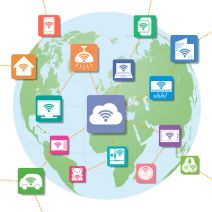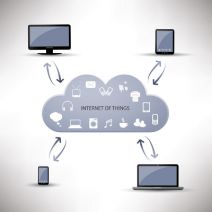






The Internet of Things is everywhere, which means that potential security risks are also everywhere. Your business needs to take the risks presented by the IoT into account and prepare accordingly.
0 Comments



Oneonta NY's Best Web Design & IT Company
The Internet of Things is everywhere, which means that potential security risks are also everywhere. Your business needs to take the risks presented by the IoT into account and prepare accordingly.

As 2018 progresses, certain technologies and implementations are becoming more prominently used by businesses. These trends are anticipated to continue, so it only makes sense to embrace these technologies sooner rather than later. Today, we’ll review some of these technologies, why they are expected to grow, and how you can use them to benefit your business operations.

The Internet of Things is now a commonality. IoT devices are in our homes, in our offices, and in our pockets. While these devices are incredibly convenient, they also contribute to some major security risks. For today’s tip, we’ll review some of the ways to reduce these risks while still leveraging the IoT.

Connectivity is one of the major benefits of mobile technology, but some developments have taken this aspect to crazy (and borderline ridiculous) heights. The Internet of Things is forcing businesses to rethink the conventions of connectivity in ways which previously weren’t particularly necessary. Unsurprisingly, the Internet of Things is forcing business owners and normal users alike to remain skeptical of connected technology to a certain degree, and a survey from Cisco showcases this trend perfectly.

The holidays are a time filled with good food, visits from dear friends and family, and exchanging gifts with those you care about. However, to keep the season bright and merry, you need to be a little cautious during your next gift exchange, as many gifts can present some unexpected risks to your recipient’s security. Be mindful if you see the following items on someone’s wish list.

Every business is searching for ways to improve productivity. There are now quite a few methods being used to boost the amount that each employee can accomplish, many of which revolve around technology. Admittedly, some of these methods may not be attainable for the average SMB… yet. However, as technology advances you may find yourself able to leverage some of these productivity-enhancing tools to improve the look of your bottom line.

The small business is under siege. Many small business owners do what they can to compete, but it seems like there is no solution for their revenue woes, as larger organizations are able to attract a larger part of the market share. This has been the case for some time, but there are market forces at work today that make it even more difficult for businesses to contend with competitors that have more resources.
Many smaller businesses look to a niche market for sustainability; and, while this seems like a decent strategy on the surface, if demand falls in that niche, you could quickly be faced with some very disheartening questions. Other businesses decide to forgo this strategy and continue as intended, relying on their people’s expertise or experience to guide them through rough patches in business. This is a great strategy until your larger competitors pilfer your organization’s talent with offers of more pay and better benefits.
The truth is that there are no easy answers on how to sustain a small business through turbulent times. For this reason, one avenue almost any small business can venture down is to make improvements in technological resources to try and mitigate the gaps in financial and productivity deficits. Technology, if leveraged properly, can build additional efficiency to your offering, making business move faster. The problem for the modern small business owner or manager is ascertaining what technology investments make the most sense for you.
Where Do Mobile Devices Fit?Mobile has been a popular discussion point in every technology-of-the-future discussion for the past ten or twelve years. This means that the future is now for mobile and while there are a lot of things to love about mobile devices, for small businesses they may do more harm than good. For the small business that has already covered their bases with a thorough mobile device management platform and a BYOD strategy, leveraging the positive attributes out of mobile will be simpler than those who are starting from scratch. Of course, it’s easier to build a bridge if you’ve already procured the materials you need, but without some idea of what you’ll use it for, what’s the point?
For a small business, mobile devices can have some positive effects on employee engagement, awareness, and for cultivating the relationships you depend on. On the other hand, mobile devices can be a hopeless waste of time, which just happens to be one of the most critical resources to manage for the small business owner. With well over 90% of a smartphone’s utility wrapped up in distractions, it seems like that is an endless amount of monitoring and management for a very little return. As long as your organization has clear rules in place to manage data dissemination, access, and communication, mobile will continue to work for your business. But, if you are just getting on the mobile bandwagon, be sure to create your mobile policies before relying on mobile as a way to build more revenue.

You may have heard about the Internet of Things in passing, but do you truly understand the nature of these connected devices, and how they will affect your business in the coming years? The Internet of Things is a major trend that needs to be addressed if your business plans on succeeding in the near future.
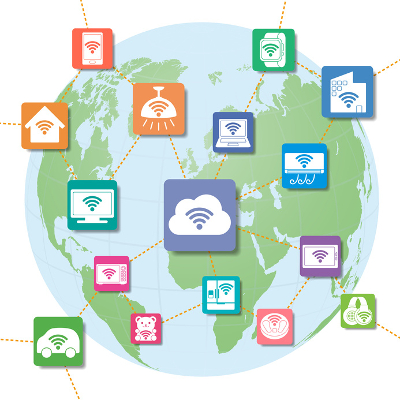 The introduction of new and exciting technologies keeps changing the ways people interact. Innovations such as email, instant messaging, and the development of mobile devices are now turning out to be just fundamental steps to a more connected planet. The Internet of Things is set to turn human civilization on its head. What does this shift mean for the immediate future?
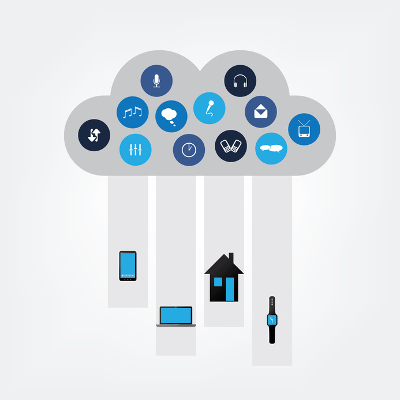 When one thinks about The Internet of Things, new and fantastic devices come to mind, like smart homes, smart cars, mobile devices, and more. While innovations like these are fueling the excitement behind the IoT, it’s actually the smaller, behind-the-scenes IoT devices which are poised to bring about the most significant change to our connected society.
 Businesses invest a significant amount of time and energy into growing their business, but what some organizations don’t understand is that this growth comes with what we like to call “growing pains.” When an organization grows, there are all sorts of problems that must be addressed in order to maintain optimal operations. Among these is your network. Is it ready to handle your organization’s growth?
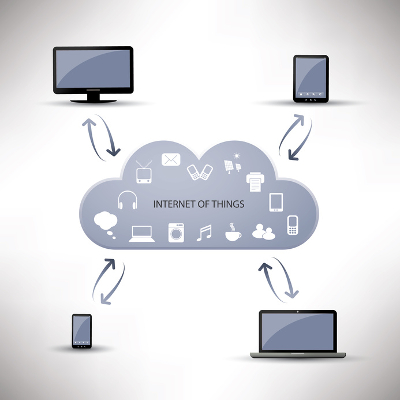 In the near future, there will be many new devices connecting to the Internet. Some will be useful, while others will be… not so much. Either way, the fact remains that, according to IDC, the Global Internet of Things (IoT) spending is expected to reach around $1.3 trillion by 2020. That’s a pretty huge number, and we’ll tell you why your organization needs to keep the IoT in mind when putting thought into your technology strategy.
 There are those in the technology world that argue that professional sports are of marginal importance. Grown men and women, getting paid vast sums of money by fat-cats that make the average successful business owner look like a pauper, to play games that millions of children play everyday. However, according to a poll taken by CNN/USA Today/Gallup, nearly two-thirds of American respondents admitted to being sports fans. In other nations around the world, the sports that fans follow may differ, but percentages are similar to, or exceed those in the U.S.