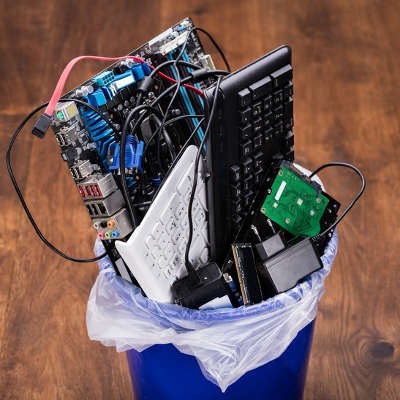
When it’s time to replace your technology, it might bring about a sense of panic. How can you replace your technology without breaking your budget, or worse, exposing data on your old technology to potentially threatening actors? Only one thing is for sure; you need to make sure that you have a solid strategy to adhere to when you need to replace your broken-down technology.
Tech Minutes
New technology paves the way for businesses to leverage their resources in exciting ways. Of course, it’s impossible to take advantage of these benefits if you don’t even know these new technologies exist. Therefore, to help you achieve an edge over your competition, consider how these four new technologies can enhance your business model.
Smart Virtual Personal Assistants (SVPAs)Think of SVPAs as virtual executive assistants. These "predictive intelligence" apps use voice recognition to sort through personal data from email messages, address books, calendars, and task lists in order to anticipate the next logical step and drastically boost daily efficiency. Apple, Google, and Yahoo all recently acquired SVPA apps to integrate into predictive products, from mobile apps to smart speakers, helping users get tasks done even before they would remember to do it otherwise.
Security and Privacy SolutionsA perennial on Webbmedia's list, privacy concerns remain top-of-mind for wired Americans. According to a Pew Internet and Society poll, 91 percent agree that consumers have lost control of their personal data. Adobe, Dropbox, and Snapchat have experienced major password breaches, and Target and Home Depot had credit card data from millions of customers stolen by hackers. To address these system breaches and reduce the widespread public mistrust, companies are looking to spend more resources on password security and encryption management. To assist with this, Twitter released Digits, a two-way authentication service that sends one-time confirmation codes via texts, which will be offered to mobile apps.
Internet of ThingsThanks to the Internet of Things, the world we live in is now surrounded by an unprecedented number of devices with the ability to communicate directly with one another, similar to how the Nike FuelBand connects to the coffee maker. These devices will become a vital part of our day-to-day home, work, travel, and shopping experience. The implications on how IoT devices can enhance the productivity and connectivity of businesses as only limited by imagination and the ways that these vast networks can be secured.
Collaborative SoftwareLooking to make the workday more efficient, a new slew of services combine the best of email, instant messaging, social media, and cloud storage into one platform for collaborating with co-workers. Salesforce's Chatter and Microsoft's Yammer are currently two top players in this space, and with the launch of apps like Facebook for Work, the race to further socialize the office is far from over.
Regardless of how your business’s administration is set up, you should be aware that anyone in a position of authority must have a basic understanding of how IT, and its related responsibilities, functions for your business. Here are four ways that you can learn more about how IT works within your organization.
By its nature, technology is always changing, evolving, and moving forward. Organizations that understand this and plan for these changes end up making the most out of their technology. Those that don’t, get left behind. Here are three ways to make sure that your company’s technology will best serve your future needs.
When running a business, you can’t always upgrade your technology to the latest and greatest equipment or software every time something new comes out. Yet, you also don’t want to be left behind, which would be limiting to your growth and mobility. Moving forward can be a daunting task, especially if you haven’t revamped your IT strategy in some time. Paying attention to the details is an important part of avoiding potential roadblocks with your future IT strategy.
You can’t have IT without information, you can’t have information without data, and technology is what creates data so that you can better use your company’s technology to increase sales. Got it? Understanding the flow of data can be confusing. It’s important to have a handle on it so you can leverage your data for the success of your business.
Before investing in a solution for your business, it’s important to understand what you’re getting into. Sometimes it can be difficult, especially with all of the jargon floating around. In fact, an excessive amount of this “geekspeak” can intimidate prospective clients, and maybe even frighten away a sale. While it’s avoided as much as possible, it sometimes can’t be helped, and some business owners are still lost on certain sayings or acronyms.
The history of movies is rooted in technological advancement. After all, there are well over 100,000 still photographs in any feature length motion picture. The persistence of vision allows for these images to be strung together by our perception to form the images we see. It didn’t take long after the discovery of this phenomenon for it to be utilized as entertainment, and giving birth to cinema as we’ve come to know it.
Because you manage a business, we don't have to convince you of the benefits of planning ahead. For example, having an onboarding strategy in place for hiring a new employee will get them acclimated more quickly, which will help them contribute to boosting your bottom line faster. Similarly, planning your IT network maintenances will benefit your organization.

We live in a time where information technology has touched every facet of life. It would be a fair bet to assume that, at this point, it is more commonplace than a trend. We are inundated with Internet-connected computer systems in every aspect of life. We use automated tellers to do our banking, most major retailers have automated checkouts to supplement the work staff they have in place, and even your Grandma uses Gmail. With this technology saturated into the culture, there are many pragmatic uses that are just now being discovered and implemented. Nowhere is this more true than in the health care industry.
Are you looking to make 2014 a breakout year for your business? Of course you are. One way to make this happen is to take advantage of the year's biggest business technology trends. This week we are featuring three trends in particular that will give your organization the competitive edge. For our second trend, we're reporting on the advantages of "The Internet of Things."
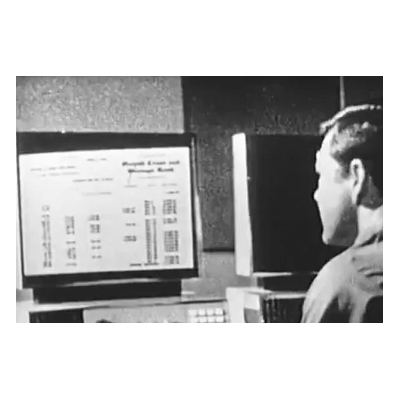
The Internet certainly has changed the way we live, work, shop, and communicate. We may think we're superior to previous generations because of all our Internet-based technology, but we have video proof that the Internet was actually conceptualized in 1969. In many ways, our parents and grandparents were spot on with their predictions. In other ways, not so much.
Did you know that your computer may have the capability to be turned on and off without ever physically pushing its power button? Besides helping you feel like a wizard, your computer's Wake-on-LAN feature has many convenient applications for your business, including saving time and energy, and aiding your campaign to create a greener workplace.
We are doing business in a digital world. Technology has become so prevalent that the employee who pulls out a notebook at a meeting is now the odd man out. Yet, you will still find dated paper-consuming devices in modern offices like fax machines. Is it possible for an office to go completely paperless?
What are your business' biggest pain points? Some pain points are obvious, like the issue keeping you up at night. Other pain points are smaller; you may not worry about them as much, but they still negatively affect your bottom line. Here are three ways we can help identify and find solutions for your company's pain points.