The average employee and business owner relies on various hardware solutions to go about their day-to-day duties. These hardware devices--think keyboards, wireless mouses, external microphones, and any USB devices--utilize drivers which allow for inter-device compatibility. What happens when these drivers aren’t installed or kept up to date? Your technology suffers, and so does your productivity.
Tech Minutes
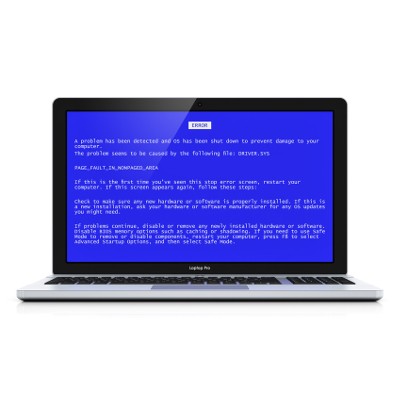
If you happened to plug your Kindle into your computer and get a blue screen of death, you aren’t alone. Many Kindle users have discovered that the Anniversary update to Windows 10 has caused an issue when attempting to use USB to charge the device or transfer books. It would seem that, within moments of connecting the Kindle to a Windows 10 device, the device will lock up and display the dreaded Blue Screen of Death before rebooting.
Those users who have experienced this issue have taken to Microsoft’s forums, posting their grievances and describing their troubleshooting experiences. Unfortunately, these accounts seem to vary from user to user - some of whom are those who updated to the Anniversary version of the OS, as well as some on pre-release software testing service Microsoft Insider.
Some users have found that their devices are restored to normal function after the reboot, only to encounter the issue again on the next reboot. Some find that having the OS of their desktop or laptop asleep as they plug in their e-reader tablet will prevent the BSoD issue from occurring. However, this does not seem to be a rule among those affected, as many have experienced their device crashing regardless of what they do.
These experiences are documented in posted descriptions of what users did to troubleshoot the issue. However, the issue was persistent, despite elements (like the USB cable used) being used as variables.
This isn’t the first issue Microsoft has contended with since the release of the acclaimed operating system’s Anniversary update. In addition to the increased usability and features that the update brought, it also brought a bug that led to many Windows 10 users being unable to use their webcams.

Every time that you purchase a new piece of business technology, you’re faced with a choice: go with a product that’s been around for awhile, and thus, is cheaper, or pay a little extra for the latest solution. We like to encourage business owners to go with the latest tech because it saves them money in the long run - an IT concept known as “future proofing.”
Windows 10, the latest operating system in Microsoft’s repertoire, has several business-friendly features that can potentially improve your organization’s workflow. However, many users are reporting that Windows 10 is installing on their devices automatically without their consent. If this is true, and your organization’s software is upgraded without your consent, you could be facing a big issue.
Safe Mode has long been a troubleshooting method for Windows operating systems, but Windows 10 has done away with the classic method of booting up in Safe Mode. Instead of simply pressing F8 during Windows startup, you now have to go into your settings and manually configure your computer to do so. Here’s how it’s done.
When it comes to technology, upgrading is part of the package. Despite this being a well-established fact, some business owners will delay upgrading for as long as possible, while others will upgrade as soon as the latest product is released. What’s behind a company’s motivation to upgrade or not? We can better understand this by looking at a study on why businesses upgrade their operating systems.
The most recent edition to the Windows family of operating systems, Windows 10, offers several new features that appeal to business owners. Yet, many businesses are still skeptical about adopting it for their entire infrastructure. Still, there’s good news abound for Microsoft’s OS, as compared to the unpopular Windows 8, Windows 10 is being tested on twice as many computers following its release date.


Microsoft’s most recent addition to the Windows family of operating systems, Windows 10, is full of new features, but when it comes to implementing it, many businesses are still dragging their heels. However, the primary reason for this seems to be the fact that organizations want to make sure Windows 10 won’t break their IT infrastructure. Despite this handicap, Windows 10 is still being tested on twice as many PCs as Windows 8 was following its release.
Windows 10 is making its rounds in the business environment, which is hardly surprising. Microsoft is known for making great operating systems that are ideal for both consumer use and workplace productivity. Though Windows 10’s adoption rate has been somewhat slow, it’s expected to be on par, or even surpass, other Windows OSs in terms of sheer usability over the next few years.
The hype is still strong for Windows 10, and it’s easy to see why. It’s a great operating system that has the potential to change the way your business performs its daily duties. However, the monthly desktop operating system usage statistics released by NetMarketShare hint that Windows 10 adoption is starting to slow down and that many users are simply opting to keep using Windows 7, Windows 8, and Windows 8.1. What gives?
For all of you who have Windows 10, you probably have realized that it is, without a doubt, one of the most refined versions of the Windows operating system released by Microsoft in recent years. In a way, it takes the best aspects of Windows 7, combines them with the metro menu from Windows 8, and adds several great new features that improve the user experience. However, not all is well for Windows 10; many users are concerned with some of Windows 10’s questionable data collection policies.
We all know that Windows 10 is the hot new operating system released by Microsoft this past July, with slick new features and (gasp!) the Start menu. We’ve been writing a lot of articles about how great and functional the new operating system is. Keep in mind that Windows 10 is a great operating system, but you should also take note of these four shortcomings when considering whether you should immediately upgrade or not.
With plenty of new features to throw around, Windows 10 is shaping up to be quite the operating system. One feature that seems to have fallen off of everybody’s radar (so far) is Windows Hello, a brand new way to authenticate your PC login. By taking advantage of biometric scanning, your computer will let you log in just by looking at your face.
For many Windows users, the fact that Microsoft is issuing Windows 10 incrementally came as a shock for those who patiently waited for its release date. While users wait, however, hackers are taking advantage of those who are less patient by creating a ransomware that disguises itself as a launcher for a Windows 10 download. So, while you sit and wait for your version of the latest OS, don’t fall prey to deals that seem too good to be true.
Windows 10 has officially been released and a healthy number of the Microsoft faithful are upgrading. With a new operating system comes a new set of features and slight changes to how you interact with your PC. To use Windows 10 in the most proficient way possible, you’re going to want to learn these ten keyboard shortcuts.
Just because something is brand new doesn’t mean that there’s a market for it. Just look at Windows 8 to see what we’re talking about. It might have been a brand new operating system when it first came out, but it didn’t really take to users, who preferred the familiar feel of Windows 7. How do business owners suspect Windows 10 will affect the business world?
A few weeks ago, Microsoft presented several of their latest projects at a live event. As expected, there was a lot of focus put on the new Windows operating system, Windows 10, in addition to their in-development browser Spartan; but what we didn’t expect Microsoft to show off was a slew of brand spanking new consumer technologies.
In addition to Microsoft’s upcoming new operating system, Windows 10, the software company has released that there is a new web browser in production. This new browser, code-named “Spartan,” is expected to have similar functionality to Mozilla’s Firefox and Google Chrome, and will be released alongside Windows 10.