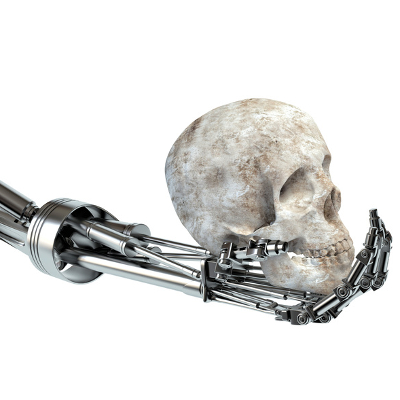
The holiday season has always been one of deep-seated traditions, some that draw from ancient customs, and some that are inspired by more contemporary trends. These traditions have been shaped, and often inspired by, the technology available in the day. Today, we’ll reflect on how the technologies we have now have impacted our celebratory traditions.
Tech Minutes
Today’s fast-paced work environment demands multitasking and juggling various projects at once. Thankfully, there’s a lot of great technologies designed to make workloads more manageable. If you’ve not yet looked into utilizing automation apps for your business, you may be surprised to learn how they can improve efficiency.
To summarize, automation apps are used to automatically carry out an action that’s triggered when a user completes another action. Automation apps actually vary by different strengths, based on the other applications that currently function with the automator. By using apps to automate several of the mundane tasks throughout the workday, you can end up saving your company time and money by providing users with more control over their work routine.
Here are three automation apps of different strengths that are worth looking into for any company valuing productivity and efficiency.
If This Then That (IFTTT)This is a simple automation app that’s fairly easy to set up and compatible with 320 web services. IFTTT uses a “recipe” that the user enters to select a trigger action along with the responsive action (if [trigger] happens, then [response] happens).
IFTTT can be downloaded directly from its website, and it includes mobile versions for Android and iOS. One advantage of IFTTT is its large user community that shares recipes with other users. You may be able to find something useful just by scanning the available recipes like, receiving a notification when a new subscriber is added to an email list, or incorporating receipts and orders into a single spreadsheet.

Even if artificial intelligence is still a long ways off, people always try to emulate it and push it toward greater heights. One of the best, most recent examples, is how an artificially intelligent program co-wrote a short novel (or novella) that almost won the Hoshi Shinichi Award. If it won the award, it would have been groundbreaking, but the fact that it came so close to doing so begs the question: how long will it be before computers can emulate human creativity?
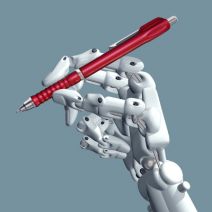
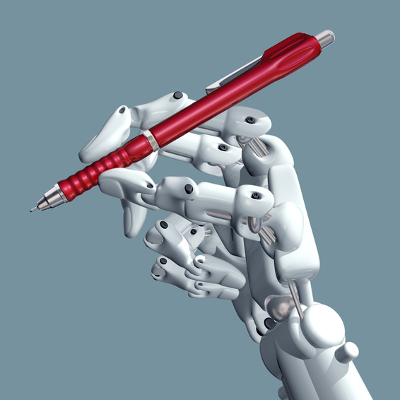
Companies are always looking to improve their operations by eliminating unnecessary costs. It’s a part of business, no matter how you look at it. However, as automation technologies grow more advanced, some of the more mundane (and even some professional) positions are at risk of getting replaced by cheaper, more efficient robotic systems.
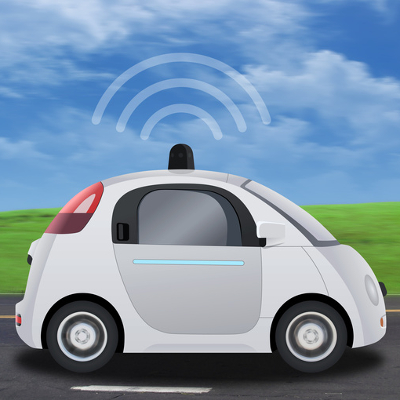
The world might not see legitimate artificial intelligence for quite some time, but that doesn’t mean developers aren’t taking baby steps in the right direction. A current example of this is Google and its automated vehicles. If Google is capable of successfully making a self-driving car that’s aware of its surroundings, we might see them on the roads as early as 2020.
As technology grows more advanced, humans turn to robots to replace certain monotonous jobs. The goal here is to create a society where people are free to spend more time enjoying life. However, technology is prone to both technical problems and user error, which can lead to disastrous consequences.
If you were asked to recall the last time you restarted your PC or smartphone, could you? Too many people don’t take the few minutes required to promote quality efficiency and productivity with their machines. In fact, rebooting can be very much like a full night’s sleep for a computer, and without it, its performance might not meet your business’s expectations.
Automation is an increasingly sought-after convenience in the workplace, especially when it comes to repetitive tasks. Some professionals foresee a world which has fully automated assembly lines, but most are only concerned about what this can do for their assets. Instead of freeing up menial positions for others to take on more meaningful existences, could automation destroy these jobs completely?