Traditional telephone lines were once extremely important for your business’s success. You had to have dedicated phone lines in your office running to each and every desk so that each of your employees had access to a phone when they needed it. Nowadays, however, virtual telephone systems have become popular with businesses of all size. How does this new way of handling your business’s communications hold up compared to the more traditional model?
Tech Minutes
How does your business communicate? If you are relying on a telephone solution that isn’t optimized to fit the specific needs of your business, you may be hindering your ability to stay efficient and cost-effective.
When it comes to a business being successful, it’s only natural to eliminate any wasted expenses and focus on those that can serve multiple purposes. Many businesses are very good at doing this, but they overlook a great opportunity to cut costs through the consolidation of their telephony system.
While at first glance, a telephone may seem to be just a telephone, this communication technology is not quite so cut and dry. More and more businesses have embraced a Voice-over-Internet-Protocol approach to handle their voice communication needs, with benefits that have a very real impact on their business. Let’s go over some of the ways that VoIP can directly assist your organization.
Significant Cost SavingsFirst and foremost, a major benefit to VoIP is the fact that it can take a considerable chunk out of your operating budget by eliminating some or all of your existing telephone bills. Since VoIP uses the Internet to send and receive sound, you have the potential to save in the long term.
This is helped by the fact that many VoIP solutions don’t require particularly specialized hardware, meaning that you will not only be saving on the phone bill, but in some cases, you might not need to replace all of your existing equipment.
Record-Keeping and CollaborationBoth the ability to document what progress has been made and the ability to work cooperatively with teammates are crucial to a business’ success. VoIP can enable a user to do both of these things. Whether it’s used to hold a meeting, recording what was discussed, or to allow clearer communication between two coworkers working on the same project from different locations. Either way, VoIP assists in keeping the lines of communication clear.
You might take extreme measures to keep your business’s devices from contracting the odd virus or malware, but what if all of your efforts are for nothing? You could have the greatest preventative solutions out there, but you can still get infected by some nasty threats, the reason being that the device was infected before you even started using it. You might be surprised by how often this happens, even to wary business owners.
Telephone solutions have long been a part of the business environment, but it’s not always a simple process to implement, as no two organizations are the same. How many users do you have? How many telephone units do you need? How many wires will you need to run through your office? These questions, and more, make it much more appealing to consider a digital voice telephony system for your business’s needs.
Traditional phone systems were once the only mode of communication for businesses and their clients. In-house workers would make outbound calls on a limited number of lines. The Internet changed this part of doing business for the better. Now, by taking advantage of Voice over Internet Protocol (VoIP) phone systems, your team can eliminate the cost of traditional phone systems, while investing in flexible solutions designed to improve productivity and communications.
Voice over Internet Protocol, or VoIP for short, is an increasingly-common communications protocol in a small business’s tech repertoire. It aids with providing reliable communication solutions to all users within an organization, without the need for extensive telephone cabling. However, if your VoIP experiences hiccups from time to time, here are a few troubleshooting tips.
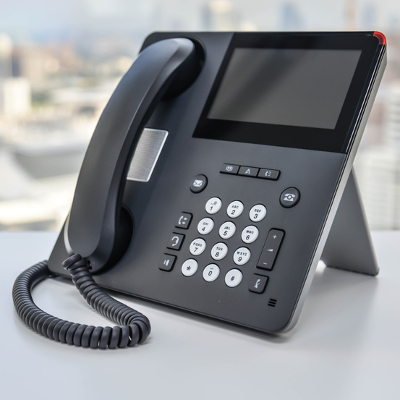
Take a good, hard look at your desk telephone. How often do you use it for day-to-day operations? With the advent of technologies like Voice over Internet Protocol (VoIP) and the smartphone, it seems silly to be reliant on the telephone that’s tethered to your desk. However, some people still aren’t ready to leave the office telephone behind in favor of these new technologies. But… why?